


Chinese Art on Paper
Chinese art on paper spans delicate pith paper studies and bold scrolls created across centuries of refined brushwork.
Chinese Art on Paper
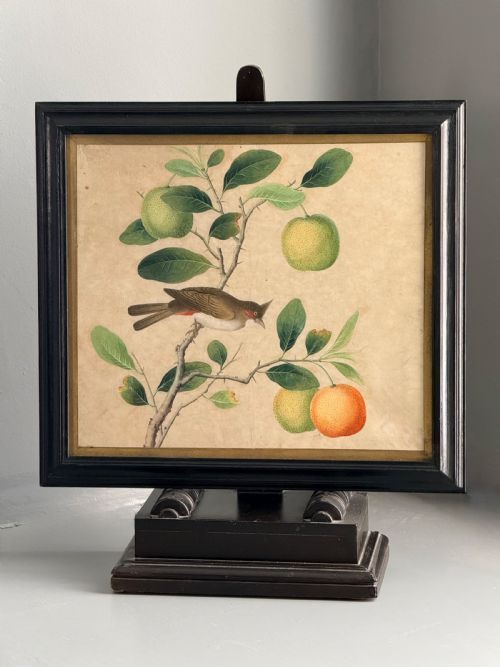
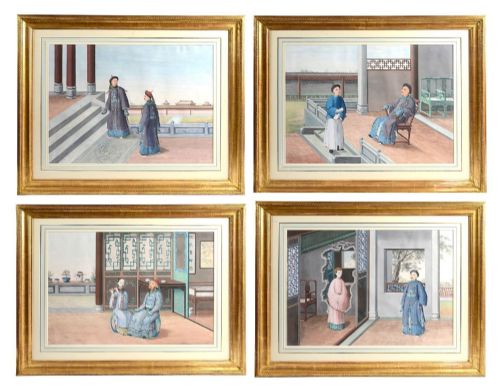
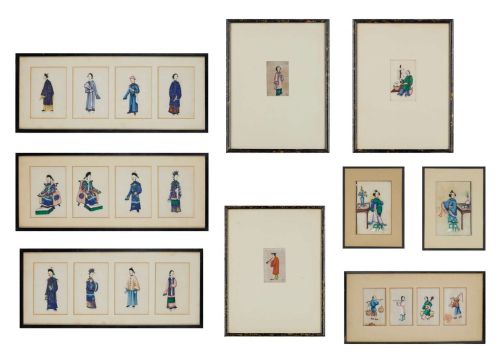
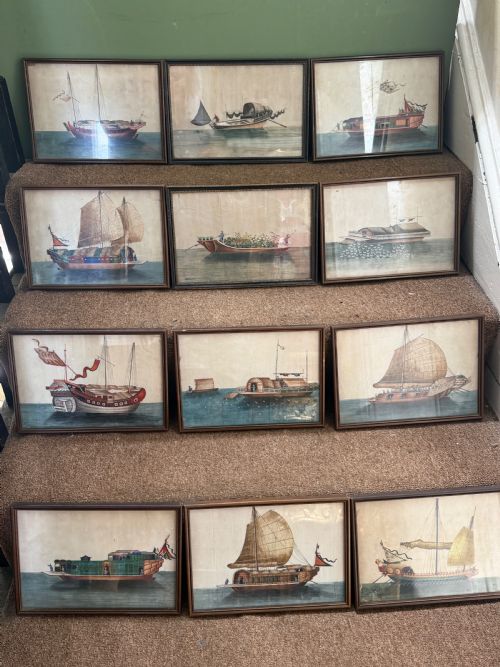
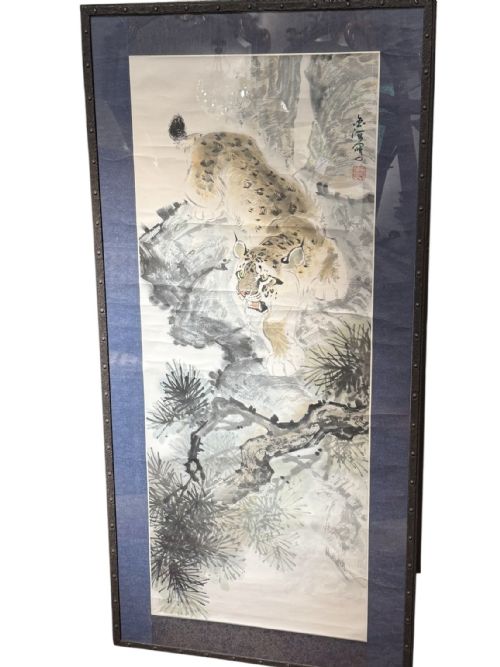
Chinese art on paper comprises traditional paintings, watercolours, gouache works, and scrolls produced across the eighteenth, nineteenth, and twentieth centuries. Buyers seeking these pieces encounter framed works and albums depicting figures, Junks, butterflies, insects, and animals.
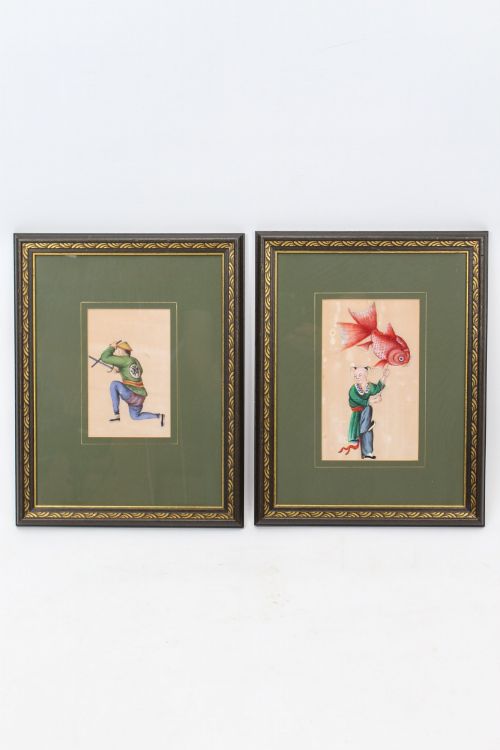
The nineteenth century yields the highest concentration of pith paper paintings, often created in sets depicting Canton scenes or trades. These delicate works frequently appear alongside Qing dynasty scroll paintings and mid-century ink sketches.
Framed watercolours and gouaches on paper or silk represent common domestic formats found on this page. Pieces range from single ancestor portraits to extensive sets of twelve or twenty-one individual paintings.
Materials and construction
Artists painted primarily on pith paper, standard paper, and silk, utilising watercolours, gouache, and ink. Pith paper, historically misidentified as rice paper, provides a distinct velvety surface that absorbs pigments with exceptional depth.
Many works incorporate wooden frames and glass protection to preserve fragile paper and silk supports. Scroll paintings utilise mounting fabrics to allow rolling and unrolling without damaging the delicate ink or pigment layers.
Nineteenth-century artists painted meticulous portraits of butterflies and insects to satisfy Western fascination with exotic natural history.
Judging quality and execution
Quality rests in the precision of the brushwork and the vibrancy of the pigments across the paper or silk. Finer nineteenth-century works display meticulous detail in figures and natural subjects, whereas weaker examples present stiff lines and flat colour application.
Completeness alters the standing of sets, such as groups of pith paintings or bound albums of sketches. Original frames and intact artist seals or signatures further distinguish superior pieces from standard decorative examples.
Ya Ming
The Chinese Art on Paper Glossary
- Pith paper
- A delicate material sliced from the pith of the Tetrapanax papyrifer plant, commonly used for nineteenth-century export paintings. It possesses a spongy texture that imparts a luminous quality to gouache.
- Gouache
- An opaque watercolour medium characterised by heavier pigment load and binder. It creates rich, saturated surfaces on paper and pith.
- Scroll painting
- A traditional format designed for vertical or horizontal display, mounted on silk or paper backings. These pieces roll up for storage.
- Ancestor painting
- A formal portrait commissioned to honour family forebears, typically executed on paper or silk with vibrant pigments. These works occupy an important role in traditional observance.
- Export art
- Pieces produced specifically for Western markets during the Qing dynasty and later periods. They often depict maritime scenes, junks, and local trades.
Chinese Art on Paper: Frequently Asked Questions
What is pith paper?
Pith paper is a delicate cellular material derived from a shrub native to southern China, used extensively during the nineteenth century for export watercolours.
Its unique fibrous structure absorbs gouache pigments to create a velvety, luminous surface that differs entirely from European wood pulp paper.
How should I frame these works?
Works on paper and pith require conservation framing with UV-protective glass and acid-free mounts to prevent fading and deterioration.
Keeping the delicate surface away from direct contact with the glass ensures the pigment remains secure over time.
Are scroll paintings meant for daily display?
Traditional scrolls were often rotated seasonally rather than left hanging permanently in direct light.
Displaying them away from strong sunlight and damp environments preserves the integrity of the paper, silk mounts, and ink.
How do I identify Qing dynasty pieces?
Nineteenth-century Qing works typically feature traditional subject matter such as junks, ancestor portraits, or botanical studies executed on pith paper.
Stylistic conventions and framing elements often provide reliable clues to their exact nineteenth or early twentieth-century origins.