


Traditional Chinese Silk Artwork
Traditional chinese silk artwork brings delicate brushwork and rich mineral pigments into modern interiors.
Traditional Chinese Silk Artwork
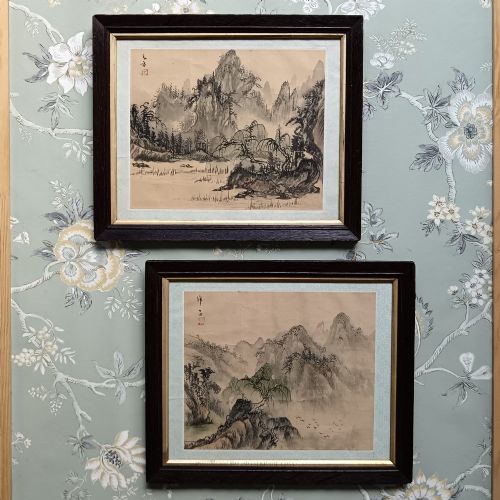
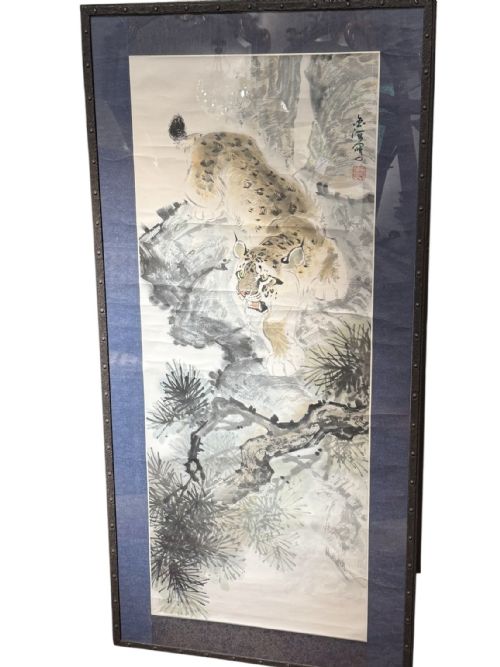
Traditional chinese silk artwork encompasses framed paintings, scroll paintings and wall art created across the nineteenth and twentieth centuries. These pieces frequently depict traditional subjects including ancestral portraits, Daoist immortals, snow leopards, birds, and landscape scenes in the shan shui tradition.
Buyers encountering this group will find works originating from the nineteenth century through to the mid-twentieth century, including pieces executed in the Qing Dynasty style and Chinese Export traditions. Common formats range from large framed pairs and ancestor group portraits to single scrolls housed in original wooden frames.
Materials and construction
These works are executed using ink, pigment, mineral pigment and gouache applied directly onto silk grounds, occasionally backed with paper and framed beneath glass with wooden surrounds. The combination of absorbent silk and fluid water-based media requires precise brush control to achieve depth and permanence.
Many surviving examples retain their original wooden frames and mounting scrolls, which protect the delicate fabric while providing structural support for hanging or wall display.
Snow leopards appear alongside Daoist immortals, proving that nineteenth-century artists possessed an exceptional range of imagination.
Judging quality in traditional chinese silk artwork
The presence of original frames, contemporary mountings, artist signatures or collector stamps adds historical context and distinguishes standard decorative items from finer collector pieces.
The Traditional Chinese Silk Artwork Glossary
- Shan shui
- Traditional Chinese painting style representing scenery or mountain-water landscapes. These compositions use brush and ink rather than conventional observational sketching.
- Scroll painting
- A work of art executed on silk or paper that is mounted for rolling or hanging. They are traditionally stored rolled and displayed rotationally.
- Gouache
- An opaque water-based pigment used to build solid areas of colour on silk. It differs from transparent watercolour through the addition of a white filler.
- Ancestor painting
- A formal portrait commissioned to honour deceased family members or lineage founders. These works often feature rigid frontal poses and rich ceremonial robes.
- Mineral pigment
- Natural earth and stone colorants ground into fine powders for painting. They provide enduring brilliance and stability on textile supports.
Traditional Chinese Silk Artwork: Frequently Asked Questions
How do I hang a scroll painting?
Scroll paintings require careful handling away from direct sunlight and excessive humidity to protect the delicate silk support and paper backings. They are traditionally suspended from integrated hanging cords using appropriate wall anchors.
Because these textiles react to environmental changes, rooms with stable temperatures and indirect light suit them best. Avoid hanging them near heat sources or in damp spaces.
What is an ancestor painting?
Ancestor paintings are formal portraits created to commemorate family lineage members, often displaying subjects seated in ceremonial attire. These works served ritual functions within domestic shrines and ancestral halls.
They are easily identified by their strict frontal composition and meticulous attention to costume details. Surviving examples frequently retain original wooden framing.
What does shan shui mean?
Shan shui translates literally as mountain-water, referring to traditional Chinese landscape paintings that depict natural scenery. These works focus on the spiritual essence of mountains and rivers rather than strict topographic accuracy.
Artists use graduated ink washes and fine brushstrokes to create atmospheric depth. This genre remains central to traditional painting aesthetics.