



Chinese Marble Side Table
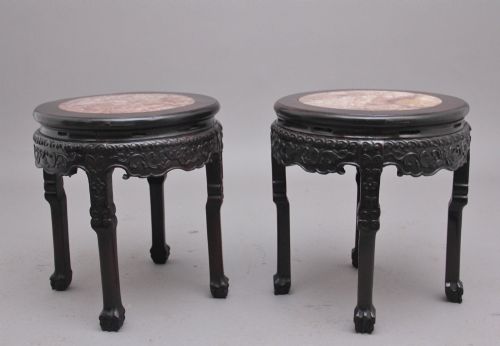
These robust Chinese marble side table examples bring sculptural weight and cool stone surfaces to traditional rooms.
Chinese Marble Side Table
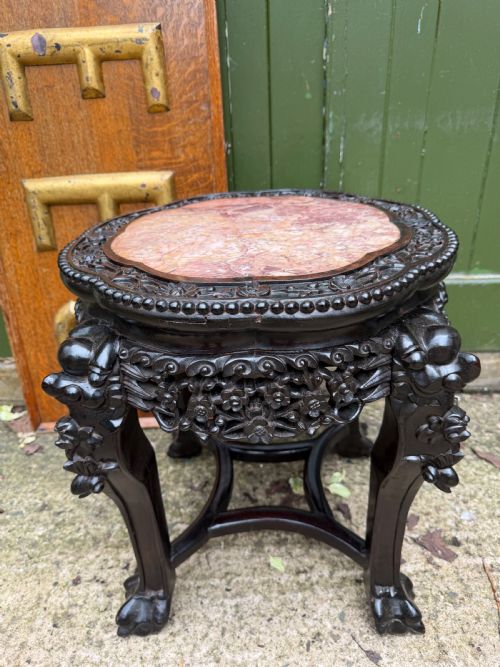
A Chinese marble side table bridges the gap between utilitarian support and decorative display, frequently taking the form of a tall plant stand, jardinière holder or low occasional table. These pieces span the nineteenth century and the early decades of the twentieth century, with a heavy concentration of items originating from the late Qing dynasty. Makers produced these stands to elevate porcelain vases, bronzes and lamps, resulting in compact footprints combined with sturdy load-bearing frames.
Materials and Construction
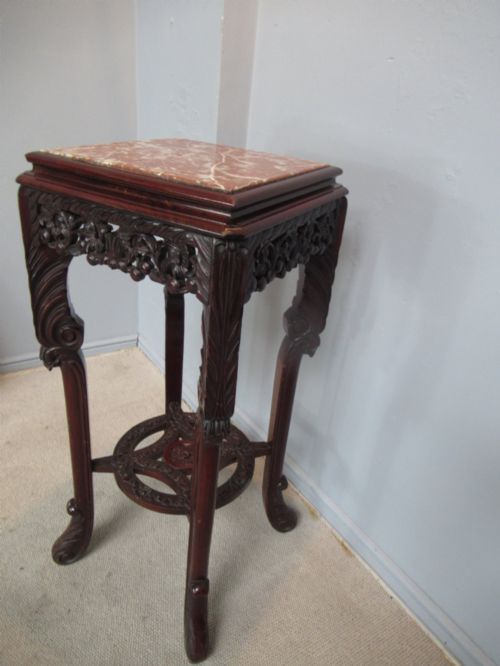
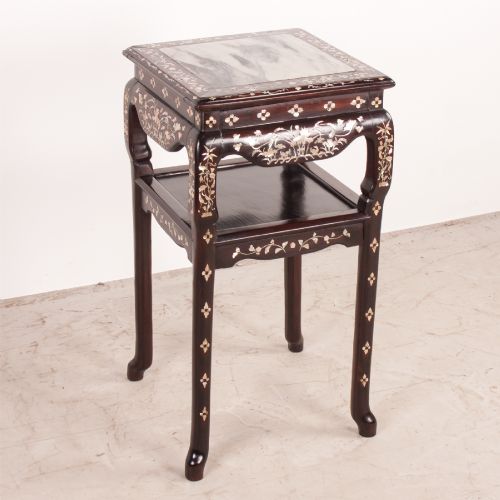
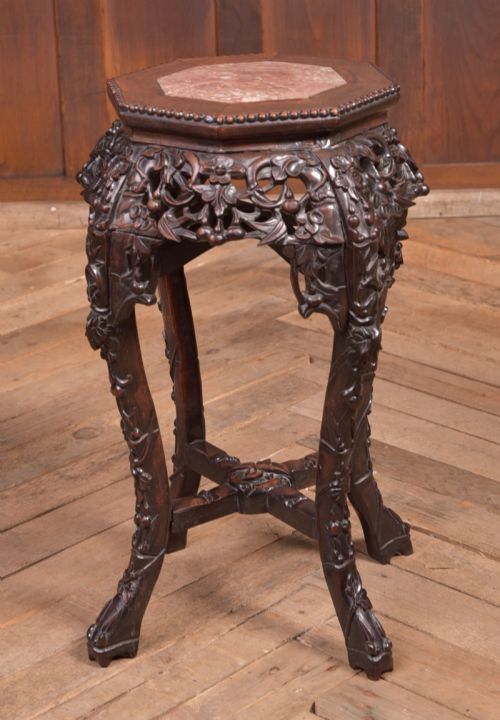
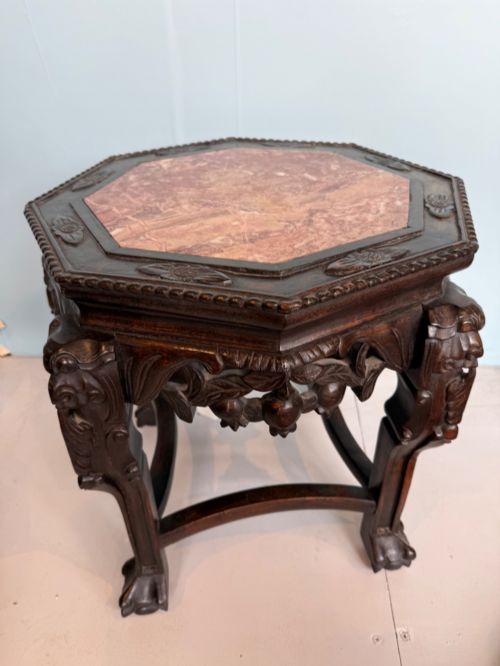
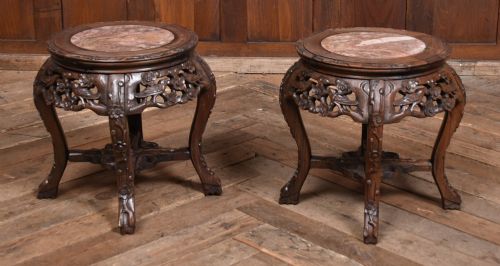
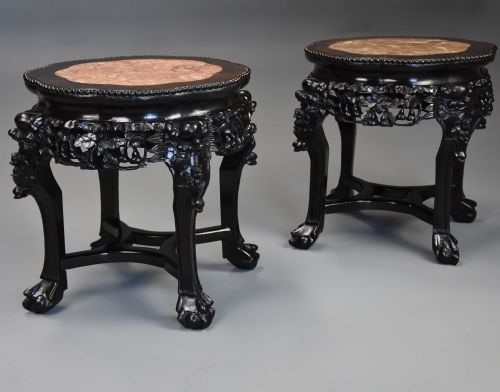
Craftsmen built these tables using dense tropical timbers including rosewood, padouk and hongmu, selecting them for their natural weight and ability to hold intricate carved relief. Artisans set smooth panels of variegated rouge marble or pale stone directly into the wooden framework, often supplementing the structures with mother-of-pearl inlay or rootwood sections. Traditional joinery secured the heavy legs and aprons without relying on modern metal fasteners.
The stone tops provide a cool, flat surface that resists moisture from potted plants and urns, contrasting against the dark, polished grain of the surrounding hardwood. Carvers worked deep floral motifs and scrolling designs directly into the solid timber frames, utilising the natural density of the wood to maintain crisp edges over decades of use.
Several tables manage to look simultaneously heavy enough to anchor a temple and delicate enough to hold a single teacup.
Assessing Quality
The distinction between standard examples and the finest pieces rests upon the depth of the carving and the choice of timber. Superior tables display crisp, undercut relief work in heavy rosewood or padouk rather than simpler machine-sawn shaping, and they utilise carefully selected marble with rich veining rather than plain grey slabs.
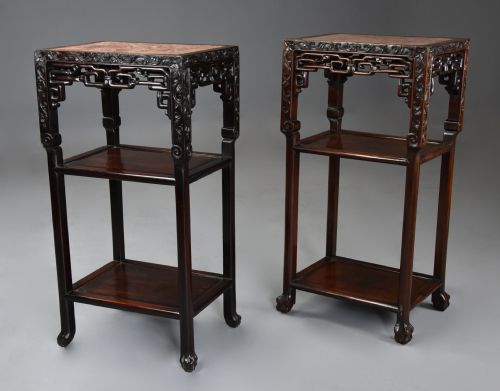
Proportion and structural integrity also dictate the standing of a piece, with top-tier examples retaining their original polished surfaces, tight joinery, and matching grain patterns across paired stands. The integration of delicate mother-of-pearl inlay or unusual rootwood elements further separates exceptional workshop production from routine domestic furniture.
The Chinese Marble Side Table Glossary
- Hongmu
- A dense, dark Chinese hardwood often translated as red wood, prized for heavy furniture and decorative stands. Craftsmen utilised its natural strength to support heavy stone inserts.
- Padouk
- A durable tropical timber showing rich reddish-brown tones used extensively for carved nineteenth-century stands. This material accepts sharp detailing and holds a fine polish.
- Jardiniere
- A large ornamental pot or planter designed to hold flowers or foliage. In these listings, stands built specifically to elevate such vessels share this designation.
- Qing Dynasty
- The final imperial dynasty of China, lasting from sixteen hundred and forty-four until nineteen hundred and twelve. Much of the carved furniture available today dates to the late phase of this era.
- Mother-of-Pearl
- The iridescent inner layer of mollusc shells used by artisans for intricate inlay work. Craftsmen set these thin shimmering pieces into dark hardwood surfaces to form floral and geometric patterns.
Chinese Marble Side Table: Frequently Asked Questions
What were Chinese marble side tables used for?
These tables served primarily as stable platforms for heavy porcelain urns, bronze vessels, and decorative plants within traditional interiors. The cool stone top prevented water damage from damp pots while adding a contrasting textural element to the room.
Over time, owners also utilised them as compact lamp tables or occasional surfaces for holding books and tea wares in reception rooms. Their sturdy hardwood frames allowed them to bear substantial weight despite their often delicate appearance.
How do I style a marble side table at home?
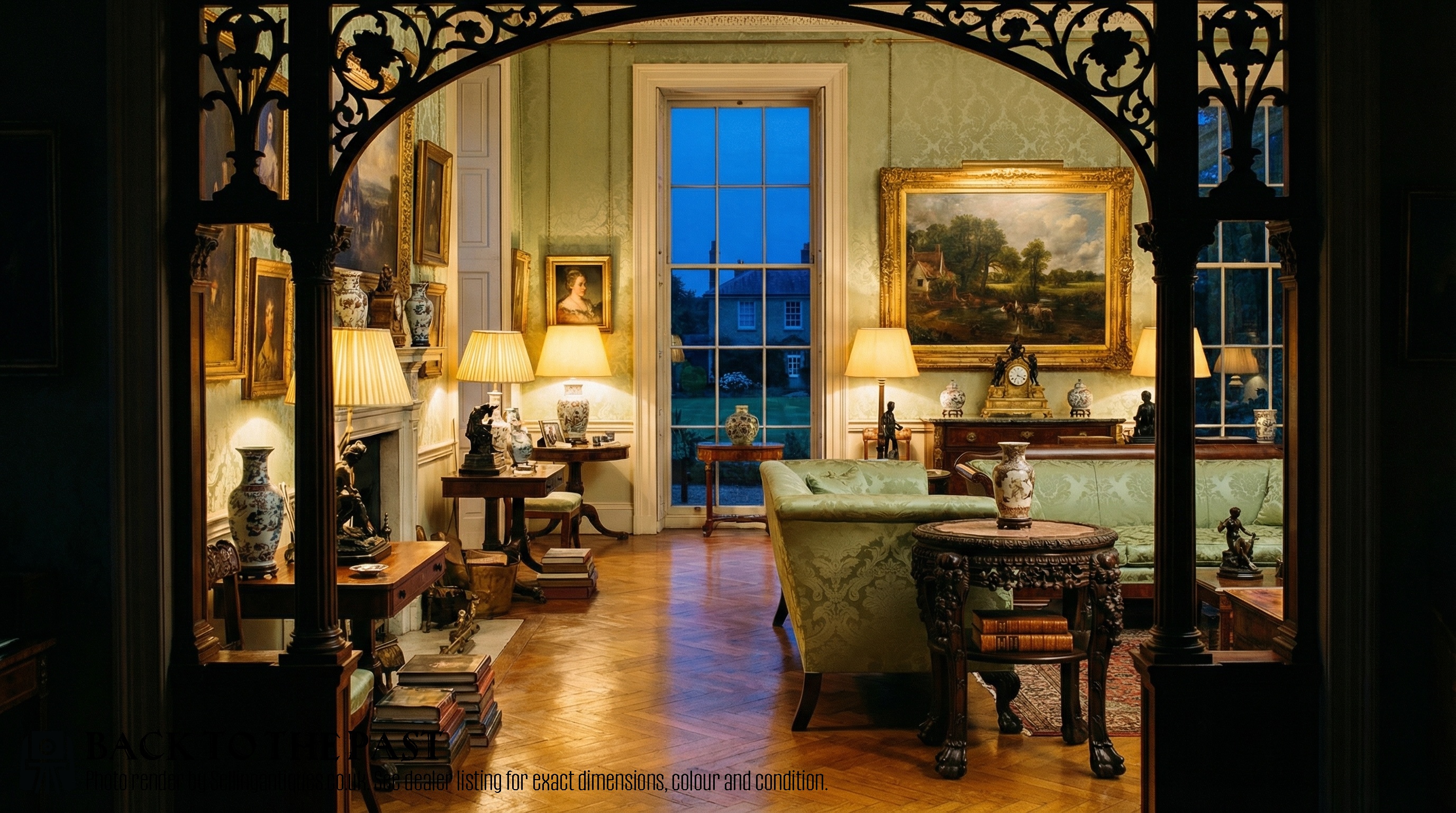
Place a single tall stand in an empty corner to elevate a trailing plant or a tall ceramic vase, letting the carved apron catch the light. Alternatively, use a low square table beside a seating group to hold a reading lamp or a small sculptural object.
Keep surrounding furniture simple to allow the dense timber grain and the veining of the marble to act as focal points. Paired stands work effectively when positioned symmetrically to frame a fireplace or a doorway.
How do I tell nineteenth century pieces apart from later ones?
Nineteenth-century examples typically display hand-carved relief work with deep undercutting in heavy rosewood, padouk, or hongmu timbers. The joinery relies entirely on traditional wooden pegs and interlocking joints without modern fasteners.
Later pieces from the early twentieth century often show slightly more uniform machine assistance in the repetitive background patterns and may utilise different finishing techniques. Examining the underside and the fit of the marble inset helps reveal the age and hand-working methods of the workshop.
Why is the marble inset into the wood?
The stone insert provides a durable, heat-resistant and waterproof surface that stands up to wet soil from plants and hot tea vessels. It also introduces a bright, smooth contrast against the dark, heavily carved wooden frame.
Setting the slab flush into the timber ensures stability so the heavy stone cannot slide off during everyday use. This construction method combined the cooling properties of stone with the structural warmth of traditional joinery.