


Chinese Lacquered Sideboard
A chinese lacquered sideboard brings rich colour and deep historical craft into a room, offering practical storage disguised as art.
Chinese Lacquered Sideboard
A chinese lacquered sideboard encompasses storage furniture coated in tree sap resin, ranging from low altar tables to tall cupboards and multi-drawer chests. These pieces span the eighteenth century through the early twentieth century, carrying regional aesthetics from various Chinese provinces.
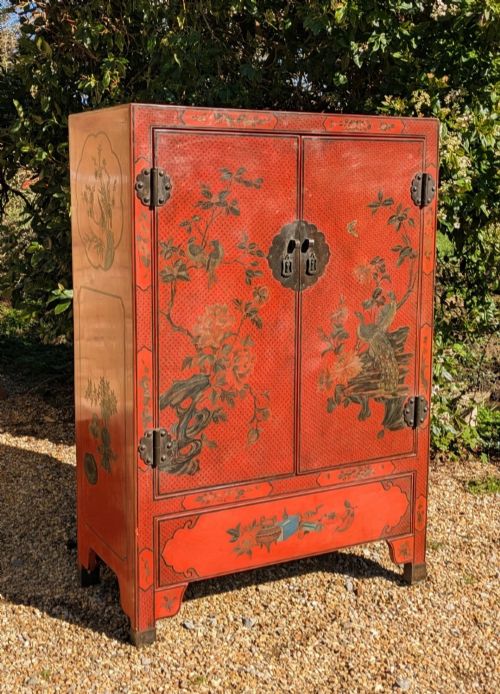
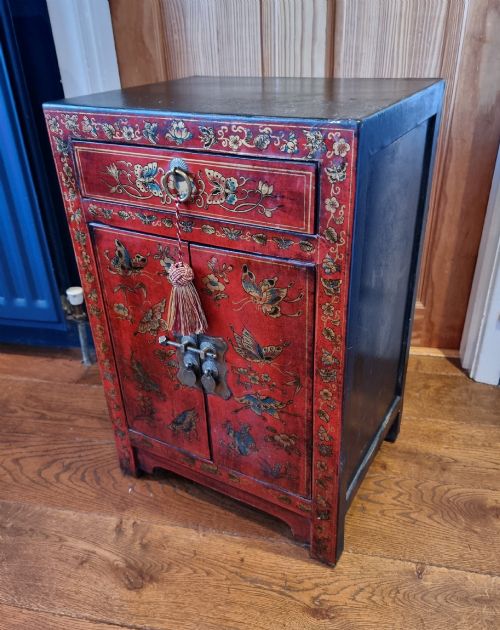
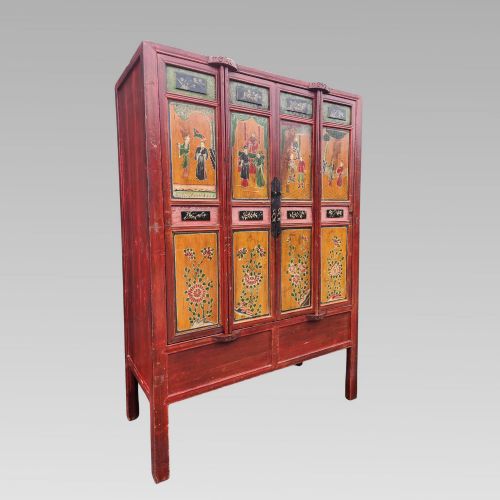
The version most commonly met on this page is a nineteenth-century red or black lacquered cabinet, often styled with Chinoiserie motifs or originating from the Qing Dynasty. Buyers also encounter console tables, side cabinets, and marriage cupboards finished in elm or hardwood underneath the lacquer.
Many of these items show distinct regional characteristics, such as the craftsmanship associated with Fujian or export designs influenced by earlier Kangxi periods. They function equally well as statement storage or display surfaces in modern and traditional interiors alike.
Materials and construction
Makers built these pieces primarily using elm and other native hardwoods, constructing sturdy carcases designed to withstand the application of numerous layers of lacquer. This natural resin required careful drying and polishing between coats to build a durable, luminous surface.
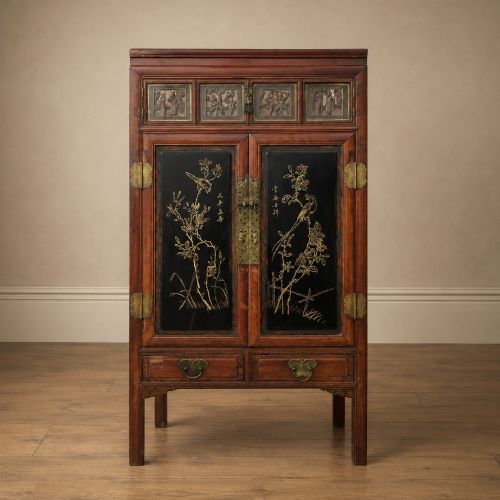
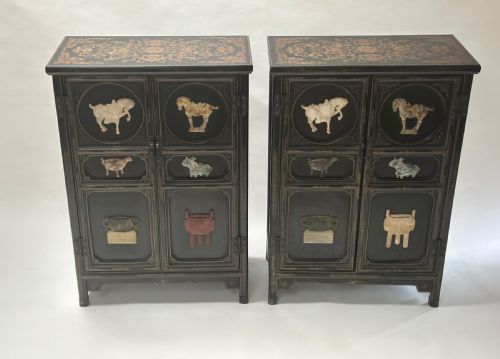
Many examples incorporate applied details such as brass hardware, carved wood, soapstone, and hardstone inlays to create textured scenes of birds, flowers, and figures. Gilded wood accents frequently highlight the carved panels and borders against red or black grounds.
Several cupboards are specifically termed marriage cabinets, built historically to hold a bride's linens and dowry items.
What separates the grades
Quality rests heavily on the depth and condition of the lacquer surface, where multiple built-up layers create a rich sheen rather than a flat, painted finish. The complexity of the hand-carved details and the finesse of any inlaid hardstone or soapstone further distinguish finer examples.
Structural integrity of the underlying elm or hardwood carcase, along with the original survival of brass mounts and carved stands, marks the difference between standard provincial utility pieces and superior workshop productions.
The Chinese Lacquered Sideboard Glossary
- Chinoiserie
- European interpretation and imitation of Chinese artistic traditions and motifs, popular in decorative furniture and lacquerwork. This style heavily influenced western interiors during various historical revivals.
- Qing Dynasty
- The last imperial dynasty of China, ruling from sixteen forty-four until nineteen twelve. Pieces from this era often feature distinct regional carving and traditional red or black finishes.
- Altar table
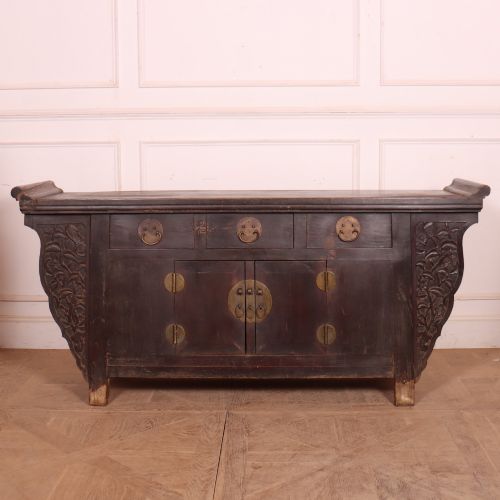
- A traditional long table form with upturned flange ends, originally used for ancestral rites. These tables were later adapted for domestic display and sideboard use.
- Hardstone
- Dense minerals such as jade, agate, or soapstone carved and set into lacquer panels. These inlaid elements create raised pictorial decorations of landscapes and flora.
Chinese Lacquered Sideboard: Frequently Asked Questions
Where should I place a lacquer sideboard?
These cabinets suit dining rooms, hallways, or living spaces where their decorative surfaces can serve as a focal point. Keep them away from direct sunlight and excessive heat sources to protect the natural resin finish.
Allow enough clearance around doors and drawers so they can be accessed comfortably without bumping surrounding furniture.
How do I clean a lacquered surface?
Dust the piece regularly with a soft, dry microfiber cloth to prevent particulate buildup on the delicate finish. Avoid using abrasive household cleaners, chemical sprays, or soaking water.
If needed, damp-wipe the surface lightly with a cloth wrung almost dry, then immediately dry it with a soft cloth.
How do I date a Chinese lacquer piece?
Dating relies on observing construction techniques, wood shrinkage, wear patterns, and stylistic markers such as Qing Dynasty carving conventions. Regional variations also provide clues regarding the workshop origin and period.
Compare the hardware fixings and the ageing of the lacquer layers against known examples from the nineteenth and early twentieth centuries.
Are these sideboards practical for daily storage?
Most of these cabinets offer deep internal shelving or drawer space suited for modern storage needs. Their robust elm and hardwood construction ensures they handle everyday domestic use.
Check the internal dimensions of specific cupboards to ensure they accommodate larger items like dinnerware or media equipment.