


Traditional Chinese Sofa Table
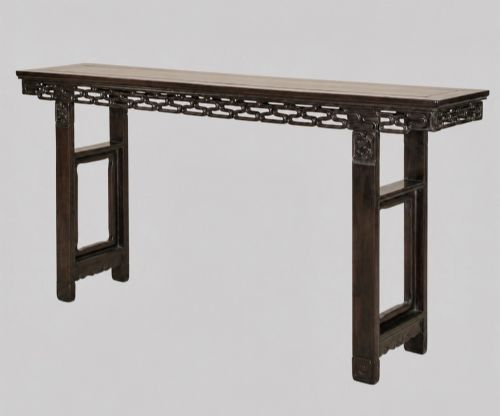
These traditional chinese sofa table pieces are substantial console and altar forms built in elm and hardwood that anchor a room with architectural presence.
Traditional Chinese Sofa Table
Buyers searching for a traditional chinese sofa table encounter console tables, side tables, and altar tables spanning the eighteenth century through the early twentieth century. The selection ranges from nineteenth-century elm and hardwood examples to pieces produced during the late Qing dynasty and the Chinese export period.
Most pieces seen here function as long surface consoles or narrow altar tables, alongside occasional side tables and furniture suites. Origins stretch across traditional Chinese workshops, incorporating Tibetan hardwood items and black lacquered forms topped with marble.
How they were made
Cabinetmakers utilised dense timbers such as hardwood, elm, and camphorwood, pairing structural wood with decorative elements in brass, glass, and lacquer. Lacquered wood surfaces frequently incorporated marble inserts for durability and contrast.
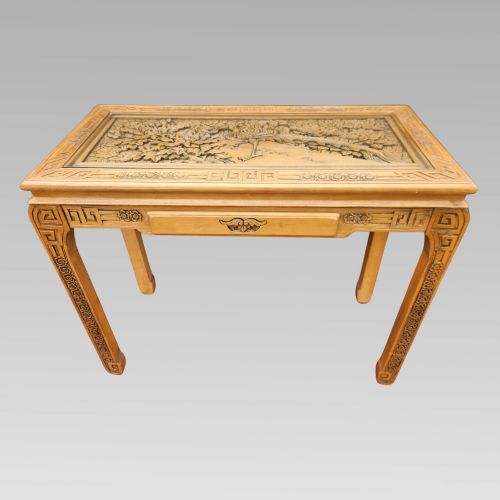
Joinery traditions of the Qing dynasty and traditional Chinese workshops prioritized frame-and-panel construction without relying on metal fasteners. Carved ornamentation on aprons and legs utilised hand chisels to shape dense grain directly into the timber.
Several console tables come equipped with marble tops, proving that ancestors also feared water rings on their good wood.
What varies in quality
The distinction between ordinary and exceptional examples rests upon the density of the hardwood and the depth of the carved detailing on the apron and legs. Pieces from the eighteenth century demonstrate refined proportions and superior timber selection compared to later export production.
Surface finish preservation dictates much of the visual appeal, where intact black lacquer, polished marble inserts, and original brass hardware elevate a piece. Structural integrity across nineteenth-century elm tables depends on the tightness of traditional joinery and the absence of timber distortion.
The Traditional Chinese Sofa Table Glossary
- Altar table
- A long, narrow console table traditionally used for ceremonial displays or ancestral tablets in domestic settings. These pieces feature high relief carving along the apron and straight or slightly flared legs.
- Hardwood
- Dense, slow-growth timber utilised for primary framing and carved decorative panels. This material resists warping and supports intricate hand chiselling.
- Qing Dynasty
- The final imperial dynasty of China, spanning from sixteen-fourteen-fourteen to nineteen-twelve. Furniture from this period exhibits characteristic architectural forms and restrained decorative carving.
- Lacquer
- A durable resin finish applied in multiple layers to wood surfaces. It provides a smooth, protective coating that often accepts detailed ornamentation or marble insets.
Traditional Chinese Sofa Table: Frequently Asked Questions
Where did these tables originate?
These tables originate from Chinese workshops, regional centres, and Tibetan makers producing furniture for domestic use and export during the nineteenth and early twentieth centuries.
Craftsmen drew upon local timber supplies, utilising elm and dense hardwoods to build forms suited to both formal interiors and everyday domestic spaces.
How do I care for hardwood tables?
Maintain hardwood surfaces by dusting with a dry cloth and avoiding placement near direct heat sources that can dry out dense timber.
Preserve the natural finish by applying appropriate furniture wax sparingly, allowing the grain to retain its historic character over time.
How can I tell periods apart?
Distinguishing periods relies on observing timber selection, joinery complexity, and decorative motifs associated with Qing dynasty production or later export styles.
Eighteenth-century examples display distinct material patination and proportion, whereas nineteenth-century pieces often employ elm and specific regional carving techniques.