
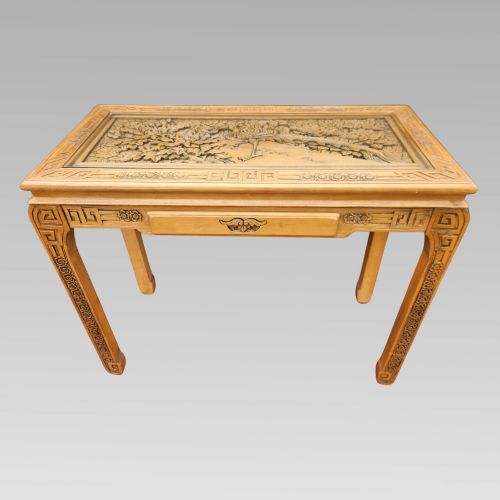


Asian Wooden Altar Desk
These asian wooden altar desk examples bring striking architectural forms and practical surfaces into a room.
Asian Wooden Altar Desk
An asian wooden altar desk bridges the gap between ceremonial temple furniture and everyday domestic utility, offering a commanding focal point for any interior. Buyers search for these pieces to anchor a room with rich wood grain and traditional joinery.
The selections available here predominantly span the nineteenth century and the early decades of the twentieth century. These include side tables, console tables, writing desks, and altar style tables reflecting Qing Dynasty and Chinese provincial traditions.
Materials and Construction
Makers relied on solid elm and camphorwood to build these tables, utilising durable hardwoods that resisted warping and supported heavy daily use. Brass hardware frequently appears on drawers and mounts, adding functional contrast to the dark timber.
Construction techniques relied on traditional joinery that avoided modern adhesives, allowing the wood to expand and contract naturally with changes in climate. Lacquer finishes were carefully applied to protect the timber while highlighting the natural grain beneath.
Listings feature pieces spanning the nineteenth century through the nineteen thirties, including console tables, side tables, and writing desks.
Assessing Quality and Craftsmanship
Quality rests in the precision of the joinery and the integrity of the timber used throughout the structure. Superior examples maintain tight joints and smooth drawer movement without relying on later modern replacements.
The depth and crispness of carved detail distinguish finer pieces from simpler provincial work. Original surface patination also plays a vital role, as untreated wear tells the genuine story of the table's age.
The Asian Wooden Altar Desk Glossary
- Elm
- A durable hardwood commonly used in Chinese furniture making for its strength and attractive grain pattern. It takes a rich polish and withstands heavy domestic use.
- Console table
- A narrow table designed to stand against a wall, frequently used in halls and living areas. These pieces offer display space without obstructing room traffic.
- Qing Dynasty
- The final imperial dynasty of China, spanning from sixteen forty-four to nineteen twelve. Furniture from this era encompasses both ornate court pieces and robust provincial designs.
- Camphorwood
- A fragrant timber utilised in traditional cabinetmaking to deter insects and protect stored items. Its distinct aroma remains detectable in enclosed spaces.
- Altar table
- A ceremonial table characterised by raised flange ends, originally designed for ritual offerings in temples or ancestral halls. Domestic adaptations retain the elegant silhouette.
Asian Wooden Altar Desk: Frequently Asked Questions
Where should I place an altar desk?
These tables sit well against a hallway wall or function as a striking console in a living room. Their narrow proportions allow them to fit into spaces where standard desks feel too bulky.
Position them beneath a large mirror or artwork to create a balanced focal point in the room. They also serve effectively as writing surfaces or display ledges for ceramics and lamps.
What defines a Qing Dynasty piece?
Pieces from this period reflect centuries of refined woodworking traditions, incorporating subtle carvings and robust joinery. They range from formal court furniture to practical provincial items made for daily domestic life.
The style prioritises structural balance and honest materials over excessive ornamentation, allowing the natural grain of the timber to remain the primary decorative feature.
How do side tables differ from writing desks?
Side tables typically feature a clean surface supported by four legs, intended primarily for display or general placement against a wall. Writing desks incorporate functional drawers and kneehole space specifically arranged for seated work.
Both forms share similar construction methods and timber choices, but the internal configuration of drawers determines the primary working function of the piece.