


Chinese Export Tea Bowls
Chinese export tea bowls are delicate porcelain vessels made for Western markets, prized for their intricate hand-painted enamel palettes and historical trade significance.
Chinese Export Tea Bowls
Chinese export tea bowls encompass small handleless cups and matching saucers produced in the eighteenth and nineteenth centuries specifically for overseas trade. Collectors frequently encounter pieces representing the Qing Dynasty, particularly the Qianlong period, alongside later nineteenth-century examples.
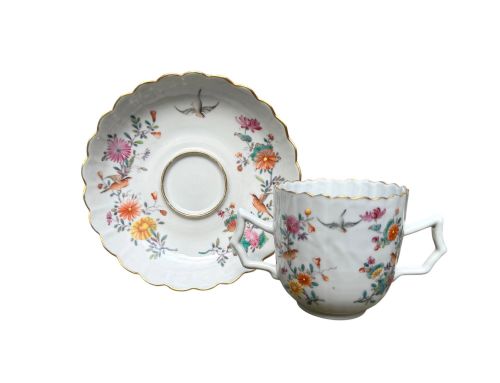
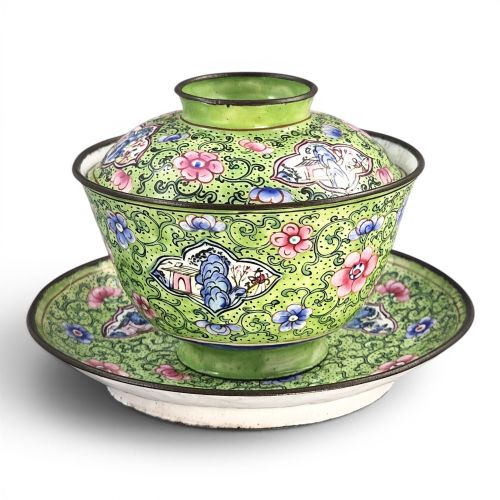
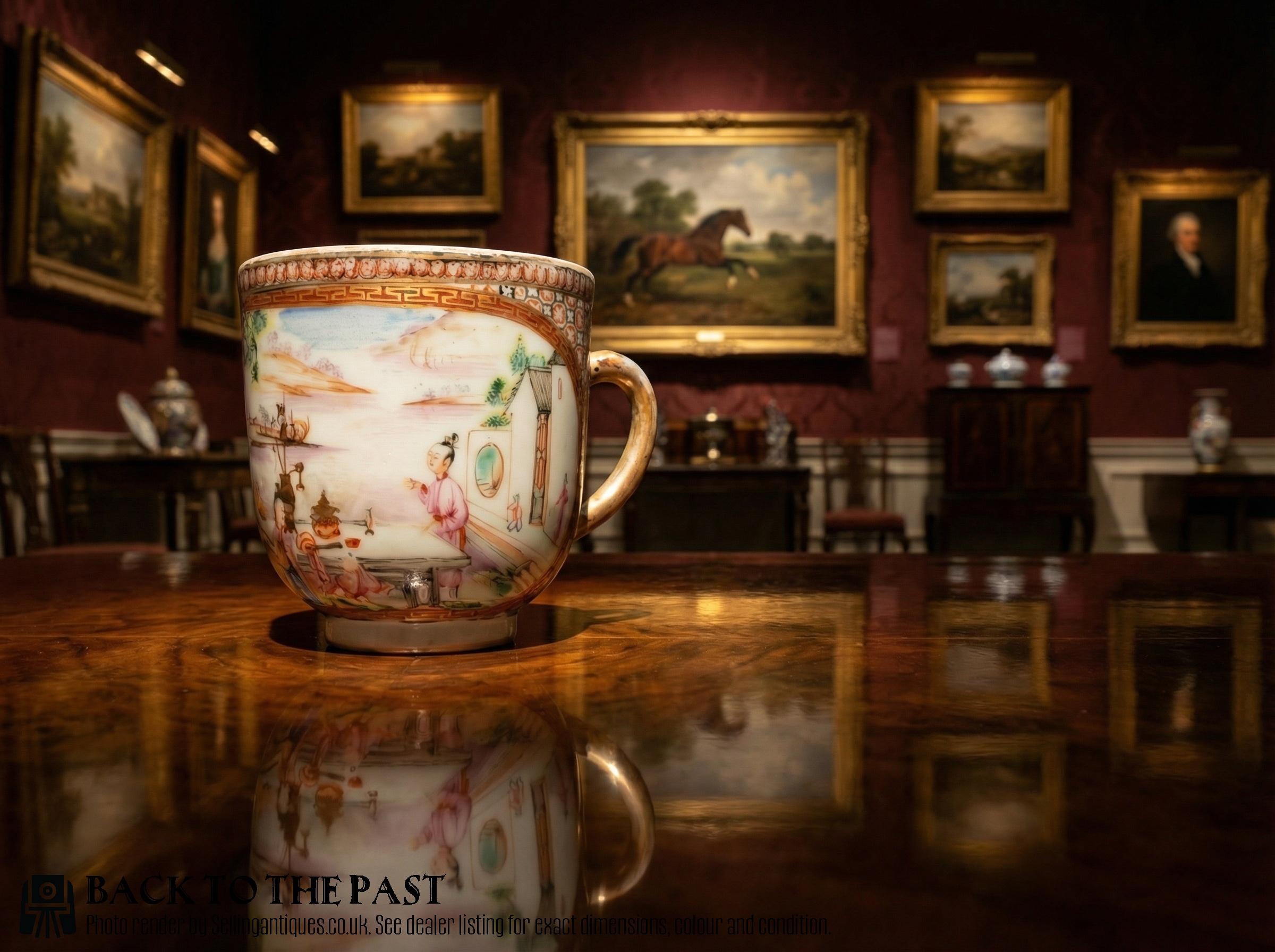
The forms vary from simple blue and white vessels to elaborate sets featuring famille rose and Mandarin pallet decoration. Surviving items often include tea bowl and saucer combinations as well as larger bowls and specialised gaiwan tea sets.
Originating primarily from Chinese kilns, some specimens received subsequent European embellishment in London or Amsterdam by independent decorators. This cross-cultural exchange defines the distinct character of chinese export tea bowls available to modern buyers.
How they were made
Makers utilised high-fired porcelain as the primary substrate, applying cobalt underglaze for blue and white designs before the initial kiln firing. Overglaze enamels, gold leaf, and gilt accents were subsequently added by hand in separate decorative phases.
Enamel application required meticulous brushwork to achieve complex scenes such as acrobatic figures, floral arrangements, and auspicious symbols. Copper and other metallic elements occasionally supplemented the enamel palettes on specialised Canton vessels.
Materials documented across the collection include porcelain, copper, overglaze enamel, cobalt underglaze, and applied gold leaf.
What varies in quality
The refinement of the porcelain body and the precision of the hand-painted brushwork distinguish superior pieces from standard production. Artisans who executed intricate Mandarin pallet scenes or detailed auspicious motifs achieved a level of depth that elevates the standing of the vessel.
The integrity of the overglaze enamels and gold leaf retention significantly influence the visual appeal of each piece. Surviving examples that retain their original vibrant colours without excessive rubbing demonstrate careful handling over centuries.
The Chinese Export Tea Bowls Glossary
- Famille rose
- A prominent palette of opaque overglaze enamels dominated by pink or rose colours, introduced during the Qing dynasty. It allowed artists to render subtle tonal gradations in floral and figural subjects.
- Mandarin pallet
- A polychrome decorative scheme featuring elaborate figural courtyard scenes framed by intricate borders. This style proved immensely popular in Western export markets during the eighteenth century.
- Underglaze blue
- A cobalt pigment applied directly to the raw porcelain body prior to glazing and firing, producing a permanent blue design beneath a clear glossy surface. It provides exceptional durability and stability.
- Gaiwan
- A traditional Chinese tea-making vessel comprising a bowl, lid, and saucer, used for steeping and drinking tea leaves directly. Export variations often incorporated vibrant Canton enamel decoration.
- Qianlong
- The emperor whose long reign from 1736 to 1795 marked a golden age of Chinese porcelain production and export. Pieces from this era exhibit remarkable technical proficiency and artistic diversity.
Chinese Export Tea Bowls: Frequently Asked Questions
How do I date chinese export tea bowls?
Dating relies on stylistic markers, potting characteristics, and historical reign periods associated with the Qing Dynasty. Eighteenth-century pieces typically feature thinner porcelain bodies and distinct enamel formulations compared to nineteenth-century examples.
Examining the foot rim and the style of the hand-painted motifs provides further clues to the manufacturing era. Comparing pieces with documented archival examples helps confirm their chronological placement.
Were these tea bowls meant for everyday use?
While originally created for functional dining and social rituals among wealthy Western elites, their delicate porcelain construction meant they required careful handling. Over time, many surviving examples transitioned from utility items to decorative cabinet pieces.
Today, collectors generally treat them as historical artefacts rather than for daily tea service. Gentle maintenance preserves the fragile overglaze enamels and gold leaf highlights.
What is Amsterdam Bont decoration?
Amsterdam Bont refers to Chinese porcelain that arrived in Europe with plain white or minimal underglaze blue decoration and was subsequently painted over in independent Dutch workshops. This secondary enamelling created colourful and often whimsical geometric or floral patterns.
These pieces represent a fascinating intersection of Asian manufacturing and European taste during the eighteenth century. They stand apart from pieces decorated entirely at the original kilns.
Why do some tea bowls lack handles?
Traditional Chinese tea culture utilised small handleless bowls designed to be held gently in both hands to assess the warmth of the beverage. Western export markets adopted this traditional form alongside saucer dishes during the early phases of the East India trade.
European factories eventually introduced handles to their own teacups, but export tea bowls largely retained their traditional shape. This design feature remains a defining characteristic of eighteenth-century tea wares.