
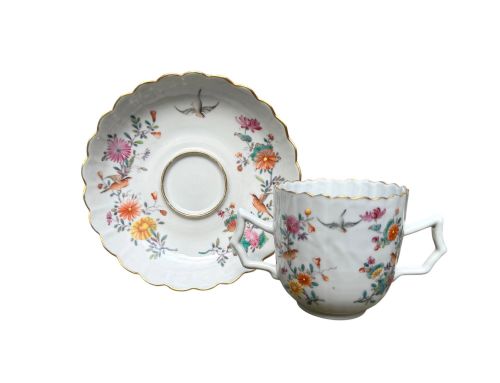


Chinese Export Porcelain Cups
Chinese export porcelain cups are traded for their bright enamels and fine hard-paste bodies, bringing centuries of global commerce straight to the table.
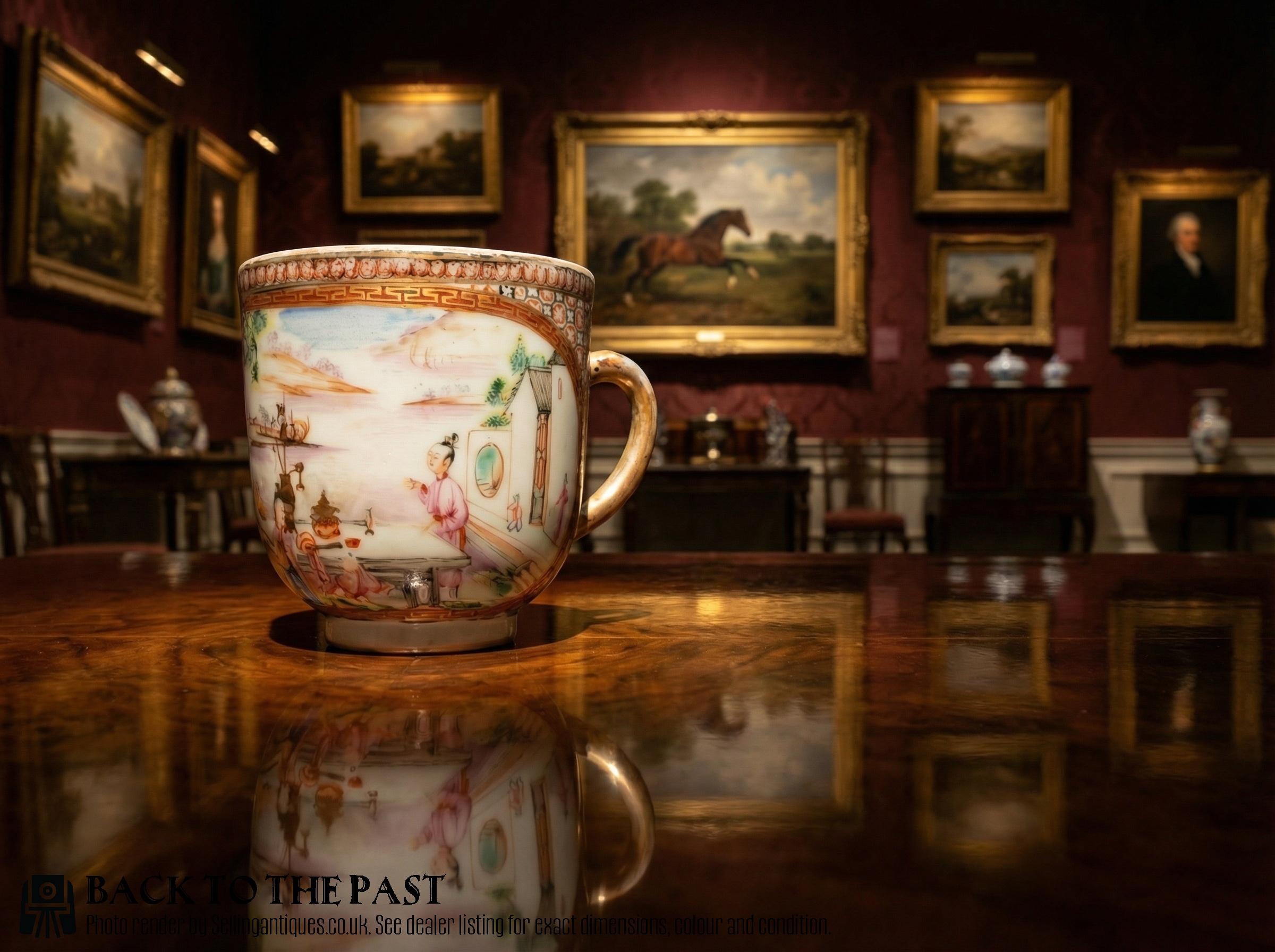
Chinese Export Porcelain Cups
Chinese export porcelain cups encompass eighteenth and nineteenth century tea wares, tea bowls, and mugs made for Western markets. Buyers searching for chinese export porcelain cups often encounter forms ranging from simple tea bowls to handled mugs decorated during the Qing Dynasty.
The inventory on this page spans the eighteenth century and the nineteenth century, capturing periods like the Qianlong reign alongside later nineteenth century interpretations. These items reflect traditional Chinese potting traditions shaped specifically for foreign trade.
Forms include teacups and saucers, individual tea bowls, stands, and larger mugs decorated with famille rose, famille vert, and cobalt underglaze. Each piece demonstrates the intersection of Eastern manufacture and Western domestic habits.
Materials and construction
Makers utilised hard-paste porcelain fired at high temperatures to create thin, resonant bodies that could hold hot liquids securely. This dense ceramic base received hand-painted decoration using cobalt underglaze before the main glaze firing.
Overglaze enamel and gold leaf or gold gilt were applied in subsequent low-temperature firings to add detailed colour palettes like famille rose and Mandarin palette. Amsterdam bont decoration also appears where blank or partially decorated white porcelain received later European embellishment.
Circus acrobats tumble across an eighteenth century saucer, proving that ancient tea time could double as a lively theatrical event.
Assessing quality and decoration
The refinement of the hard-paste porcelain body and the precision of the cobalt underglaze painting set standard baseline measures. Weight, thinness of the walls, and smoothness of the glaze indicate the care taken at the kiln.
Enamel application differs significantly between simple production pieces and complex figurative scenes such as Thousand Lohan or acrobatics motifs. The crispness of gold gilt highlights and the preservation of overglaze enamels dictate the visual strength of each surviving cup.
The Chinese Export Porcelain Cups Glossary
- Hard-paste porcelain
- A dense, vitrified ceramic made from petuntse and kaolin fired at very high temperatures. It forms the durable white body typical of eighteenth century wares.
- Cobalt underglaze
- A blue pigment applied directly to the raw clay body before glazing and firing. It withstands high kiln temperatures without fading.
- Famille rose
- A palette of opaque pink and rose enamels introduced during the Qing dynasty. It allowed for subtle tonal shading in floral and figural designs.
- Amsterdam bont
- Chinese porcelain decorated or redecorated in Dutch workshops during the eighteenth century. These pieces often feature vibrant, colourful overglaze additions.
- Tea bowl
- A handleless drinking vessel used for tea during the eighteenth century. They frequently appear paired with matching saucers.
Chinese Export Porcelain Cups: Frequently Asked Questions
What are chinese export porcelain cups?
These pieces are ceramic drinking vessels made in China during the eighteenth and nineteenth centuries specifically for export to Western buyers.
They include tea bowls, teacups with saucers, and mugs decorated with hand-painted enamels or cobalt underglaze.
How do I date these cups?
Dating relies on stylistic markers such as Qianlong period reign marks, palette types like famille rose, and the characteristics of the hard-paste porcelain body.
Eighteenth century pieces typically display finer potting and specific enamel combinations compared to nineteenth century examples.
Can I use them for drinking?
Most buyers choose to display these historic cups as decorative art rather than using them for daily dining. Their age and delicate overglaze enamels require careful handling.
Hand washing in lukewarm water is essential if handled at all.
What is the Qianlong period?
The Qianlong period spans from 1736 to 1795 within the Qing Dynasty. It represents a peak in the production and export of fine Chinese ceramics.
Porteries from this era often feature complex famille rose and Mandarin palette designs.