
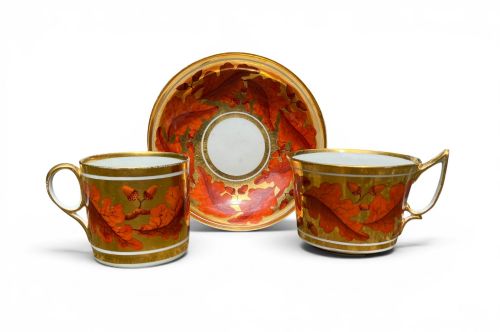
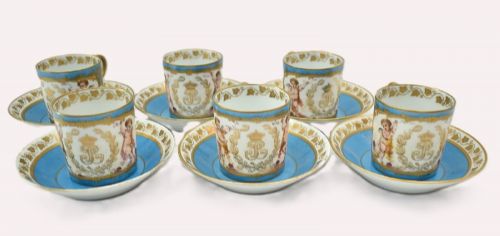


Gilded Ceramic Tea Cups
These gilded ceramic tea cups bring together the weight of Georgian, Regency, and Victorian dining tables through porcelain and gold leaf.
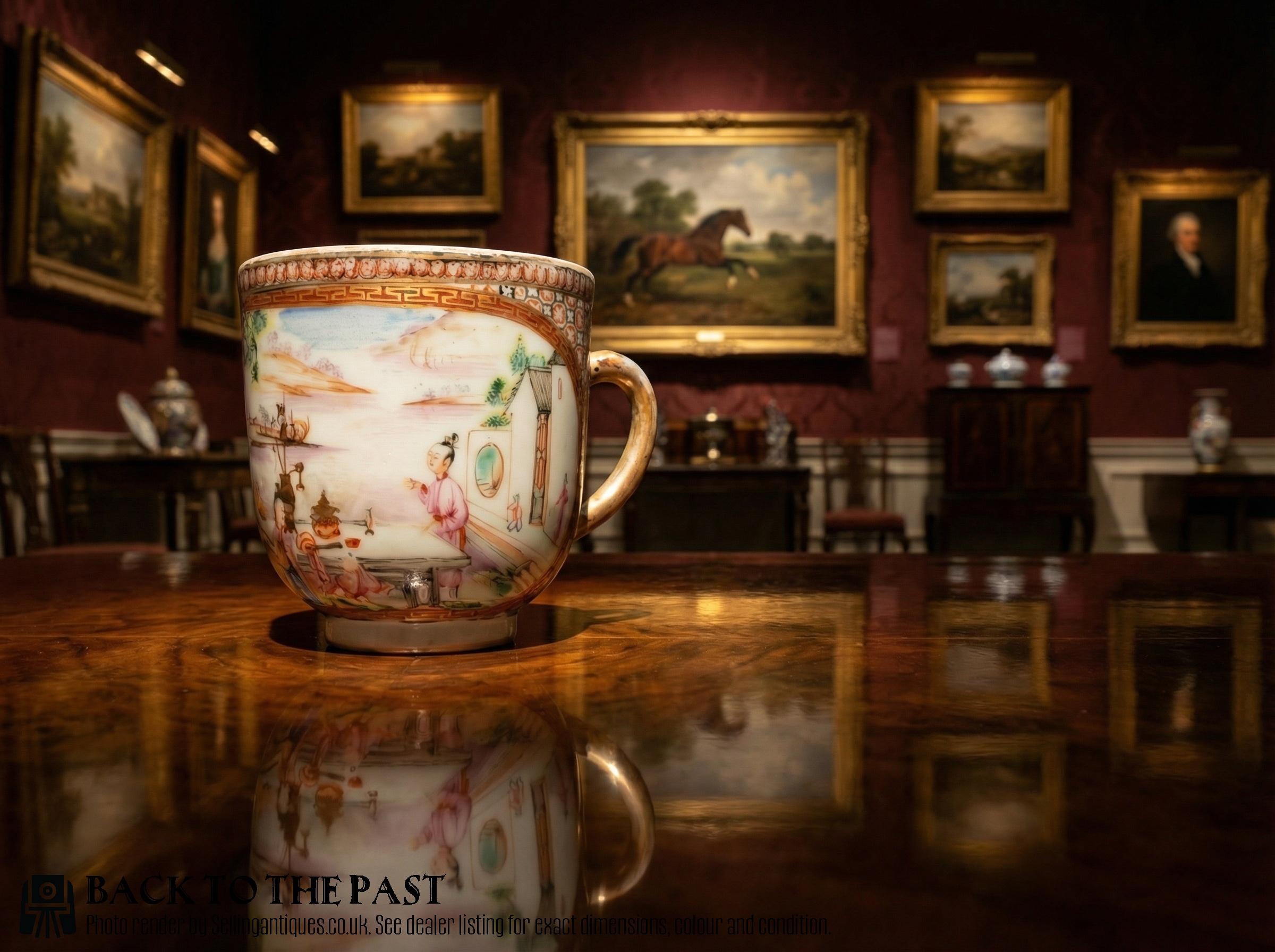
Gilded Ceramic Tea Cups
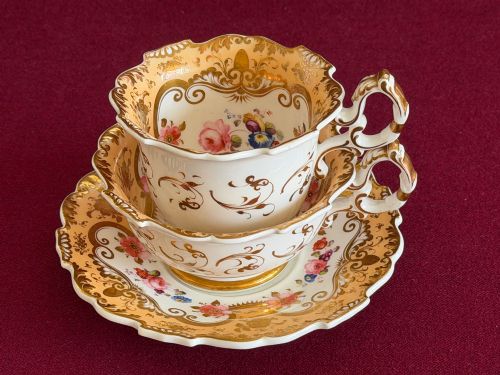
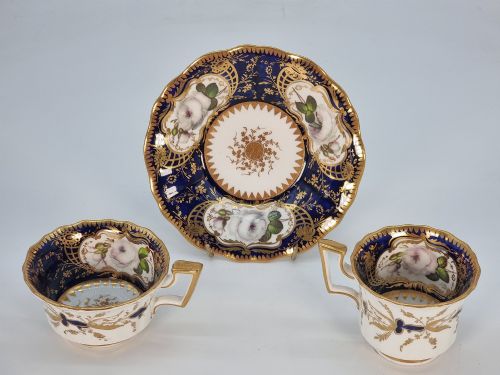
Gilded ceramic tea cups encompass teacups, saucers, trios, and complete tea services produced across the eighteenth, nineteenth, and early twentieth centuries. A buyer is looking at pieces designed for formal dining and drawing-room hospitality, originating from English potteries, continental European manufacturers, and Asian export kilns. The most common form met on this page is the English porcelain cabinet trio or teacup and saucer set dating from the Regency and Victorian eras.
The selection spans from eighteenth-century Worcester tea bowls to Edwardian and later painted sets, reflecting shifts in social habits from private tea drinking to large afternoon gatherings. Pieces range from single teabowls to extensive twenty-one-piece tea sets, including items decorated with hand-painted scenes, exotic birds, and traditional patterns.
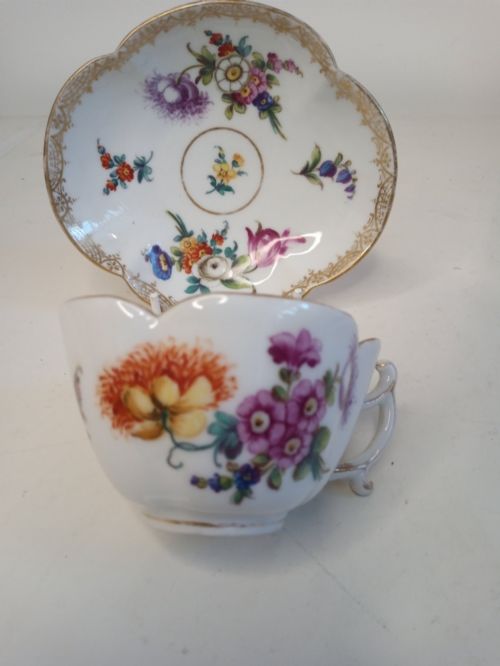
Origins stretch from Staffordshire factories and Worcester workshops to French, German, Russian, and Japanese kilns, showing how diverse traditions adapted to the demand for luxury tableware. Whether through Chinese export porcelain or British bone china, these items represent centuries of ceramic development centred around the domestic tea table.
How They Were Made
Makers utilised hard-paste porcelain, soft-paste porcelain, bone china, and ironstone as the structural body for these vessels, shaping them on wheels or casting them in moulds. Artisans applied gold leaf, gilding, and gold gilt by hand, often combining metallic highlights with enamel paintwork and hand-painted motifs.
Firing techniques evolved from early wood-and-coal kilns to more controlled methods, allowing factories to achieve fine translucency in tea bowls and cabinet cups. The surface decoration was then fixed through secondary low-temperature firings to bond the metallic leaf and polychrome enamels to the glaze.
Listings feature porcelain, bone china, and ironstone spanning the eighteenth, nineteenth, and early twentieth centuries.
What Varies in Quality
The fineness of the ceramic body and the precision of the hand-painted details distinguish standard domestic wares from cabinet pieces made for display. Superior examples demonstrate expert brushwork in enamel scenes and meticulous application of gold leaf that retains its brilliance and clean edges.
The reputation of the maker and the complexity of the pattern, such as specialised floral arrangements or figurative panels, elevate certain sets above utilitarian production. Consistency in the glaze, the delicacy of the potting, and the preservation of the original gilding determine the standing of each piece within its period.
Newhall porcelain·Coalport John Rose·Derby porcelain·Sevres Porcelain·Royal Worcester·Chamberlain Worcester·Hicks Meigh Johnson·Moser·Taniguchi·Spode Porcelain·Davenport·KPM Berlin
The Gilded Ceramic Tea Cups Glossary
- Cabinet trio
- A matching teacup, saucer, and side plate intended primarily for display in a cabinet rather than daily use. These often feature superior hand-painted decoration.
- Soft-paste porcelain
- An artificial porcelain composition fired at lower temperatures than hard-paste, common in eighteenth-century English factories. It produces a warm, creamy body.
- Bone china
- A type of porcelain containing bone ash, developed in England to create a strong, white, and translucent body. It became a standard material for nineteenth-century teacups.
- Imari
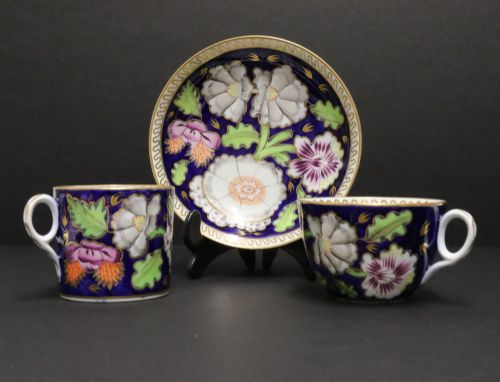
- A decorative style featuring underglaze blue and overglaze iron red and gold, originating in Japan and widely copied by European factories. Victorian Imari pieces adapt these vibrant palettes.
- Teabowl
- A handleless drinking vessel used for tea before the widespread adoption of handled cups in the eighteenth century. They frequently accompany matching saucers.
Gilded Ceramic Tea Cups: Frequently Asked Questions
What is the difference between a tea bowl and a teacup?
Tea bowls are handleless vessels modelled on Asian prototypes used during the eighteenth century when tea was poured into small bowls. Teacups feature applied handles, a design that became standard as European dining habits evolved.
Both forms appear with matching saucers and share similar decorative techniques involving gold leaf and enamel painting across various manufacturing periods.
How do I identify a Regency period tea set?
Regency tea sets typically date between the early nineteenth century and feature distinct cup shapes, such as the Shrewsbury shape, alongside neoclassical or floral motifs. They often utilise soft-paste or early bone china bodies paired with hand-applied gilding.
Examining the form of the handle, the weight of the ceramic, and any pattern numbers helps distinguish these pieces from later Victorian productions.
Can I use antique gilded tea cups for drinking tea?
While these items were originally made for dining, most collectors treat antique gilded ceramics with care due to their age and delicate enamel work. Hand washing in lukewarm water without harsh detergents preserves the gold leaf and painted surfaces.
Using them occasionally is possible, but modern dishwashers and microwaves should be strictly avoided to prevent permanent damage to the historic glaze and gilding.
What does a tea trio include?
A tea trio consists of three matching components: a teacup, a saucer, and a corresponding side or tea plate. This combination became popular for afternoon tea service in the nineteenth and early twentieth centuries.
Trios often showcase unified decorative schemes, combining hand-painted motifs with extensive gilding across all three pieces.