
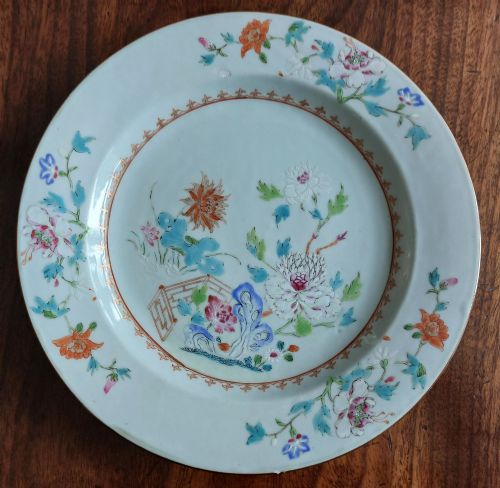
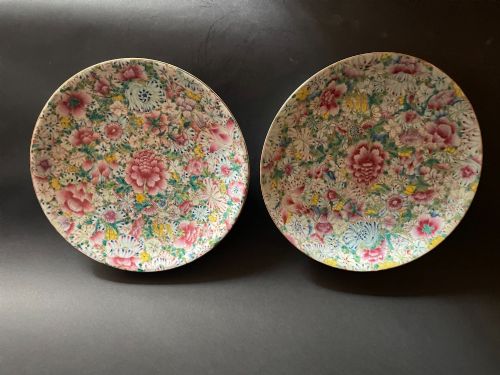
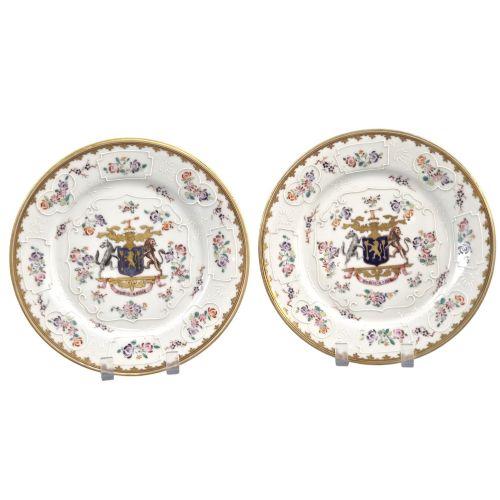


Chinese Export Floral Dish
A chinese export floral dish brings centuries of painted porcelain and vibrant enamel straight to the dining table.
Chinese Export Floral Dish
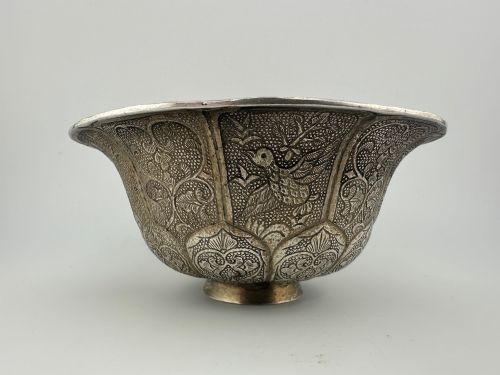
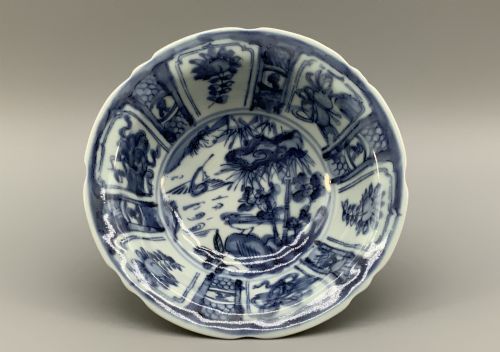
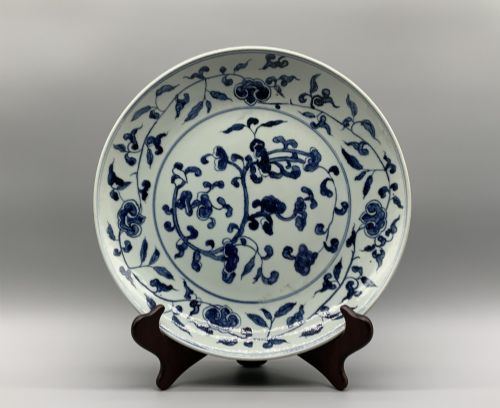
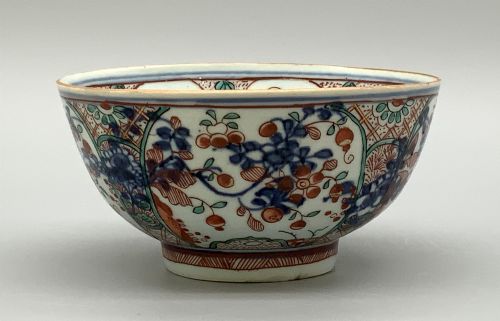
A chinese export floral dish encompasses plates, bowls, chargers, and platters created in China for international markets across the eighteenth and nineteenth centuries, alongside specific periods like the Kangxi and Qianlong reigns. Buyers will encounter both deep bowls and flat plates decorated with intricate botanical motifs.
These items range from delicate armorial dishes to large blue and white porcelain chargers and famille rose platters. The domestic selection leans heavily toward eighteenth-century porcelain plates and nineteenth-century decorative ceramics featuring floral and bird designs.
What Varies in Quality
The precision of the hand painting dictates much of the distinction, where controlled brushwork on floral motifs and bird scenes separates finer examples from standard decorative items. Crisp definition in the underglaze cobalt and rich saturation of the famille rose enamels indicate superior execution.
Form and potting thickness also play a role, with cleanly turned foot rims and balanced symmetry marking the better pieces. Condition of the delicate enamel surfaces and the integrity of the porcelain body complete the hierarchy of quality.
Listings feature porcelain pieces spanning the eighteenth century, the nineteenth century, and the nineteen thirties.
Edmé Samson & Cie
The Chinese Export Floral Dish Glossary
- Famille rose
- A palette of opaque pink and rose enamels introduced during the Qing dynasty. This grouping relies on a distinct pink pigment derived from colloidal gold.
- Cobalt underglaze
- Blue pigment applied to the raw porcelain body prior to glazing and firing. This technique produces deep blue designs that withstand high heat without running.
- Charger
- A large decorative plate or platter intended for display rather than heavy dining service. These substantial pieces frequently showcase the most ambitious painted scenes.
- Armorial
- A ceramic service or dish decorated with a European family coat of arms. These were custom ordered by aristocratic patrons through trading companies.
- Qianlong period
- The imperial reign lasting from seventeen thirty-six to seventeen ninety-five. Ceramics from this era often display complex polychrome enamels and meticulous composition.
Chinese Export Floral Dish: Frequently Asked Questions
What is a chinese export floral dish?
These pieces are ceramic plates, bowls, and platters made in China for export to Western markets, decorated with botanical and floral motifs.
They represent a long tradition of cross-cultural trade, combining Chinese manufacturing skill with European aesthetic preferences.
How were these dishes used originally?
Many served as tableware for elite dining rooms, while larger chargers and platters functioned primarily as display pieces on sideboards.
Over time, owners prized them as ornamental works of art rather than everyday kitchenware.
How do I care for antique porcelain?
Wash these fragile ceramics by hand in warm water using mild soap, avoiding dishwashers entirely to protect the antique glaze and enamel.
Display them securely on stable surfaces or specialised stands to prevent accidental chips and structural stress.
How can I tell the period?
Examine the base clay, the style of the cobalt blue, and the characteristics of the famille rose enamels to align the piece with known reigns.
Differences in potting weight and glaze texture often point toward eighteenth-century production versus later nineteenth-century revival styles.