



Chinese Export Ceramic Urns
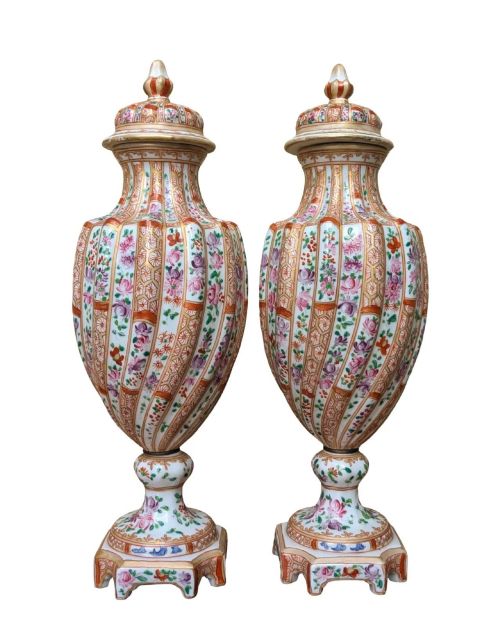
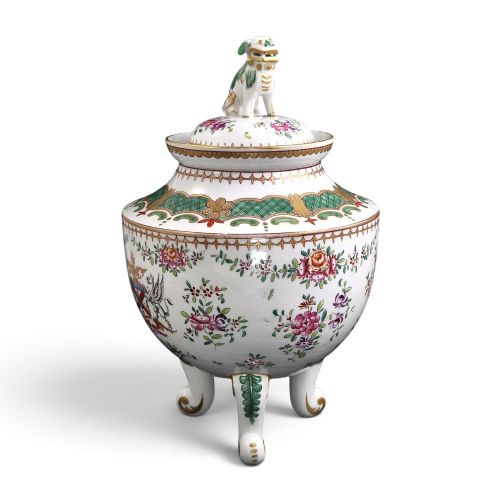
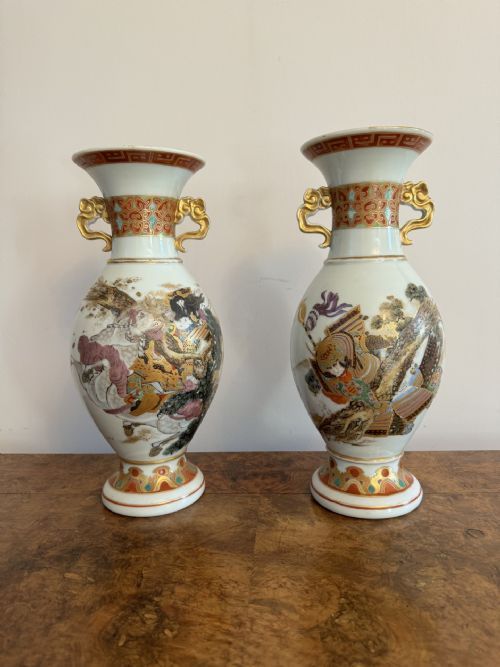
Chinese export ceramic urns bring colourful enamel decoration and intricate hand painting into a room.
Chinese Export Ceramic Urns
When you search for chinese export ceramic urns, you encounter porcelain vessels created in China for Western markets, alongside European interpretations like Samson Paris pieces. These objects span the eighteenth and nineteenth centuries, taking the form of lidded vases, bottle vases, moon flasks, and temple jars.
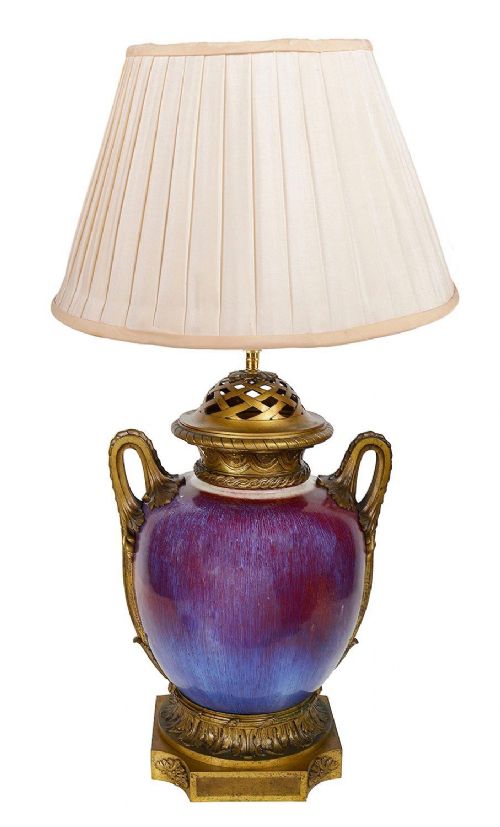
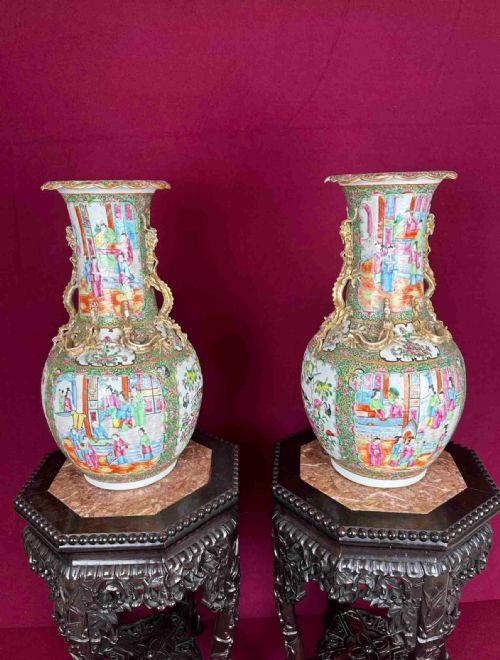
The nineteenth century dominates the selection, particularly pieces from around eighteen eighty featuring Canton, Famille Rose, and Rose Medallion designs. Many of these ceramic bodies have been adapted over time into table lamps, often mounted with gilt bronze or paired with wooden stands and silk fabric shades.
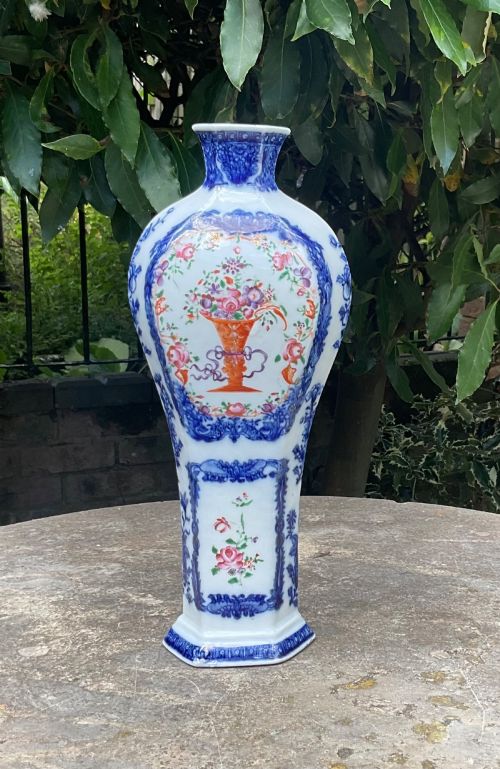
The selection ranges from robust blue and white porcelain to heavily enamelled polychrome styles representing Qing Dynasty traditions and Chinoiserie tastes. Collectors find both single decorative vases and matched pairs designed for grand interior placement.
Materials and Manufacture
Potters shaped these vessels from fine porcelain, applying intricate hand-painted enamels in palettes such as Famille Rose, Famille Verte, and traditional cobalt blue. Artisans frequently added gold leaf highlights to accentuate the floral and figural motifs across the surface.
Many nineteenth-century examples incorporate structural hardware like gilt bronze mounts, brass fittings, and wooden bases made from padouk. Some lamps also integrate fabric and silk elements within their secondary wiring and shade components.
Assessing Quality
The refinement of the hand-painted brushwork separates standard production pieces from superior works. Crisply delineated enamel details and carefully registered gold leaf indicate a higher level of artisan skill.
The integrity of the porcelain body and the weight of any associated metal mounts determine the substantial feel of the piece. Matching pairs with uniform glaze tones and intact original covers command greater attention than mismatched or heavily altered conversions.
Samson Paris
The Chinese Export Ceramic Urns Glossary
- Famille Rose
- A palette of opaque rose-pink enamel introduced to Chinese ceramics during the Qing Dynasty. This colour scheme defines many eighteenth- and nineteenth-century export pieces.
- Canton
- A style of Chinese export porcelain featuring segmented panels filled with figures, birds, and flowers, produced near the port of Canton. It forms a large portion of nineteenth-century inventory.
- Rose Medallion
- A distinct pattern within Canton porcelain characterised by a central medallion surrounded by alternating panels of figures and natural scenes. The surfaces are densely covered in polychrome enamel and gilt.
- Sang de Bœuf
- A rich ox-blood red glaze achieved through copper reduction firing in the kiln. These deep monochrome surfaces appear on select lidded vases and lamp conversions.
- Moon Flask
- A flattened circular flask with a short neck and two small handles, often supported on a footed base. They display decorative scenes across their broad flat sides.
Chinese Export Ceramic Urns: Frequently Asked Questions
What is Chinese export porcelain?
Chinese export porcelain refers to ceramic wares manufactured in China specifically for export to European and American markets from the sixteenth through the nineteenth centuries. These pieces often blended traditional Chinese forms with decorative motifs tailored to Western tastes.
Over time, many of these vessels were adapted into table lamps or fitted with gilt bronze mounts to suit changing interior decoration styles in nineteenth-century homes.
How do I identify a Rose Medallion vase?
Rose Medallion vases are easily recognised by their densely patterned surfaces, which feature a central medallion surrounded by repeating panels of figures, birds, and flowers. The predominant palette relies heavily on pink enamel and gold leaf highlights.
These pieces were produced extensively during the nineteenth century in the Canton region and frequently appear in matched pairs.
Were these urns originally made as lamps?
Most of these ceramic vessels started life as lidded vases, ginger jars, or temple jars designed for display rather than illumination. During the nineteenth and twentieth centuries, many were professionally converted into table lamps by adding electrical fittings and secure mounts.
This conversion process often involved adding gilt bronze bases or wooden stands to accommodate the wiring while preserving the decorative body.
What is the difference between Canton and Famille Rose?
Famille Rose is a broad descriptive term for Chinese porcelain decorated with a predominant pink enamel palette introduced in the eighteenth century. Canton porcelain is a specific regional export style that utilises Famille Rose enamels within structured panel layouts.
While all Canton porcelain employs Famille Rose colours, not all Famille Rose ceramics originate from the Canton workshops.
How should I care for antique porcelain lamps?
Antique porcelain and enamel surfaces require gentle dusting with a soft, dry cloth to prevent the accumulation of dirt. Avoid using abrasive household cleaners or harsh chemical solvents that might damage the hand-painted enamels and gold leaf.
If the piece is wired as a lamp, have the electrical components periodically checked by a qualified professional to ensure safety.