
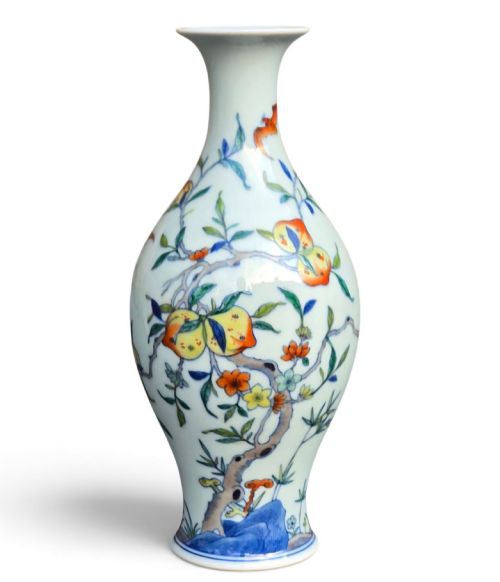


Chinese Decorative Jar
These Chinese decorative jar pieces offer substantial form and colour, carrying centuries of ceramic and metalwork tradition into modern interiors.
Chinese Decorative Jar
A chinese decorative jar brings together historical ceramic forms and intricate surface decoration, ranging from ginger jars to lidded pots. When exploring this selection, buyers encounter diverse shapes including baluster vases, garlic-head vases, and covered vessels.
The objects span multiple periods, touching upon Qing Dynasty production, Victorian interpretations, and early twentieth-century examples. Material choices extend from porcelain and pottery to cloisonne enamel, bronze, brass, copper, and carved red cinnabar lacquer.
Originating within Chinese export traditions alongside Asian regional styles and Victorian chinoiserie, these jars serve both display and container functions. The most common manifestations on this page include porcelain ginger jars and cloisonne vessels.
Assessing quality in execution
Quality rests in the precision and depth of the surface decoration, whether painted, enamelled, or carved. Superior examples display confident brushwork, well-defined enamel borders, and deep, crisp carving in lacquer or metal.
The integrity of the material foundation dictates longevity, with finer porcelain bodies, heavier bronze castings, and well-preserved lacquer bases holding greater distinction. Surface finishes show refinement through consistent firing results and minimal distortion across the form.
Materials represented across the selection include porcelain, ceramic, brass, copper, wood, lacquer, and enamel.
The Chinese Decorative Jar Glossary
- Famille Rose
- A prominent palette of opaque overglaze enamels dominated by pink or rose hues, introduced during the Qing Dynasty. It allows for subtle tonal gradations in floral and figural depictions.
- Cloisonne
- A metalwork technique where flat wire is soldered to a bronze or copper body to create compartments that receive enamel paste. The piece is then fired and polished to a smooth finish.
- Celadon
- A term for ceramics featuring a pale green jade-like glaze, achieved through iron oxides fired in a reducing atmosphere. This glaze type has a long history spanning multiple early dynasties.
- Ginger Jar
- A broad-shouldered ceramic storage vessel with a high shoulder and short neck, historically used for spices or preserved ginger. They are frequently fitted with matching domed covers.
- Cinnabar Lacquer
- A technique involving numerous successive layers of red lacquer applied to a wooden core and carved while semi-hard. The resulting surface reveals rich depth and tactile relief.
Chinese Decorative Jar: Frequently Asked Questions
What is a Chinese ginger jar?
A ginger jar is a sturdy ceramic vessel traditionally used for storage, distinguished by its rounded shoulders and straight neck. Today, they serve primarily as decorative accents in domestic interiors.
Most examples feature hand-painted blue and white designs or polychrome enamel palettes, often completed with a matching lid.
How do I date a Chinese jar?
Dating relies on stylistic markers, materials, and manufacturing techniques associated with specific periods such as the Qing Dynasty or the Victorian era. Examination of the glaze, base wear, and pigment quality provides further chronological context.
Markings on the base can also offer clues, though careful comparison with known period examples remains essential for accurate attribution.
Where should I display a decorative jar?
These jars suit prominent display locations such as sideboards, mantelpieces, or dedicated cabinets where their form and colour are fully visible. Their substantial presence anchors a room without requiring complex surrounding decor.
Pairs look effective when balanced symmetrically, while single monumental vessels work well as standalone focal points.
How do I clean cloisonne and enamel jars?
Maintenance requires gentle dusting with a soft, dry cloth to prevent accumulation within recessed wirework or enamel cells. Moisture and harsh chemical cleaners should be avoided entirely to protect the metal and glass compounds.
For stubborn surface dirt, a slightly damp cloth may be used cautiously, followed immediately by thorough drying.