

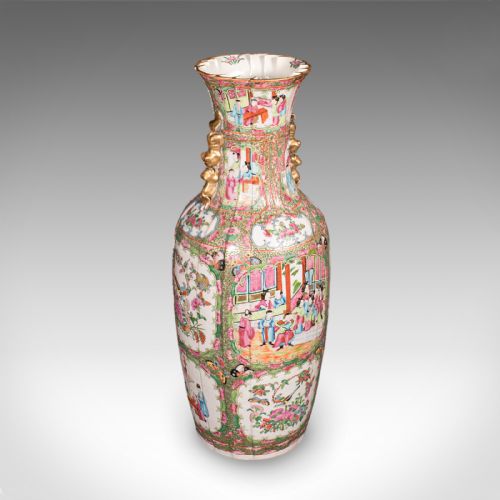


Famille Rose Vessel
These famille rose vessel pieces bring bright enamel painting on porcelain straight to your room.
Famille Rose Vessel
A famille rose vessel is a ceramic object decorated with an opaque pink enamel alongside other colours, covering periods from the eighteenth century to the twentieth century. The selection includes vases, snuff bottles, decorative bowls, teapots, and teacups originating from Qing Dynasty, Chinese Export, and Republic Period workshops.
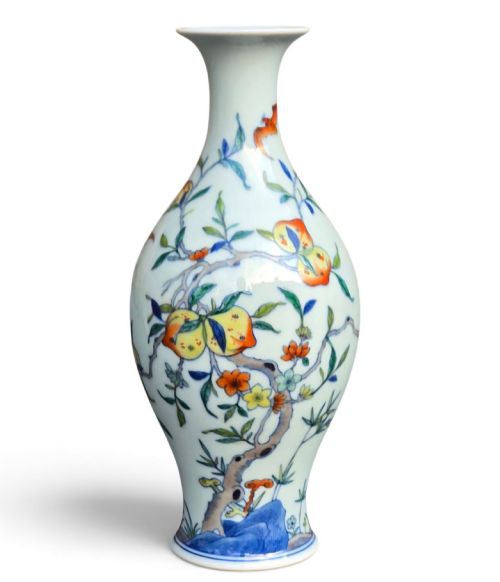
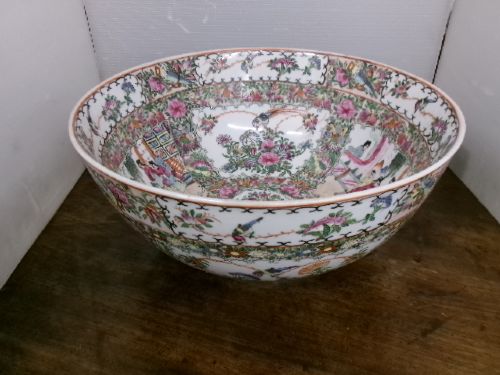
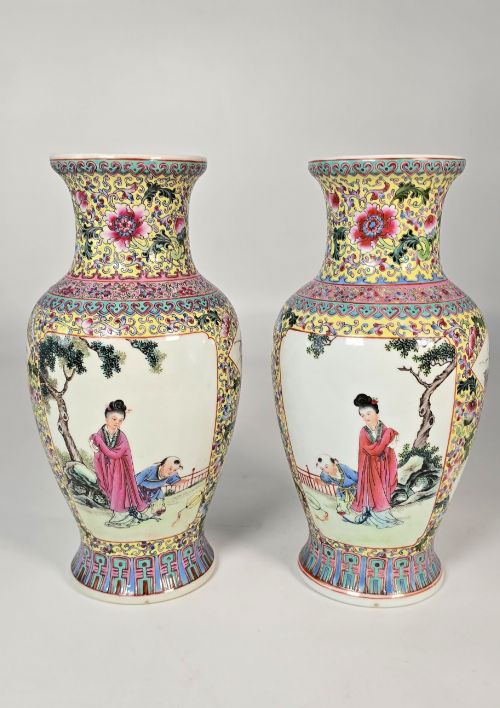
You will most frequently encounter nineteenth-century vases and Canton bowls on this page, alongside smaller snuff bottles. These pieces showcase diverse motifs ranging from peaches and bats to figural scenes and birds and flowers.
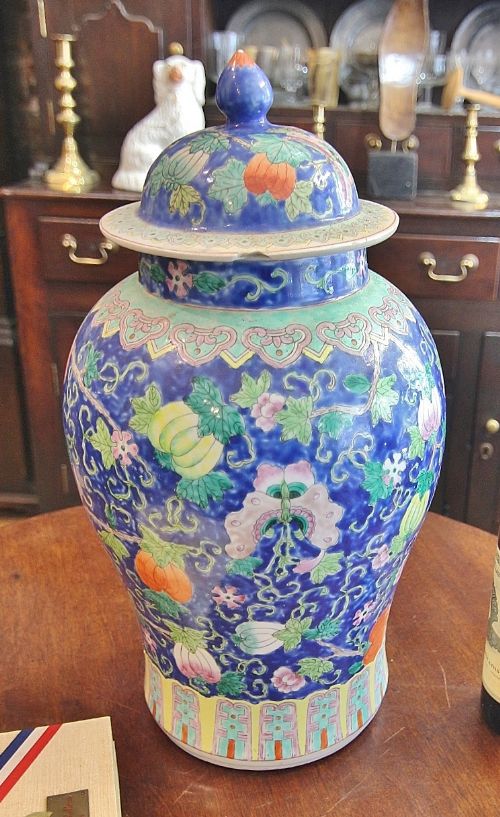
The forms span from garlic-head vases and jar shapes to square cong vessels and large centrepieces. Each item reflects the specific aesthetic of its era, whether Qianlong export ware or twentieth-century Chinese production.
How they were made
Makers shaped these items from porcelain, applying glazes before working with overglaze enamels to build up the colourful designs. Artisans introduced pink enamel derived from colloidal gold during the eighteenth century, allowing for subtle gradations of tone across the surface.
Many examples incorporate gold leaf, gilt, or vitreous enamel highlights to accent the painted scenes. Craftsmen sometimes added jade elements or marked bases with period reigns like Qianlong or Guangxu to denote their origin.
Listings feature items spanning from seventeen fifty to nineteen forty, utilising porcelain, enamel, and gold leaf.
What varies in quality
The precision and detail of the hand-painted enamels dictate the standing of a piece, separating standard production from finer examples. Finer specimens display meticulous brushwork in complex figural or floral subjects without blurring or pooling in the glaze.
The crispness of form and the integration of supplementary materials such as gilt or overglaze highlights also influence the grade. Stronger pieces maintain sharp definition across relief work and clean application of colour across the porcelain body.
Gao Hengsheng
The Famille Rose Vessel Glossary
- Famille Rose
- A ceramic palette defined by the use of an opaque pink enamel introduced during the Qing Dynasty. This group of porcelain includes vases, bowls, and teapots decorated in vibrant overglaze colours.
- Canton
- A style of Chinese export porcelain heavily decorated with colourful panels of figures, birds, and flowers. Items from this tradition often feature dense borders and bright enamel work.
- Qianlong
- A period spanning the eighteenth century associated with high-level imperial porcelain production. Pieces from this era often show refined potting and detailed enamel painting.
- Republic Period
- An era in twentieth-century China spanning from nineteen twelve onwards when porcelain workshops produced innovative pictorial designs. Signed pieces from this time demonstrate continued mastery of enamel techniques.
- Overglaze Enamel
- Coloured glass paste applied to already fired and glazed porcelain before undergoing a second, lower-temperature firing. This technique allows for rich, multi-coloured pictorial decoration.
Famille Rose Vessel: Frequently Asked Questions
How do I date a famille rose vessel?
Examine the style of the painting, the form of the vessel, and any reign marks present on the base. Eighteenth-century pieces often display finer Qianlong characteristics, while nineteenth and twentieth-century items show distinct Canton or Republic Period traits.
Compare the colour palette and enamel texture with known period examples to narrow down the decade of production. Supporting evidence such as specific export patterns helps confirm the manufacturing era.
Where were these vessels made?
These ceramic objects originated in Chinese kilns, with many pieces produced specifically for export markets in the West. Canton workshops and imperial kilns drove the creation of these painted wares.
Production centres utilised local porcelain stone and clay before shipping the finished decorated goods internationally.
What motifs appear on these pieces?
Common decorative themes include peaches and bats symbolising longevity and prosperity, alongside detailed bird and flower arrangements. Figural scenes depicting immortals and reclining beauties also frequent the surface designs.
Interiors and borders often carry geometric or floral brocade patterns that frame the primary pictorial subjects.
How should I display a porcelain vase?
Place your vessel on a stable surface away from heavy foot traffic or direct sunlight to protect the overglaze enamels. Ensure the support accommodates the base dimensions safely, especially for tall garlic-head or cong shapes.
Keep decorative bowls and jars in well-lit areas where the hand-painted details and gilt highlights can be appreciated clearly.