
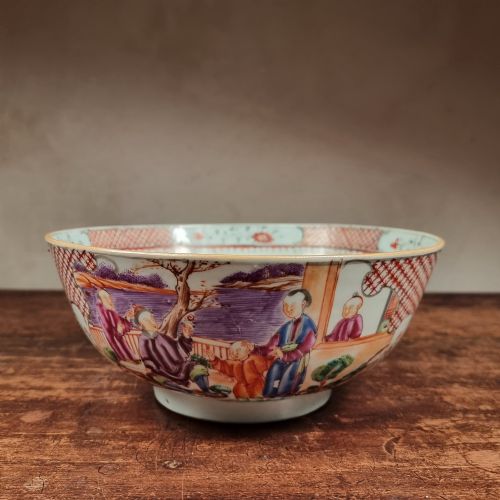
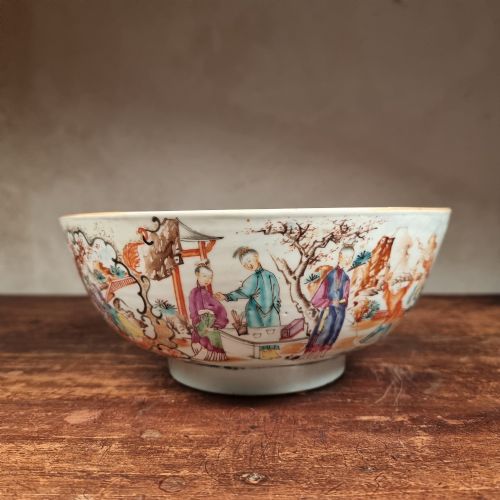
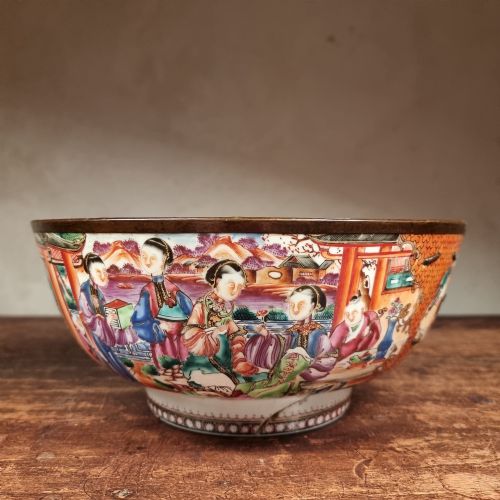
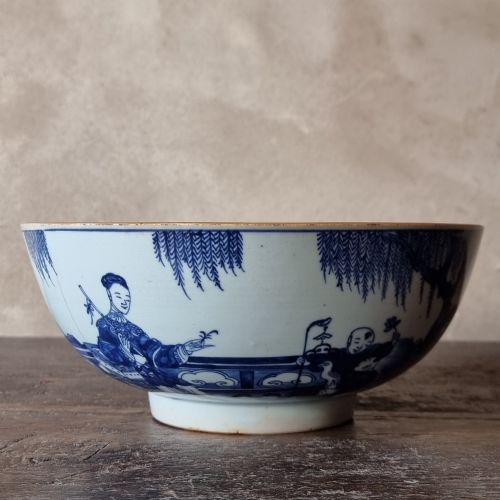

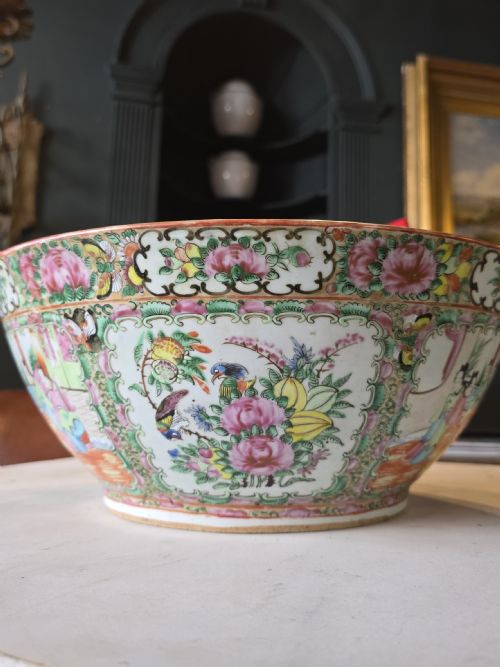


Chinese Ceramic Punch Bowl
A chinese ceramic punch bowl brings centuries of export artistry, robust porcelain forms and vibrant hand-painted enamels straight to the modern table.
Chinese Ceramic Punch Bowl
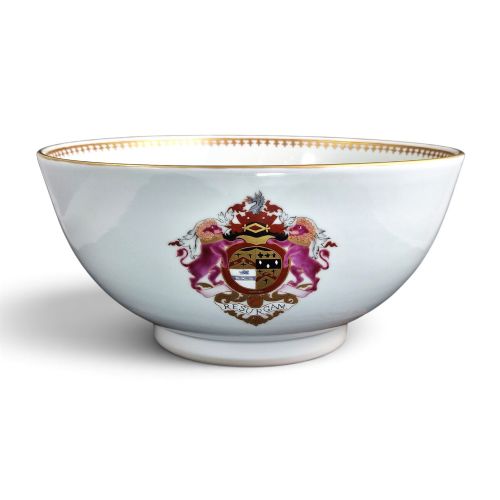
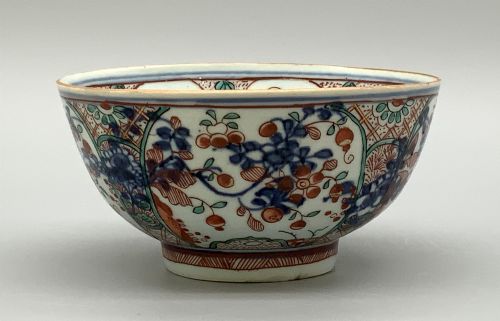
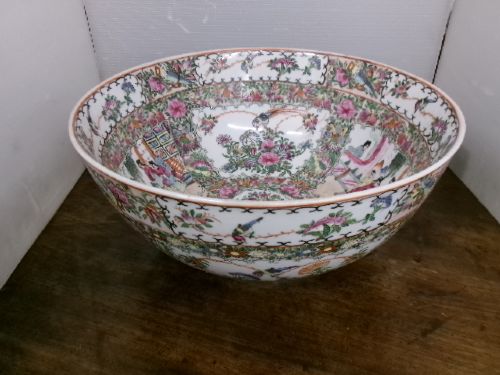
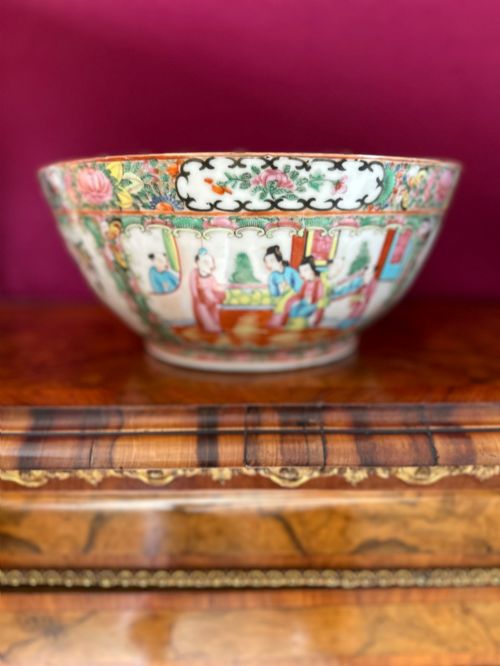
A chinese ceramic punch bowl represents substantial vessel forms produced primarily for export or domestic service across multiple imperial and later periods. Buyers seeking these large decorative pieces encounter substantial porcelain bodies painted with complex narrative scenes, floral arrangements or cobalt motifs. The examples seen on this page span several centuries, with nineteenth-century Cantonese production and eighteenth-century export wares appearing most frequently.
These vessels range from deep blue and white scholar basins to heavily coloured famille rose and rose medallion centrepieces. The selection includes both traditional Chinese export items and European revival or imitative interpretations created by studios such as Samson of Paris. Such bowls functioned originally for communal hospitality before transitioning into decorative centrepieces displayed upon stands or tables.
Dating these objects requires careful reading of the potting style, iron-red highlights, and cobalt depth across periods ranging from the Ming dynasty to the Edwardian era. Eighteenth-century pieces often display thinner potting and specific trade motifs, whereas nineteenth-century Cantonese alternatives favour denser panel painting and vivid gilding. Every piece offers a tangible link to historical ceramic trade routes.
Factors determining quality
Quality in a chinese ceramic punch bowl rests primarily on the crispness of the hand-painting, the complexity of the enamel palette, and the overall balance of the form. Superior examples display confident brush control across crowded figural or floral compositions without the muddy colour mixing seen in lesser production. The precision of gilding and the clarity of the underlying white porcelain further separate standard decorative vessels from exceptional collector pieces.
The weight, wall thickness and structural integrity of the ceramic body also dictate the grade of the piece. Master potters managed large bowl diameters while keeping distortion to a minimum during the intense kiln firing process. Surviving mountings, original stands and minimal restoration preserve the integrity and historical value of the vessel.
Listings feature porcelain punch bowls spanning the Ming dynasty, eighteenth-century export periods, and nineteenth-century Victorian Cantonese production.
The Chinese Ceramic Punch Bowl Glossary
- Famille rose
- A major palette of Chinese ceramic overglaze enamels introduced in the eighteenth century, distinguished by an opaque pink or rose colour derived from colloidal gold.
- Rose medallion
- A distinct style of Chinese export porcelain featuring panelled compartments filled with alternating birds, flowers and figures, bordered by dense green and gold floral motifs.
- Canton
- A major port city in southern China associated with the production and export of brightly enamelled porcelain wares destined for Western markets during the nineteenth century.
- Imari
- A style of Japanese and later Chinese export porcelain decorated in underglaze blue, iron red and gold, inspired by Japanese wares produced at Arita.
- Armorial
- Porcelain decorated with European coats of arms, crests or monologues, commissioned specially by elite families through the China trade.
- Ormolu
- Gilt bronze mounts applied to the rims or bases of porcelain vessels, commonly utilised by European makers to enhance decorative centrepieces.
Chinese Ceramic Punch Bowl: Frequently Asked Questions
Were these bowls used for actual punch?
Large ceramic vessels served historically as communal punch bowls at grand dining tables, holding mixed drinks ladled out for guests during social gatherings.
Over time, many transitioned into decorative centrepieces or fruit bowls rather than serving functional drinkware roles.
How can I tell eighteenth-century porcelain apart?
Eighteenth-century pieces typically feature lighter potting, subtle glaze variations and specific trade motifs such as early famille rose or Imari patterns.
Examining the foot rim and the natural ageing of the porcelain paste helps distinguish these earlier export items from later nineteenth-century revivals.
Can I display these heavy bowls on dining tables?
These robust porcelain bowls sit securely on flat surfaces, though their substantial weight requires a sturdy table or dedicated centrepiece stand.
Keep them away from high-traffic edges or direct sunlight to protect the hand-painted enamels and gold leaf details from accidental damage.