
Chinese Carved Hardwood Stand
When you search for a chinese carved hardwood stand, you are looking at dense, highly figured timbers shaped to elevate vessels, porcelain, and plants.
Chinese Carved Hardwood Stand
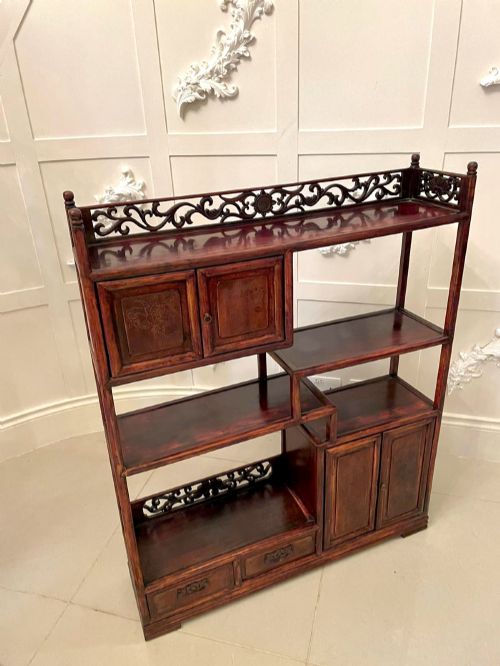
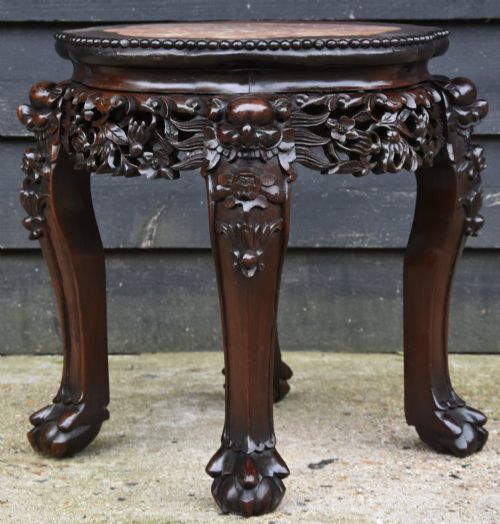
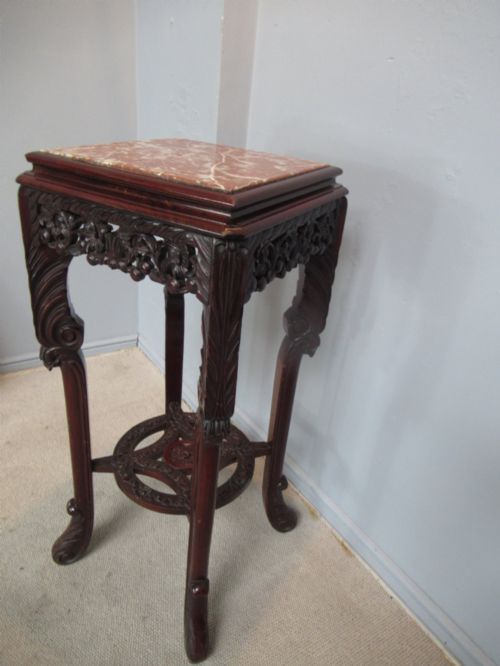
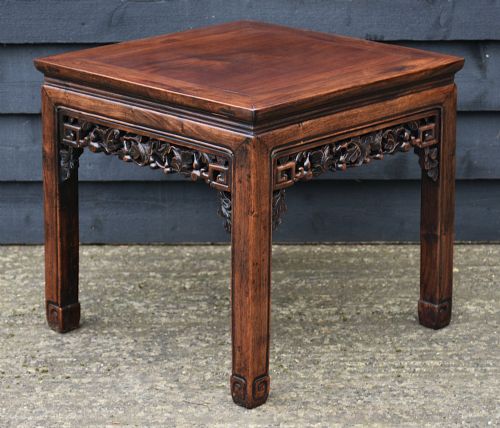
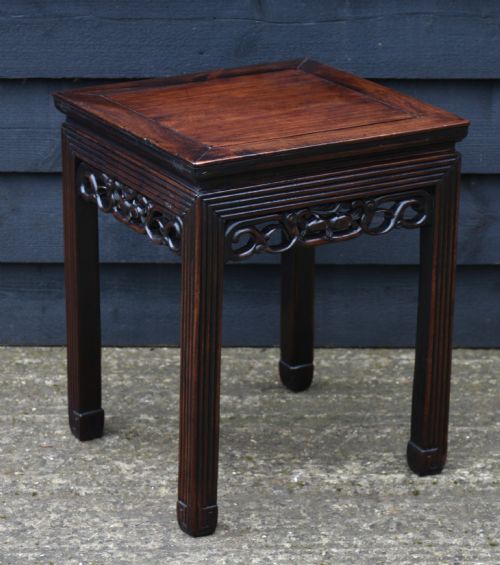
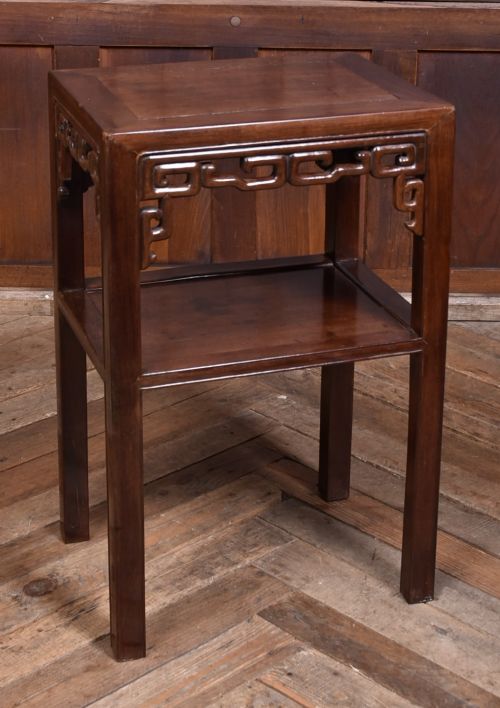
A chinese carved hardwood stand encompasses various low tables, plant holders, jardiniere supports, and display bases designed to elevate objects within traditional interiors.
The pieces appearing on this page span the eighteenth, nineteenth, and early twentieth centuries, including Victorian and Edwardian periods alongside Qing Dynasty examples.
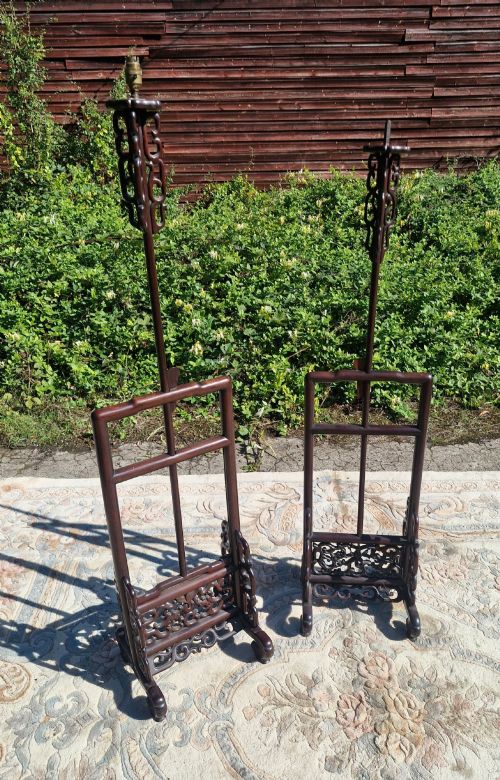
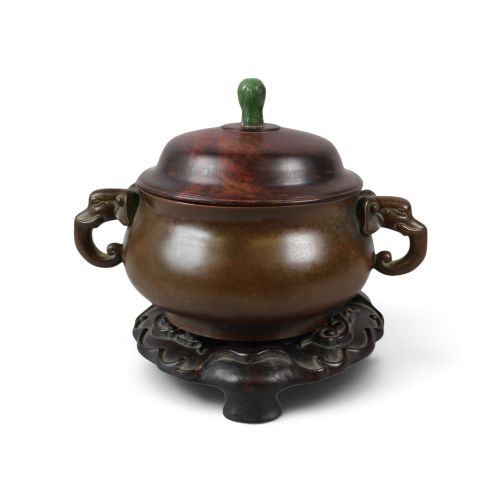
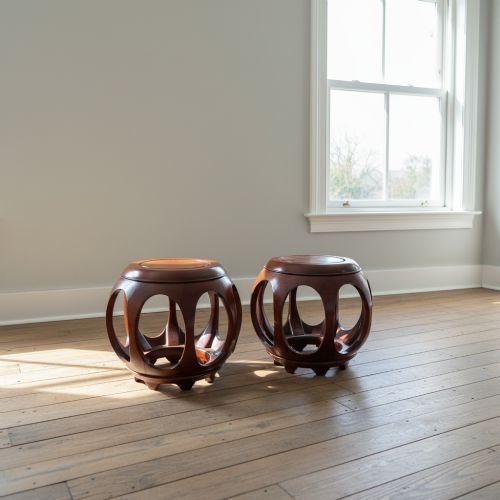
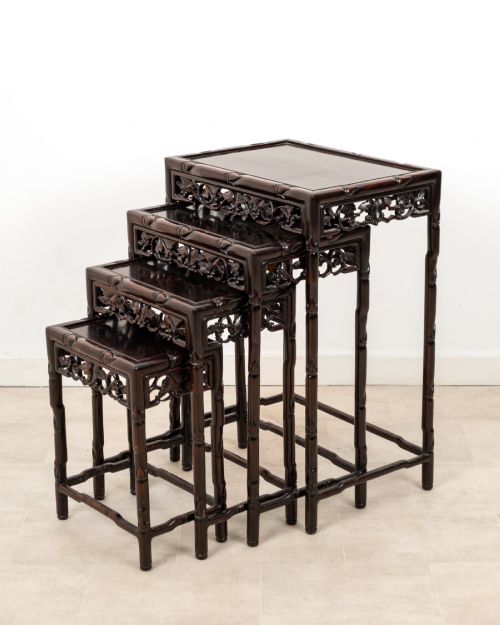
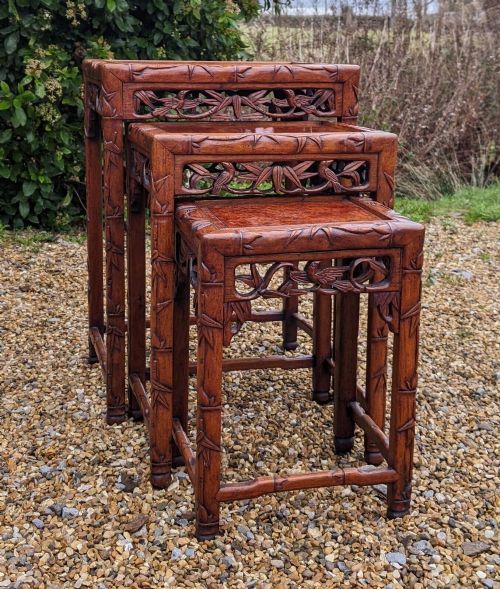
Forms range from small circular vase bases and square low tables to tiered display stands and structural supports for lamps and bronze censers.
Materials and Technique
Craftsmen utilised dense timbers such as rosewood, padouk, and huanghuali, chosen for their capacity to hold intricate, deep relief carving without splintering.
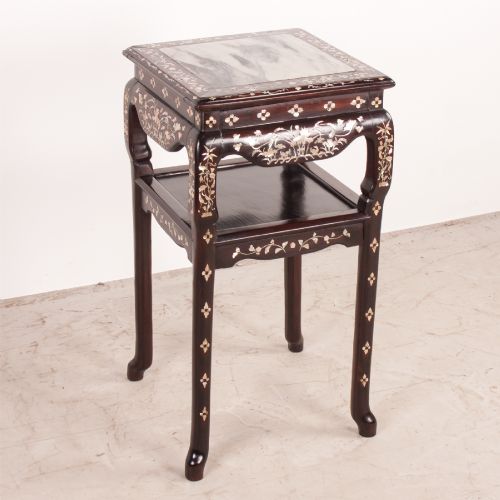
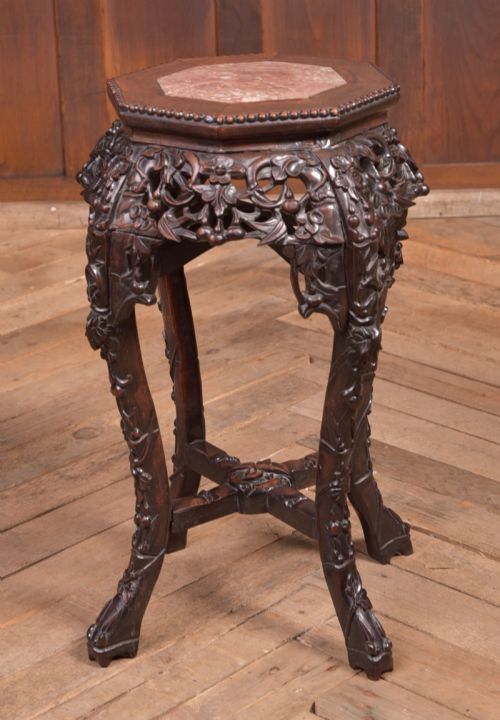
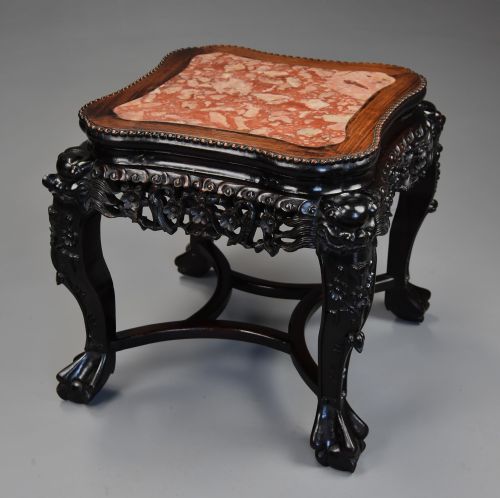
Many examples incorporate inset panels of variegated rouge marble or ceramic tiles, held flush within the wooden frame to support heavy ceramic vessels.
Joinery methods rely on traditional pegged and mortise-and-tenon construction, allowing the dense wood to accommodate natural expansion and contraction.
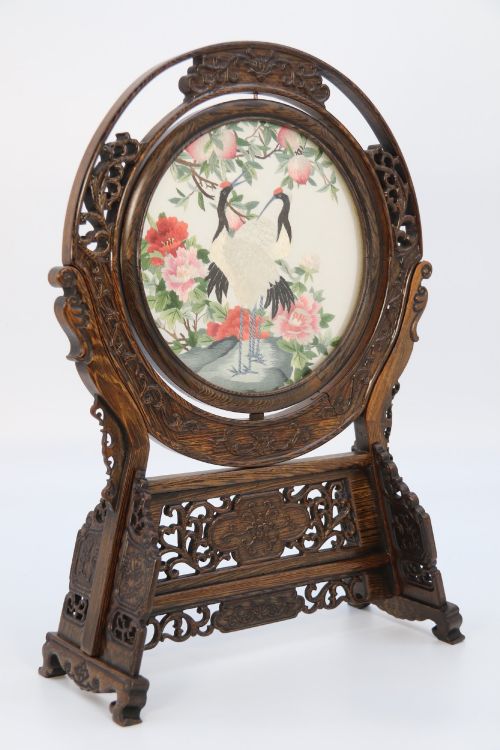
Several stands double as multi-tiered platforms for brass gongs and rotating silk screens, proving that Victorian practicality had a theatrical streak.
The Measure of Craft
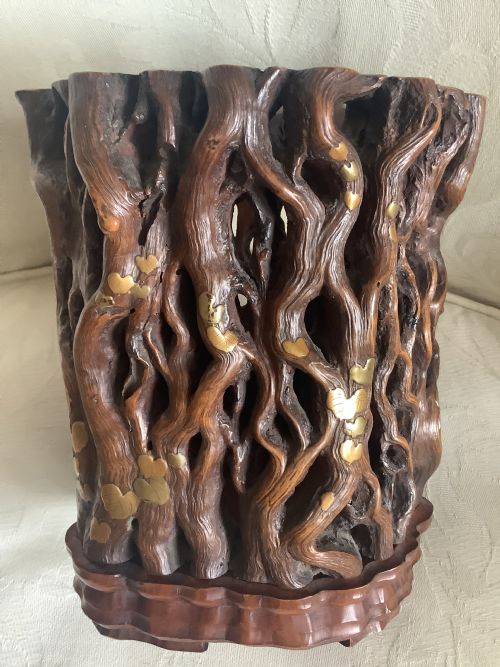
Quality rests primarily in the crispness and depth of the hand carving, where superior examples exhibit undercut foliage and dragons with distinct anatomical clarity.
The selection and figuring of the timber dictate the visual weight of a piece, with dense, highly polished grains commanding greater attention.
Structural integrity and the precision of the joints distinguish master-carved supports from utilitarian workshop items produced for export.
The Chinese Carved Hardwood Stand Glossary
- Jardiniere stand
- A tall or low support specifically built to hold heavy ceramic plant pots or flower bowls. These items often feature inset marble tops to resist moisture.
- Hongmu
- A traditional Chinese term denoting dense, dark hardwoods used in fine furniture making. It translates literally as red wood.
- Padouk
- A heavy, durable tropical timber with a distinct reddish hue frequently utilised for carved stands. The material polishes to a deep, lustrous finish.
- Archaistic
- A stylistic choice emulating ancient bronze or jade forms from earlier Chinese dynasties. Makers applied these ancient motifs to nineteenth-century display pieces.
Chinese Carved Hardwood Stand: Frequently Asked Questions
What were chinese carved hardwood stands used for?
These pieces served primarily as elevated platforms for valued household items, including bronze censers, ceramic vases, and heavy porcelain fish-bowls.
By lifting vessels off the floor or table surface, they protected delicate lacquer and polished wood from moisture and accidental knocks while enhancing the display.
How do I date a hardwood stand?
Dating relies on observing the depth of the carving, the choice of timber, and the construction methods used in the frame.
Nineteenth-century Qing Dynasty examples typically display heavier relief work and dense rosewood or padouk, whereas later twentieth-century pieces often exhibit lighter structures.
Are marble inserts original to the stands?
Most rouge and variegated marble panels set into the tops of these stands are entirely original to the construction.
They provided a cool, impermeable surface that safely accommodated damp plant pots and heavy porcelain without staining or warping the surrounding wood.
How should I care for antique hardwood?
Maintenance requires keeping the timber away from direct heat sources and rapid humidity shifts to prevent the dense wood from splitting.
An occasional application of microcrystalline wax helps nourish the polished surface without building up excessive residue over time.