



Cheval Toilet Glass
A cheval toilet glass is a freestanding mirror designed for the dressing table, offering a clear view from top to toe.
Cheval Toilet Glass
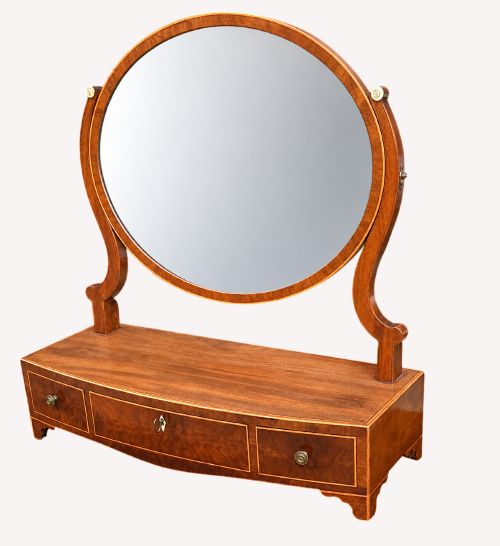
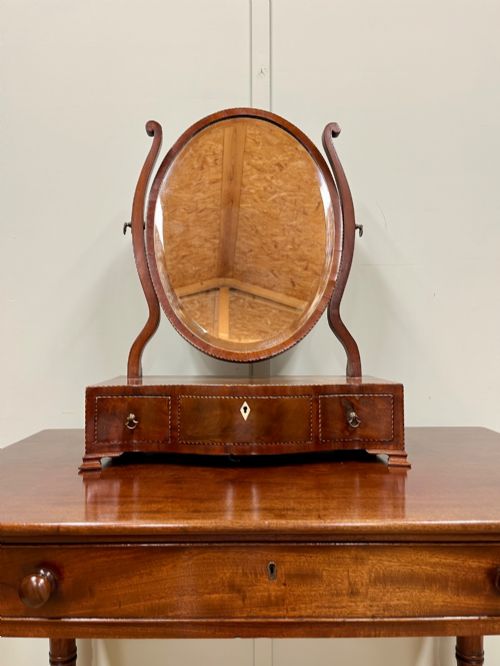
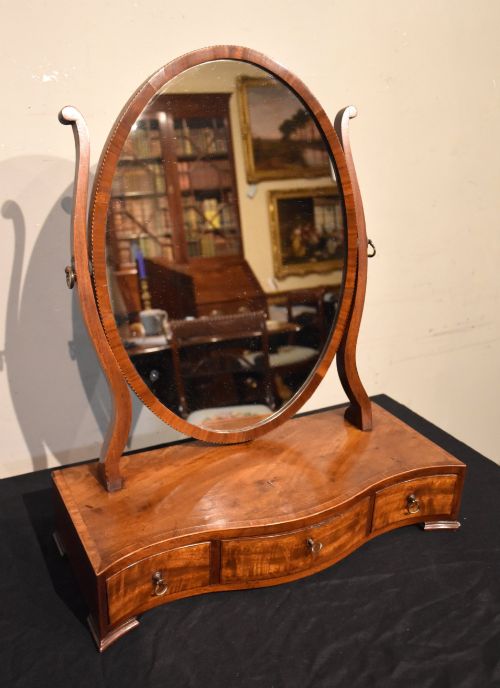
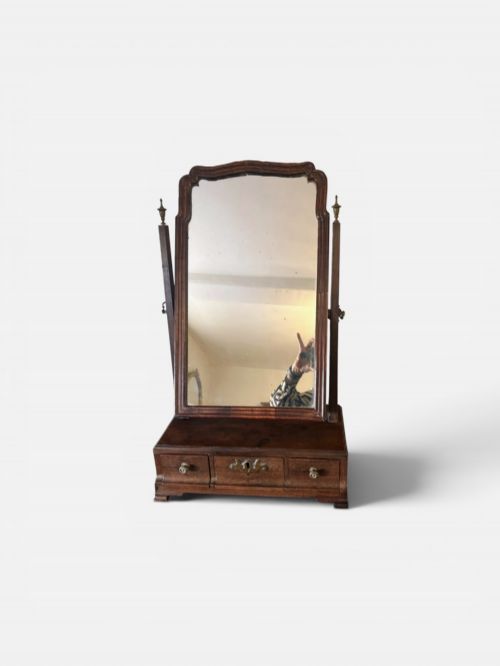
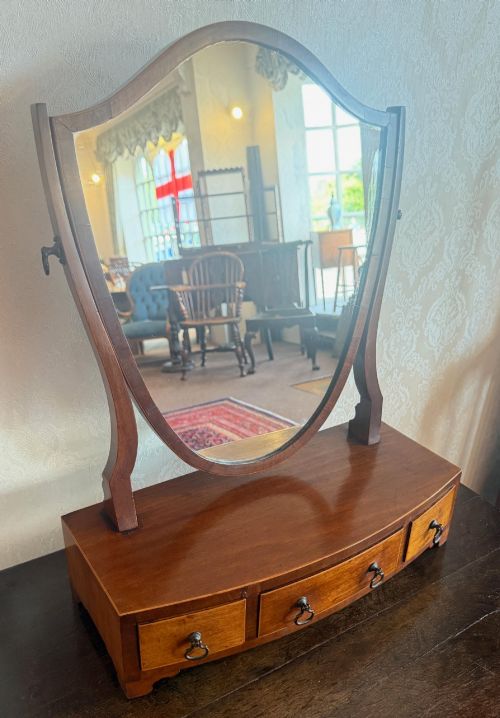
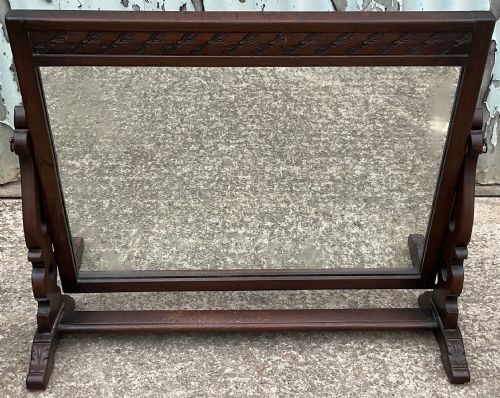
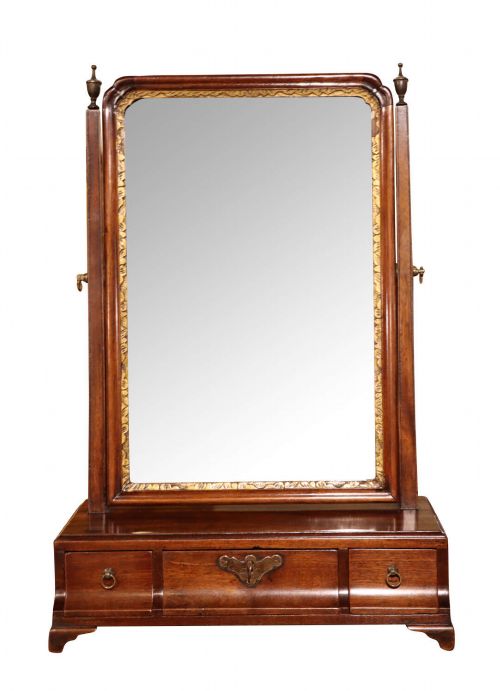
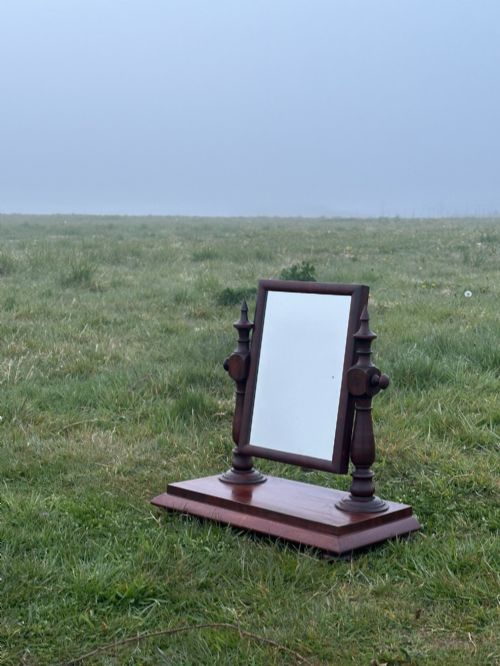
A cheval toilet glass sits upon a table or chest, allowing the user to adjust the angle of the glass for grooming and dressing. The selection on this page centres on mahogany pieces from the Georgian, Regency, and Victorian periods, alongside examples in oak, walnut, and hardwood.
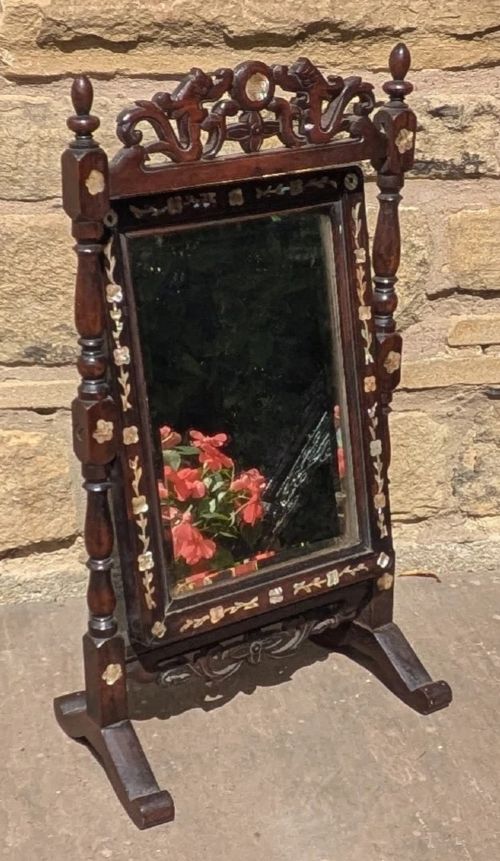
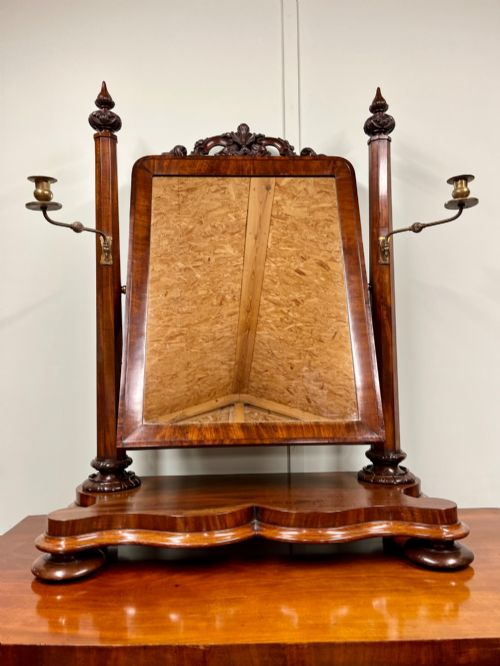
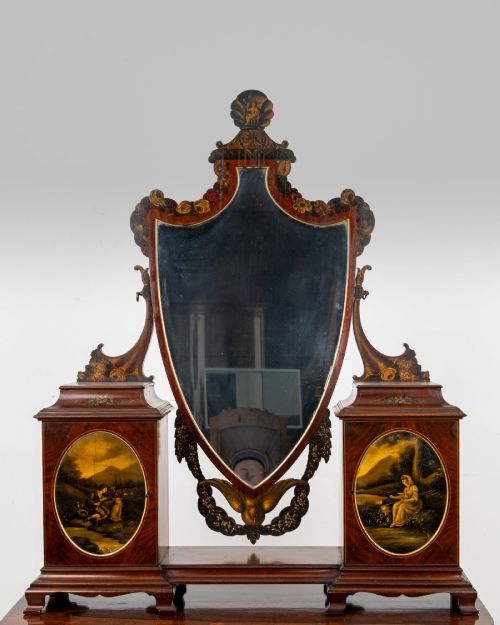
Makers produced these mirrors in various shapes, including rectangular, oval, and serpentine fronts, often incorporating small drawers at the base for trinkets. Table top cheval mirrors and travelling swing versions appear alongside larger freestanding items featuring brass hardware and candle holders.
Materials and Construction
Cabinet makers utilised solid timber and veneers, predominantly mahogany, supported by secondary woods like oak and pine for internal drawer construction. Frames frequently incorporate boxwood inlay, marquetry, bone, or mother-of-pearl detailing to enhance the visual depth of the woodwork.
The glass plate rests within a swing frame held by upright pillars and pivot screws, allowing the mirror to tilt smoothly. Brass fittings such as candle arms, knobs, and bracket feet provide structural support and functional movement.
Some travelling examples packed away neatly into fitted boxes for gentlemen on the move.
Distinctions in Craftsmanship
The standard of timber selection marks the difference between basic utility items and finer workshop productions, with figured mahogany and intricate marquetry indicating higher ambition. Finely cut dovetails on the base drawers and well-cast brass hardware demonstrate careful attention to detail by the maker.
Proportion and stability dictate the success of the design, ensuring the swing frame remains balanced upon its supports without sagging. The preservation of the original mirror glass and secondary woods adds significantly to the integrity of the piece.
Gillows·Jean Gille
The Cheval Toilet Glass Glossary
- Cheval glass
- A freestanding mirror that swings within a floor or table frame. This allows the user to alter the reflection angle completely.
- Serpentine
- A curved edge shaped like a horizontal 'S', swelling outward in the centre and curving inward at the sides. Cabinet makers used this profile on the drawer fronts of dressing mirrors.
- Swing mirror
- A glass plate hung on side pivots between two upright supports. The mechanism enables the user to tilt the mirror surface as required.
- Marquetry
- Decorative patterns formed by inserting thin pieces of wood, bone, or shell into a veneer ground. Artisans applied this technique to cabinet and mirror frames.
Cheval Toilet Glass: Frequently Asked Questions
How do I use a cheval toilet glass?
Place the mirror upon a stable dressing table or chest of drawers of suitable proportions. Adjust the side pivot screws to tilt the glass to the desired angle for grooming.
Ensure the base rests evenly on the surface so the swing frame operates without straining the upright pillars.
Where were these mirrors placed?
These mirrors sat primarily on dressing tables, chests of drawers, or washstands within bedrooms and dressing rooms. Smaller travelling versions accompanied owners on journeys.
They provided a mobile reflective surface close to natural light sources near windows.
How do I distinguish Georgian from Victorian examples?
Georgian pieces often display restrained classical lines, finely figured mahogany veneers, and delicate boxwood stringing. Proportions remain light and balanced with subtle ogee bracket feet.
Victorian examples frequently present heavier proportions, deeper mouldings, and larger drawer capacities within the base structure.
What maintenance do these mirrors require?
Clean the timber surfaces using a soft cloth and traditional beeswax to nourish the polish. Avoid excessive moisture on both the wood and the mirror plate.
Check the pivot screws periodically to ensure they remain gently tightened for smooth movement without stressing the frame.