


Edwardian Vanity Swing Mirror
An edwardian vanity swing mirror sits on a dressing table or chest, pivoting to catch the light while housing small drawers for everyday items.
Edwardian Vanity Swing Mirror
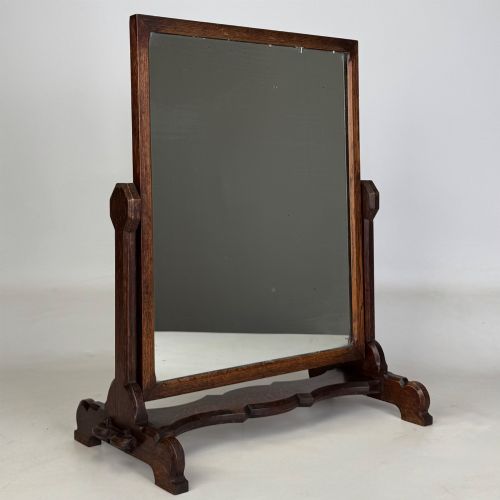
When you search for an edwardian vanity swing mirror, you encounter pieces designed for dressing and grooming, predominantly taking the form of tabletop toilet mirrors and cheval mirrors. These objects span periods from the Georgian era through the Victorian period and into the Edwardian years, with walnut, mahogany, and oak appearing frequently.
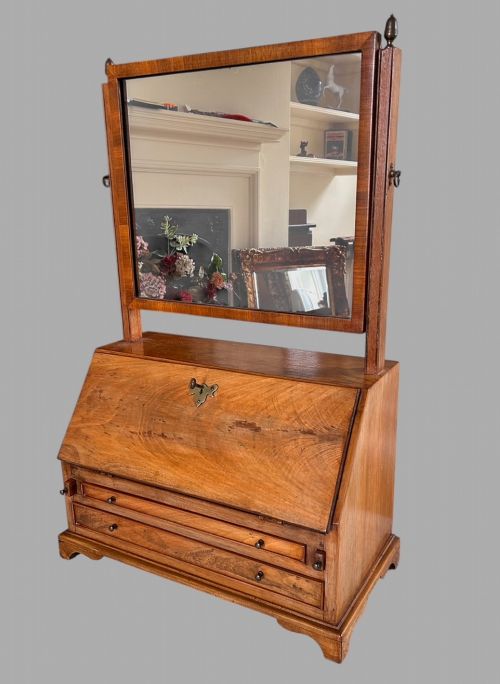
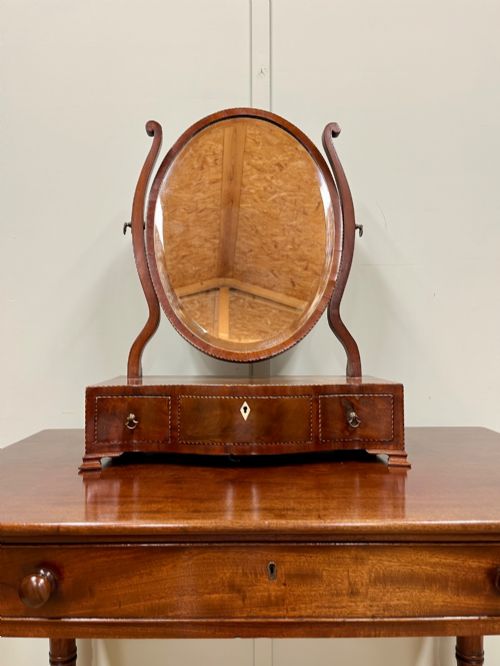
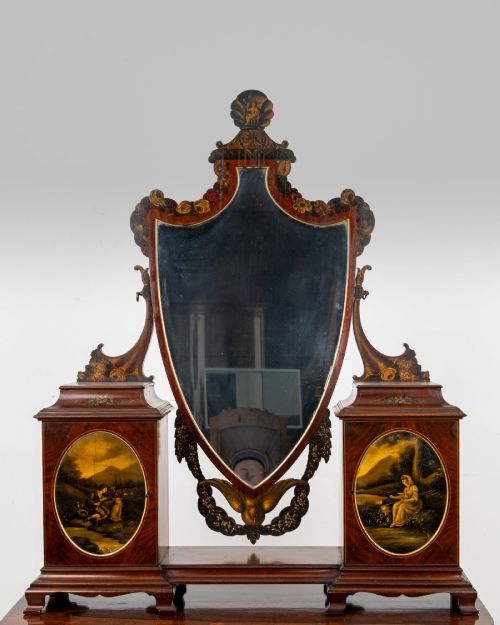
The most common formats on this page include mahogany and satinwood dressing table mirrors featuring oval or shield-shaped glasses suspended between upright supports. Many incorporate small compartment bases or jewellery drawers fitted beneath the pivoting glass.
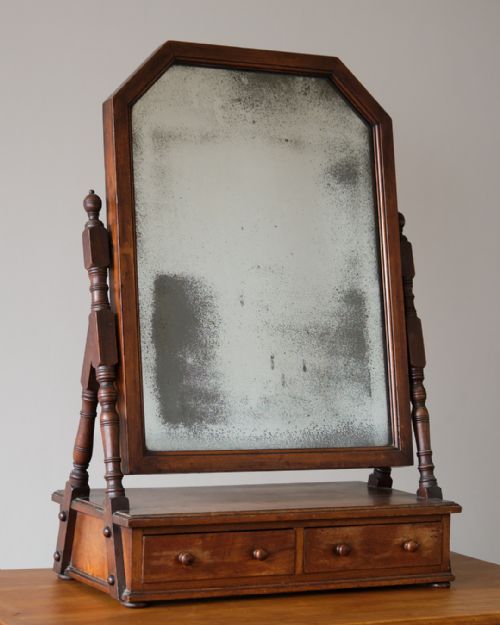
While Edwardian examples dominate, the selection extends to earlier nineteenth-century designs influenced by Regency and Queen Anne styles, alongside Arts and Crafts interpretations in oak. Buyers also encounter larger dressing tables and bureau combinations that integrate the swinging mirror into a larger piece of furniture.
Materials and construction
Cabinetmakers constructed these mirrors using solid timbers and veneers of mahogany, walnut, oak, and satinwood, often embellishing the frames with decorative stringing and inlay. Brass and copper fittings secure the pivoting glass plates to their upright standards.
The glass itself is held within adjustable frames that tilt on screw pins or pivot brackets, allowing the user to alter the angle of reflection. Bases frequently incorporate dovetailed drawers supported on bracket feet, bun feet, or plain plinths.
Listings feature mahogany, oak, walnut, and satinwood across Victorian, Edwardian, and Regency periods.
Distinctions in craftsmanship
Quality reveals itself in the selection of timber figures, such as flame mahogany or figured satinwood, matched with careful hand-cut dovetails on the drawer construction. Finer pieces display refined carving on the scroll supports and well-turned wooden knobs.
The integrity of the mirror glass and the stability of the pivoting mechanism determine the structural success of the piece. Superior examples maintain balanced proportions between the weight of the glass frame and the rigidity of the supporting standards.
Heal & Sons·P & MA Nicholson·Wright & Hunter of Belfast
The Edwardian Vanity Swing Mirror Glossary
- Cheval mirror
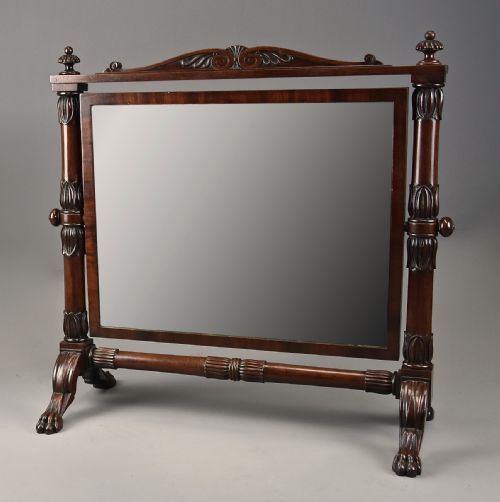
- A full-length or large tabletop mirror suspended in a standing frame that allows it to swing freely through a full circle. These taller versions stand independently on the floor or a large surface.
- Toilet mirror
- A smaller tabletop dressing mirror designed to sit on a chest of drawers or dressing table. They typically include a small box base fitted with one or more drawers.
- Shield mirror
- A dressing mirror featuring a glass plate cut into the outline of a heraldic shield. This shape was popular during the Georgian period and revived in later eras.
- Swing mirror
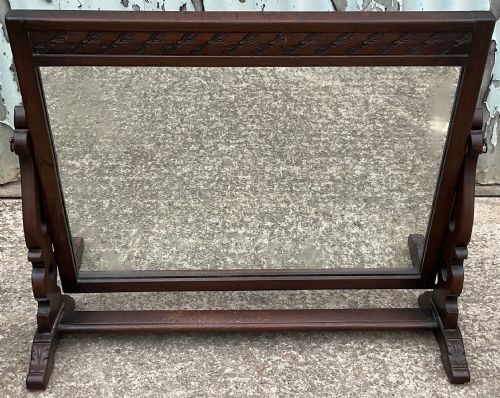
- Any mirror mounted on vertical pivots or screw pins within a frame, allowing the glass angle to be adjusted. The frame is supported by upright arms attached to a base or stand.
- Stringing
- A narrow line of contrasting wood inlay used to outline the edges of panels, drawer fronts, and mirror frames. It provides subtle linear decoration on mahogany and satinwood furniture.
Edwardian Vanity Swing Mirror: Frequently Asked Questions
How do I date a swing mirror?
Dating relies on identifying timber choices, construction methods like dovetailing, and the prevailing style of the frame supports. Earlier Georgian and Regency pieces tend to feature heavier mahogany proportions, while Edwardian and Arts and Crafts examples introduce satin walnut, oak, and specific inlay patterns.
Bevelled edges on mirror glass and secondary woods used inside drawer boxes also offer clues to the decade of manufacture. Comparing the hardware, such as brass screws and pivot pins, helps confirm whether the components remain original to the period.
Where should I place a vanity mirror?
These mirrors suit placement on top of dressing chests, tallboy cabinets, or dedicated kneehole dressing tables. Their pivoting design makes them functional for grooming when positioned near a natural light source.
Ensure the surface supporting the mirror is level and deep enough to bear the weight of the base and the pivoting frame. Placing them away from direct, damp heat sources protects both the wood and the silvering on the glass.
What is the difference between a toilet mirror and a cheval mirror?
A toilet mirror is designed to sit on top of another piece of furniture, such as a chest of drawers or a dressing table. They are compact enough to be lifted and include integrated small drawers at the base.
A cheval mirror is significantly larger and typically stands directly on the floor or on a substantial tabletop base. The frame allows the entire body of the mirror to swing, originally serving the purpose of viewing a full outfit.
Are the mirror plates original?
Original mirror plates often show faint foxing, minor speckling, or slight distortion in the reflection due to historical manufacturing methods. Clear, perfectly uniform glass without blemishes frequently indicates a later replacement.
Examining the backboards and the way the glass is secured into the rebated wooden frame reveals if the plate has been disturbed. Many antique mirrors retain their original mercury or silvered glass, which rewards gentle cleaning.