
Bedroom Vanity Table Mirror
These bedroom vanity table mirror pieces offer practical grooming utility and period charm, spanning Victorian, Edwardian, and Art Deco designs.
Bedroom Vanity Table Mirror
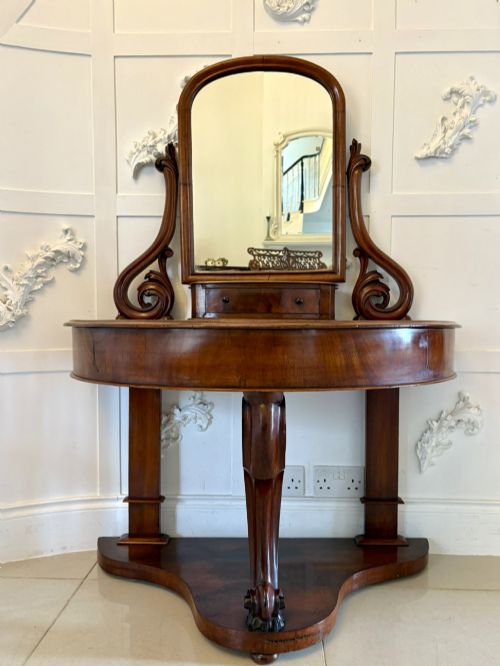
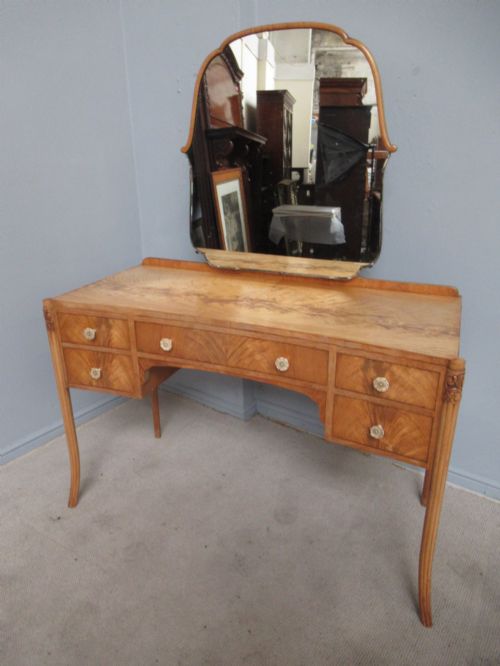
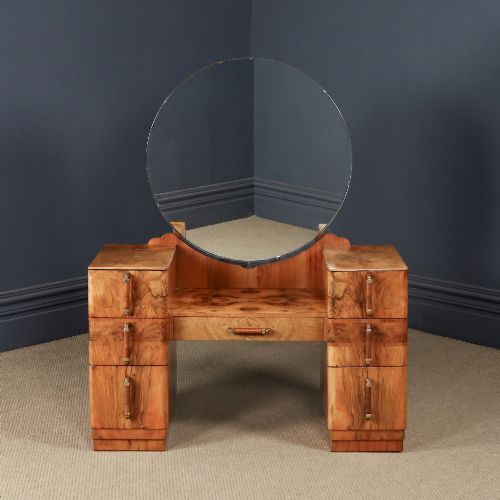
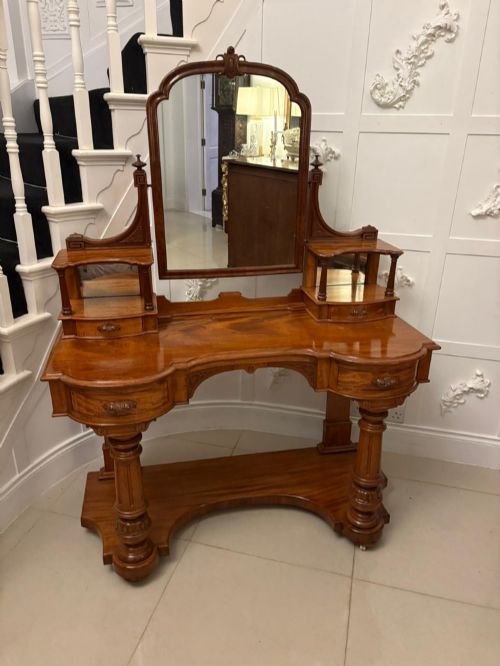
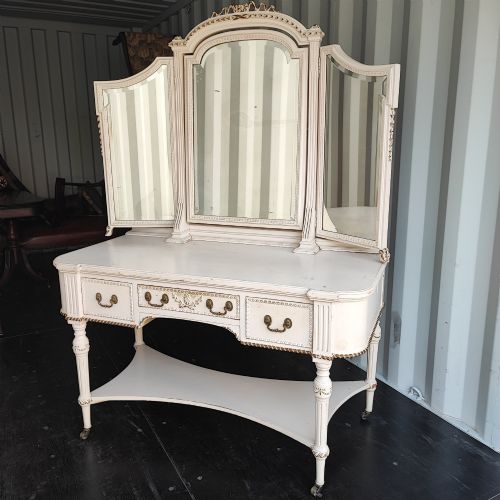
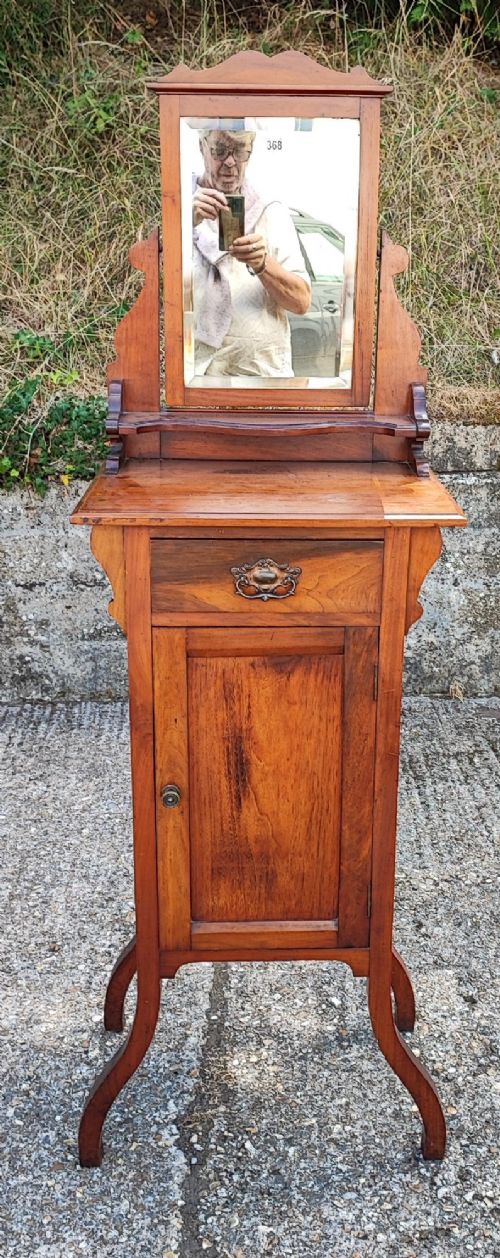
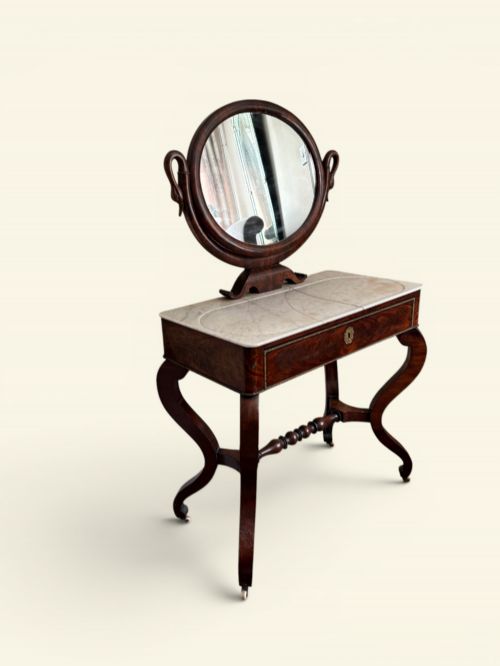
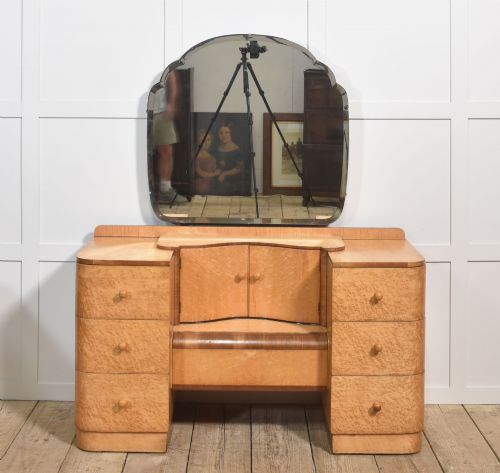
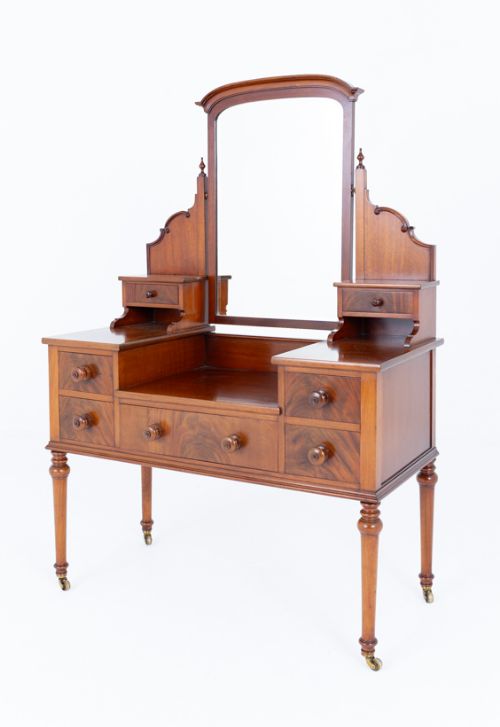
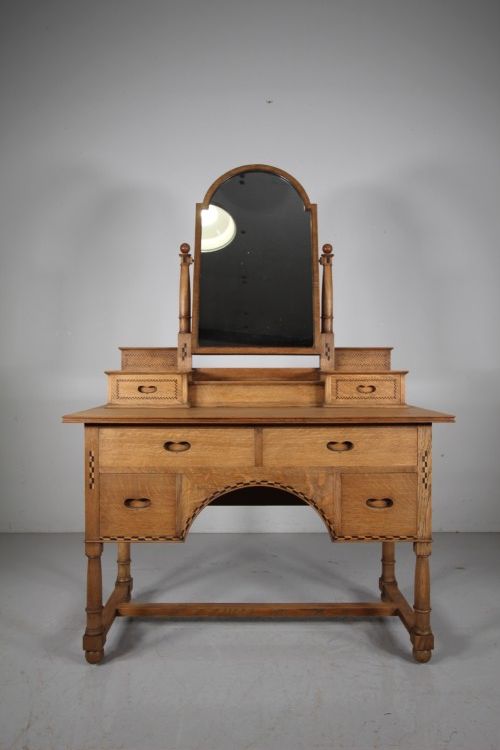
A bedroom vanity table mirror serves as a functional dressing piece or a decorative focal point for domestic chambers. When searching for a bedroom vanity table mirror, buyers encounter a variety of forms ranging from compact toilet mirrors to elaborate dressing chests and full dressing tables.
The selections on this page draw from periods including the Georgian era, Victorian times, the Edwardian period, and the 1930s. Pieces appear in woods like mahogany, walnut, burr walnut, and oak, often paired with glass mirror plates.
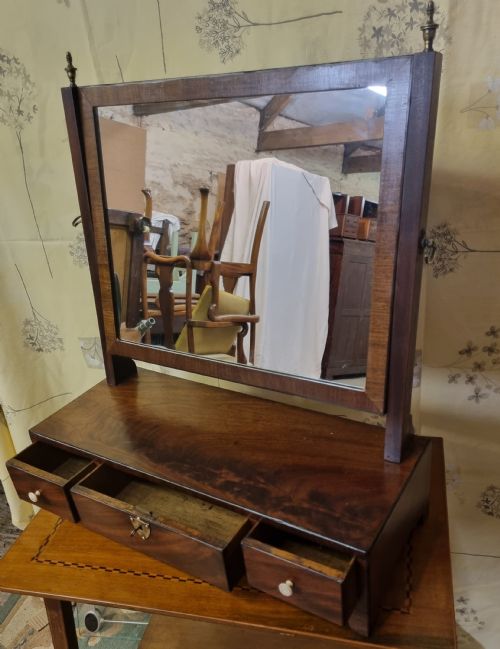
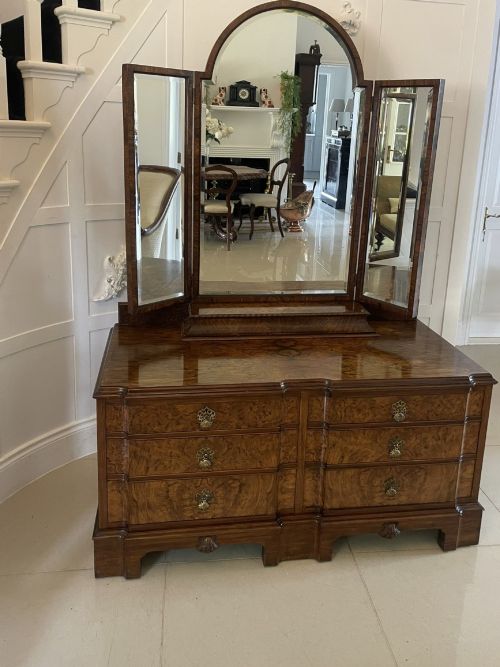
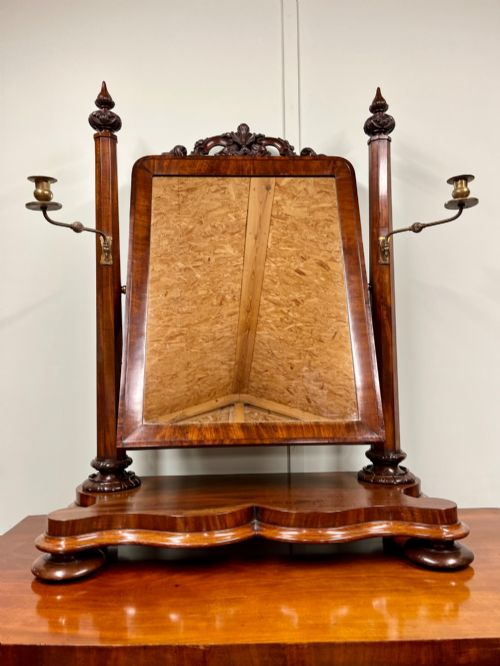
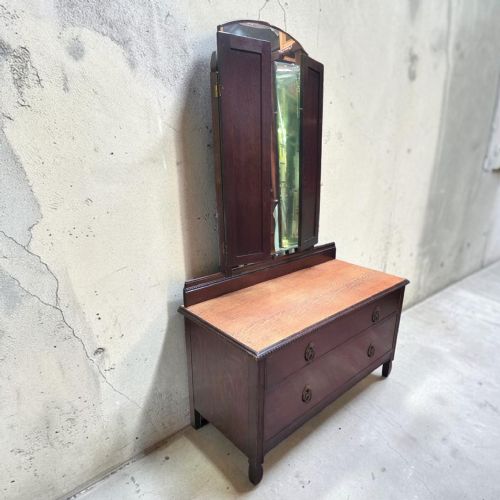
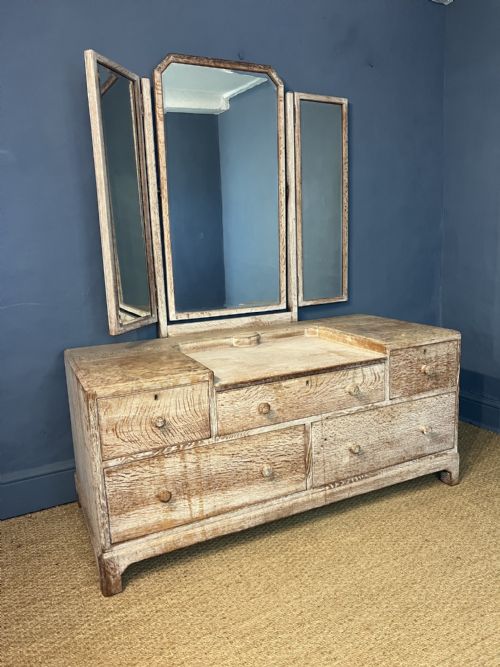
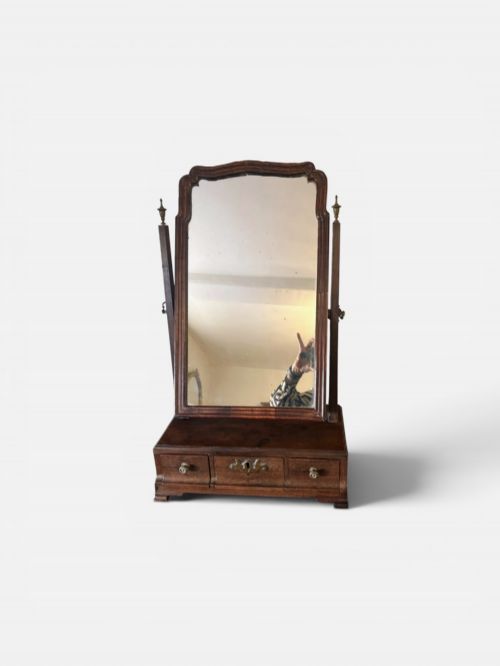
Common forms include freestanding toilet mirrors designed for table tops, pedestal dressing tables with integrated mirrors, and triple mirror dressing chests. Many incorporate drawer spaces for storage alongside the pivoting or fixed glass.
Materials and construction methods
Cabinetmakers utilised solid timbers and decorative veneers such as burr walnut, maple, and mahogany over supportive framing. Wood surfaces were finished with polishes, waxes, or original paint depending on the workshop and period style.
Mirror glass was set into carved or moulded wooden frames, often supported by adjustable pivots or standing on small base drawers. Brass hardware, handles, and swing brackets added both structural stability and decorative contrast to the wood.
Materials utilised across these items include brass, marble, oak, burr walnut, and painted pine.
Factors determining quality
The refinement of the timber selection dictates much of the visual appeal, with figured veneers and rich grain patterns marking out superior examples. Hand-carved details, well-proportioned drawer construction, and original hardware indicate higher levels of craftsmanship.
The condition and clarity of the mirror glass, alongside the integrity of the wooden frames and pivoting mechanisms, distinguish finer pieces from standard utilitarian furniture.
Heals·Lamb of Manchester·Shapland and Petter·Maples of London and Paris
The Bedroom Vanity Table Mirror Glossary
- Toilet mirror
- A smaller mirror designed to sit upon a chest of drawers or table top rather than standing on the floor. These often feature small trinket drawers in the base.
- Triplate mirror
- A three-panel mirror assembly where the two outer wings can be angled to reflect different sides of the user. This configuration appears frequently on Edwardian and Art Deco dressing chests.
- Burr walnut
- A highly decorative wood veneer taken from the growth growths of the walnut tree. It yields intricate, swirling grain patterns prized by cabinetmakers.
- Duchess dressing table
- A grand nineteenth-century dressing table style featuring a large central mirror supported by small drawers or compartments above a main table surface.
- Limed oak
- A finish where oak timber is treated to create a pale, whitish appearance. This technique became popular during the Arts and Crafts movement and the 1930s.
Bedroom Vanity Table Mirror: Frequently Asked Questions
How do I date a bedroom vanity table mirror?
Dating relies on observing the prevailing style, timber choices, and construction methods characteristic of periods like Georgian, Victorian, or Art Deco. Examining the backing boards, drawer dovetails, and mirror glass bevelling provides further clues to the manufacturing era.
Makers' stamps, paper labels, or distinctive retailer signatures can also narrow down the origin and decade of production for pieces originating from prominent workshops.
Are dressing table mirrors detachable?
Many table mirrors and larger dressing table superstructures are designed to be removable for easier transport and placement. They typically attach via wooden support arms, metal brackets, or drop-in slots on the main table top.
Larger pedestal designs and fitted bedroom suites often integrate the mirror frame permanently into the backboard or pedestal towers of the dressing chest.
What is the difference between a toilet mirror and a dressing table?
A toilet mirror is a compact, portable glass unit meant to rest on top of an existing chest of drawers or washstand. A dressing table is a complete piece of freestanding furniture that incorporates a working surface, drawers, and an attached or integrated mirror.
Both forms served the same daily grooming functions in the bedroom, with the choice depending largely on available chamber space and the evolution of domestic furniture styles.
How should I care for antique wood and mirror glass?
Maintain antique wood finishes by applying appropriate natural waxes sparingly and keeping the pieces away from direct heat sources and strong sunlight. Regular dusting with a soft, dry cloth preserves the patina without stripping historical oils.
Clean mirror glass carefully using a neutral cleaner applied to a cloth rather than directly to the glass, ensuring moisture does not seep behind the old silvering or wooden frame.