



Freestanding Dressing Table Glass
These pieces of freestanding dressing table glass are the adjustable mirrors designed for grooming and vanity, offering clear reflection and period character.
Freestanding Dressing Table Glass
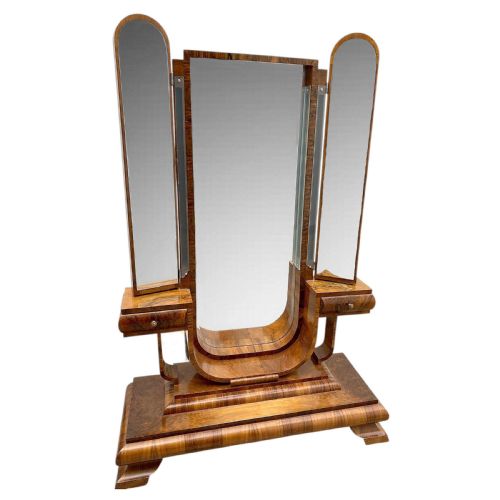
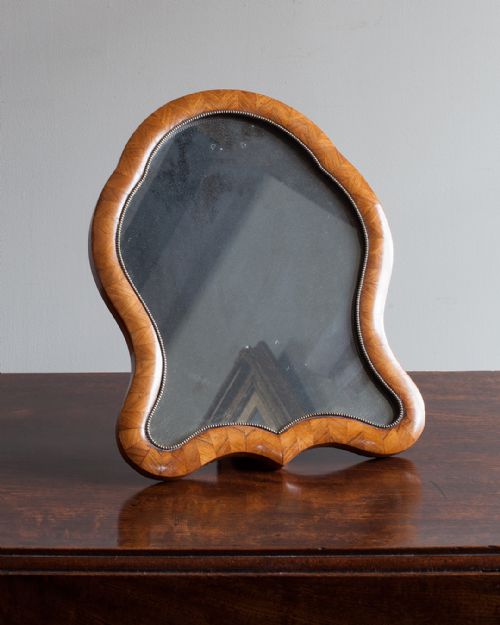
Freestanding dressing table glass comprises portable mirrors designed to sit atop furniture for daily grooming. These pieces range from compact table mirrors to larger swing mirrors and vanity glasses.
The selections span multiple eras, including Victorian, Edwardian, and Art Deco periods. Buyers frequently encounter wooden frames housing pivoting glass panels supported by upright arms and bases.
Examples appear in forms such as toilet mirrors, shaving mirrors, and triptych arrangements. Each version provides the adjustable angle needed for personal reflection.
How they were made
Cabinetmakers constructed the frames using hardwoods like mahogany, walnut, oak, kingwood, and satinwood, often pairing them with brass adjusting screws and hinges. The timber provides a stable housing for the reflective glass plate.
Some sophisticated examples incorporate silver plate or delicate easel backs to support the glass. Joinery methods relied on traditional cabinet techniques to ensure the mirror frame could tilt securely between its upright supports.
Freestanding Dressing Table Glass Retail Price Guide 2026
Typical asking prices for freestanding dressing table glass among the pieces listed under this phrase on Sellingantiques today, from the lower quarter to the upper quarter. They describe what is for sale here now, not the wider market.
A tilting shaving mirror lets you check your chin from three angles before breakfast.
What varies in quality
The refinement of the timber and the crispness of the framing define the upper tier of these mirrors. Dense woods like kingwood and walnut, combined with substantial brass mounts, indicate superior craftsmanship.
Heavier proportioning and integrated box bases or drawers separate the finer examples from simpler utilitarian versions. The clarity of the original glass plate and the smooth action of the pivoting mechanism also distinguish better pieces.
HENRY MATTHEWS
The Freestanding Dressing Table Glass Glossary
- Swing mirror
- A mirror plate suspended on pivots between two upright arms, allowing the glass to tilt forwards or backwards. This arrangement is central to most dressing table glasses.
- Toilet mirror
- A smaller mirror designed to sit on a table or chest, frequently incorporating a small box base with drawers for accessories. They became common in bedrooms during the eighteenth and nineteenth centuries.
- Cheval mirror
- A full-length freestanding mirror supported on a four-legged frame, allowing the entire glass to swing. They offer a larger reflection than standard table versions.
- Triptych mirror
- A three-panel mirror where the outer wings hinge inward to adjust the angle of reflection. This style provides side views useful for grooming.
- Easel mirror
- A mirror supported by a hinged prop at the back, similar to an artist's easel. They are typically smaller vanity pieces designed for tabletop use.
Freestanding Dressing Table Glass: Frequently Asked Questions
What is freestanding dressing table glass?
These pieces are portable mirrors mounted on frames that sit on top of furniture rather than hanging on a wall. They provide adjustable reflection for personal grooming and dressing.
The category includes swing mirrors, toilet mirrors, and vanity glasses produced across the nineteenth and twentieth centuries in various woods.
How were these mirrors used?
People placed them on dressing tables, chests of drawers, or washstands to assist with shaving, hairstyling, and fastening garments. The pivoting mechanism allowed the user to angle the glass for optimal light.
Many versions also included small boxes or drawers at the base to hold pins, cosmetics, and small trinkets.
How do I tell Victorian pieces apart?
Victorian examples often feature rich timbers like mahogany and walnut with substantial, robust frames. They frequently utilise brass adjusting screws and heavier proportions compared to lighter later styles.
Turned support pillars and arched crests are also common design markers found across mid to late nineteenth-century pieces.
How do I live with antique table mirrors?
These mirrors integrate easily onto modern dressing tables, chests, or sideboards as functional decorative accessories. Their compact footprints allow them to sit comfortably in bedrooms and dressing areas.
Positioning them near natural light enhances their utility, while regular gentle dusting preserves the wooden frames and metal fittings.