


Swing Vanity Mirror with Drawer
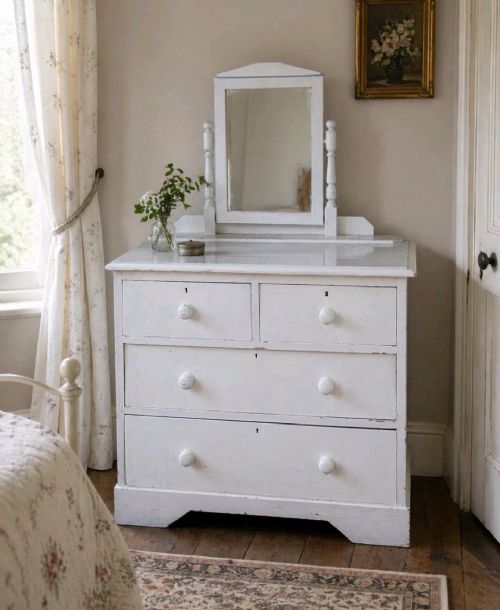
A swing vanity mirror with drawer sits on a dressing chest to hold small valuables while reflecting the morning light.
Swing Vanity Mirror with Drawer
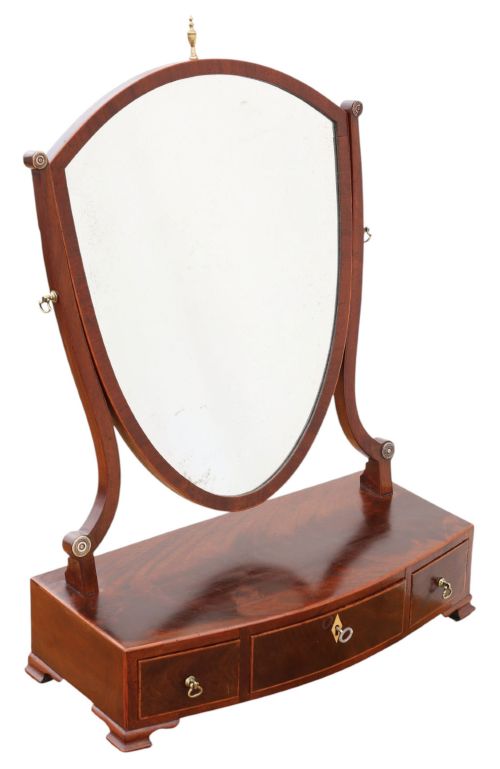
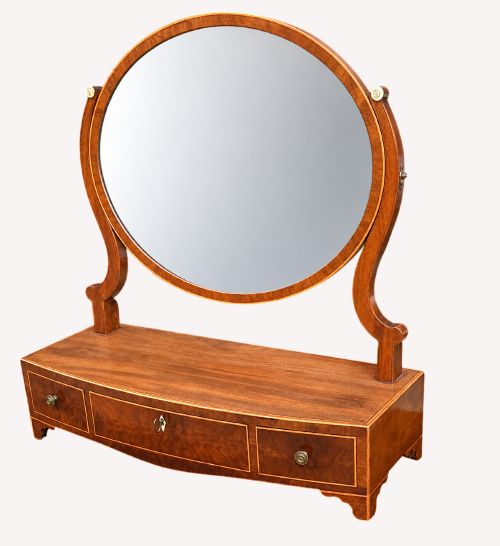
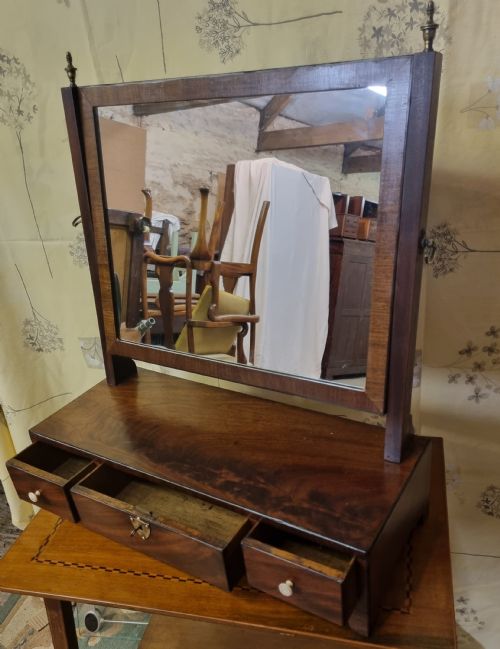
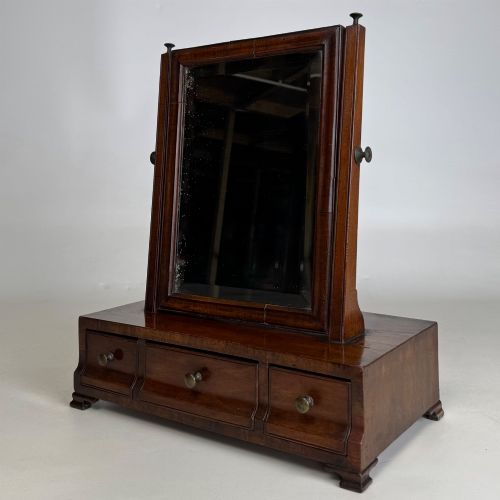
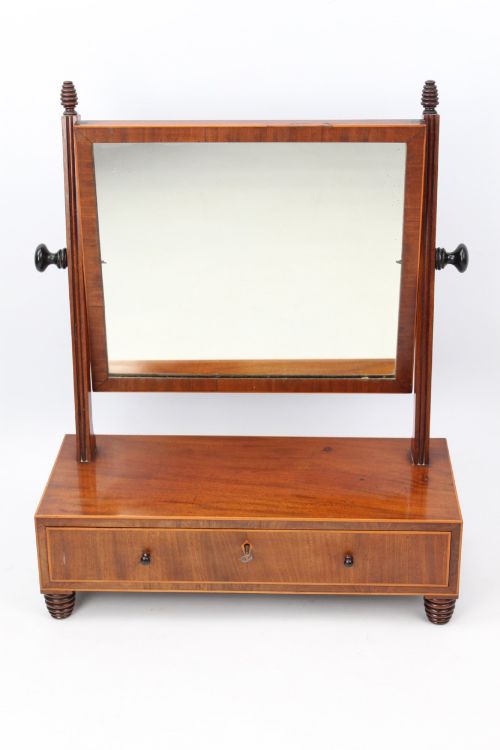
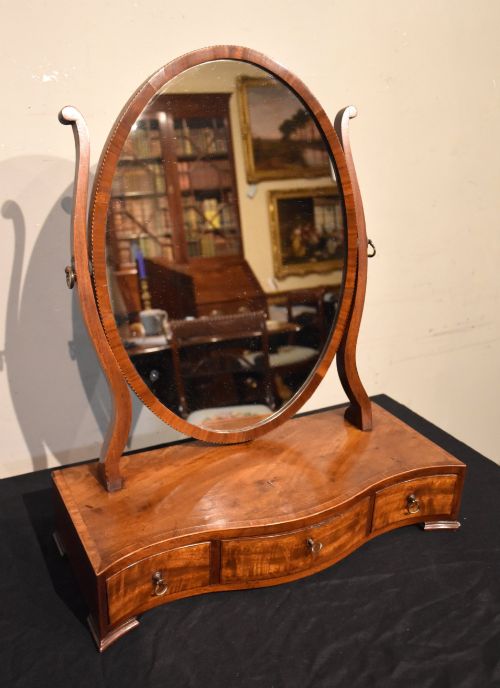
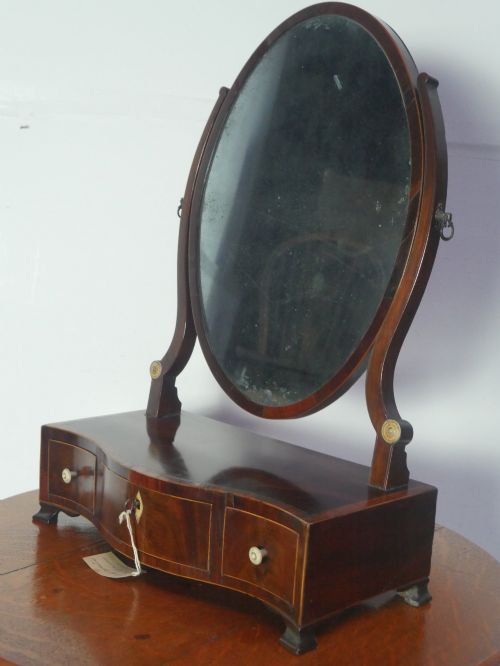
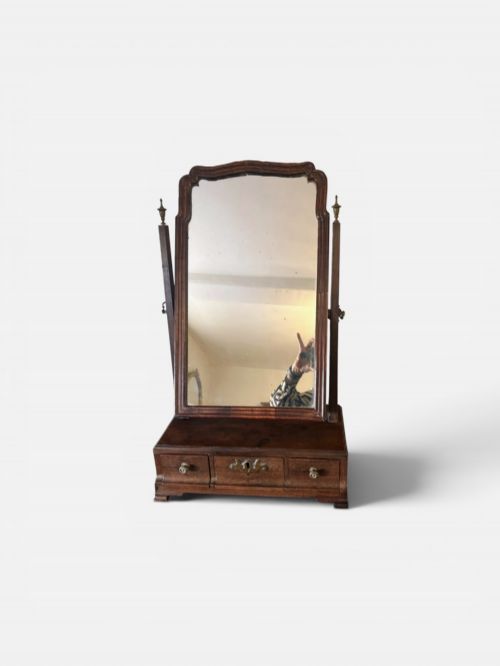
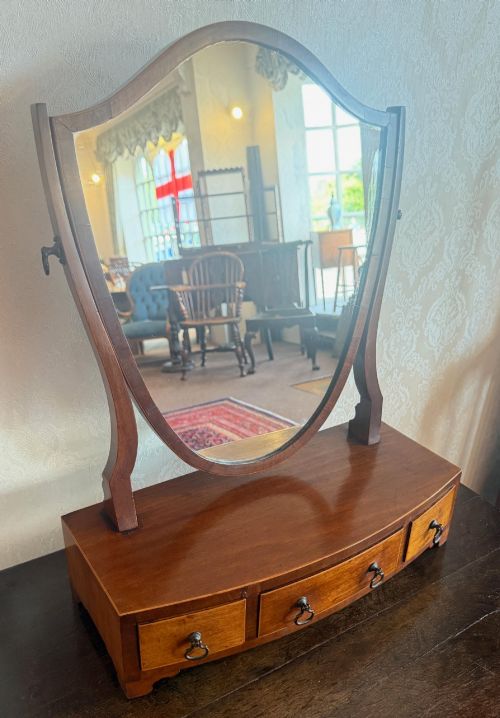
A swing vanity mirror with drawer provides a movable glass plate mounted on upright arms above a base fitted with one or more small compartments. These table mirrors appear most frequently in Georgian and Victorian incarnations, spanning the eighteenth and nineteenth centuries.
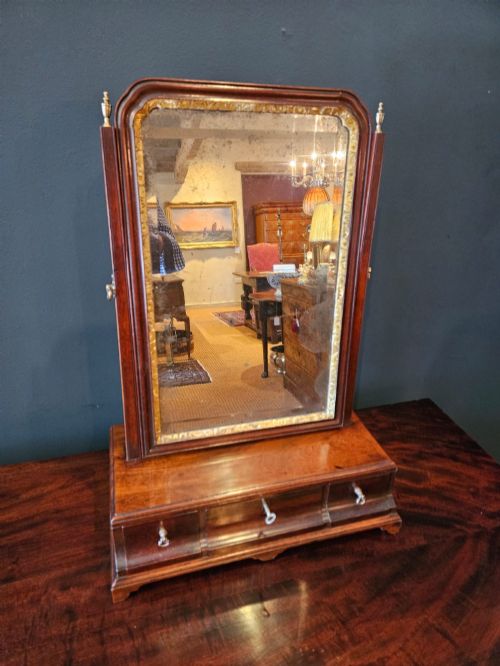
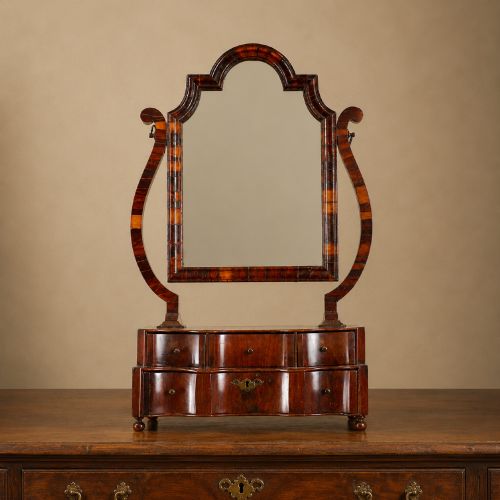
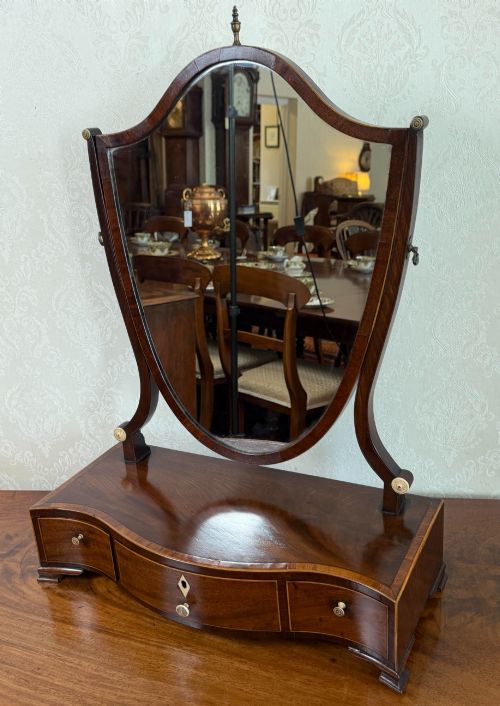
The profile ranges from rectangular plates on plain uprights to shield and oval shapes set within serpentine or straight-fronted box bases. Makers also produced bureau fitments and marquetry inlaid variants during the Regency and later Victorian periods.
Most examples rest upon small bracket feet or ogee supports, elevating the drawer section slightly off the surface of a dressing table or chest.
Materials and construction
Cabinet makers utilised dense hardwoods such as mahogany and walnut, frequently selecting figured veneers, burr maple, or satinwood for the primary surfaces. Inlays of boxwood and marquetry decorate the better examples alongside bone escutcheons.
The mirror plates utilise silvered glass held within pivoted frames connected by brass screw caps or side arms that allow the glass to tilt. Drawer boxes incorporate traditional dovetail joints to withstand daily use.
Some nineteenth-century mirrors hide tiny secret compartments beneath the main drawers for stashing the day's smallest treasures.
Judging execution
The standard of timber selection and the precision of veneer matching distinguish finer pieces from standard production. Grain continuity across drawer fronts and the subtlety of boxwood stringing indicate the workshop's ambition.
The integrity of the original mirror plate, the crispness of the brass pivot hardware, and the absence of structural alterations to the base dictate the standing of a surviving toilet mirror.
Wright and Hunter of Belfast
The Swing Vanity Mirror with Drawer Glossary
- Toilet mirror
- A small table mirror designed for personal grooming, usually incorporating a drawer base to sit atop a larger chest.
- Shield mirror
- A mirror plate shaped like a heraldic shield, popular during the eighteenth century.
- Serpentine
- A curved line with a convex centre flanked by concave sides, frequently seen on drawer fronts.
- Stringing
- Thin lines of contrasting wood inlaid into the surface of furniture as a decorative border.
Swing Vanity Mirror with Drawer: Frequently Asked Questions
How do I date a swing vanity mirror?
Dating relies on timber choices, construction methods like dovetails, and the shape of the mirror plate and base. Georgian pieces often display simpler mahogany frames, while Victorian examples introduce heavier carvings and burr veneers.
Hardware such as brass side screws also offers clues, as manufacturing techniques evolved from hand-filed components to machine-made fittings over the nineteenth century.
Were these mirrors made to stand alone?
These pieces were designed to sit on top of an existing chest of drawers, sideboard, or dressing table rather than function as floor-standing furniture. The integrated drawer base provided a secure platform and storage for small personal items.
Their portable nature meant users could move them around rooms depending on where the best natural daylight fell.
What is the difference between a toilet mirror and a dressing mirror?
The terms are largely interchangeable in historical records, though toilet mirror traditionally refers to smaller table-top versions associated with morning ablutions. Both describe a swiveling glass plate mounted above a small storage base.
Larger variations often accompanied specific dressing tables or chests rather than operating as independent pieces.
Should the mirror glass be original?
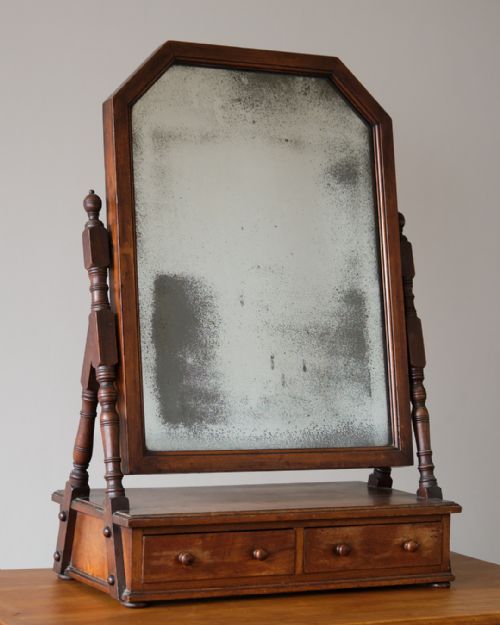
Original mirror glass often exhibits light foxing, small blemishes, or uneven silvering due to age, which many collectors prize as a sign of authenticity. Replacement glass is common because the original material was fragile and prone to deterioration.
When replacement has occurred, it is typically set into the historic frame without altering the surrounding woodwork.