
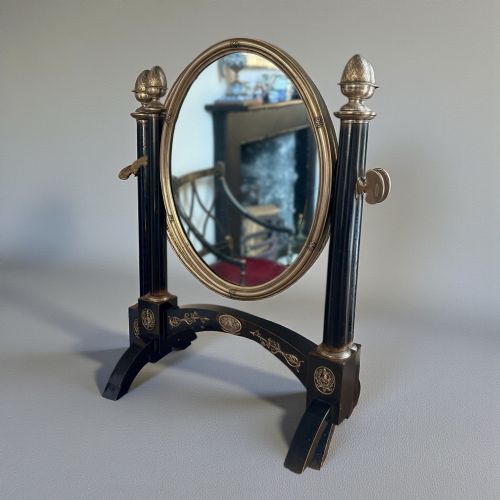
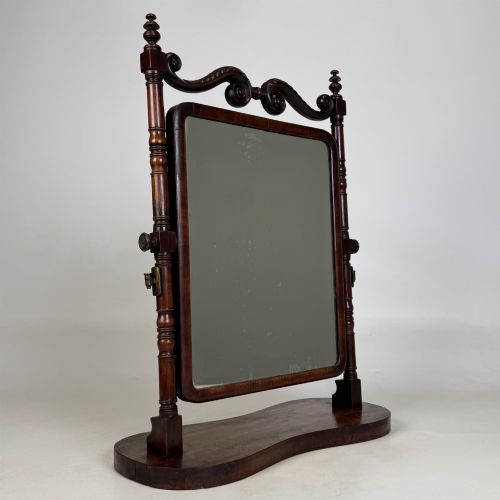
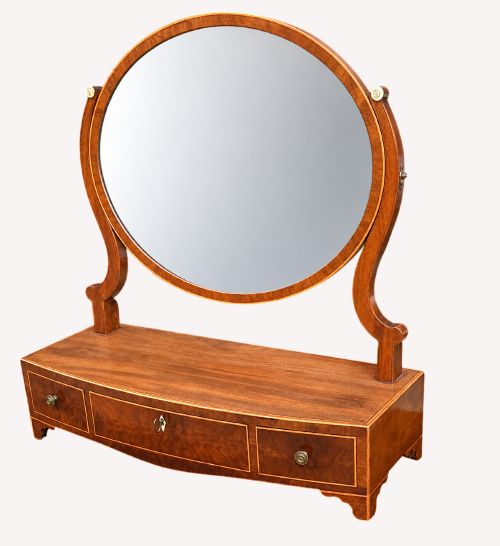
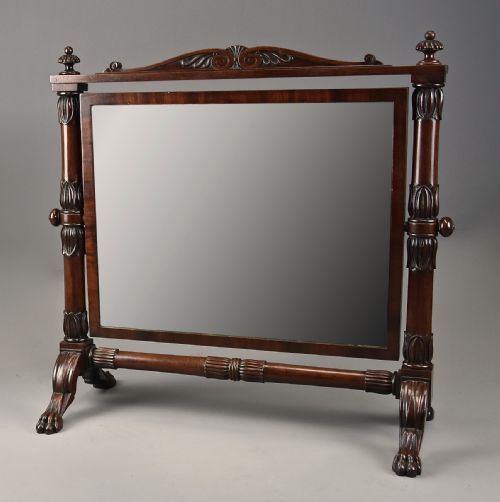

Cheval Dressing Table Mirror
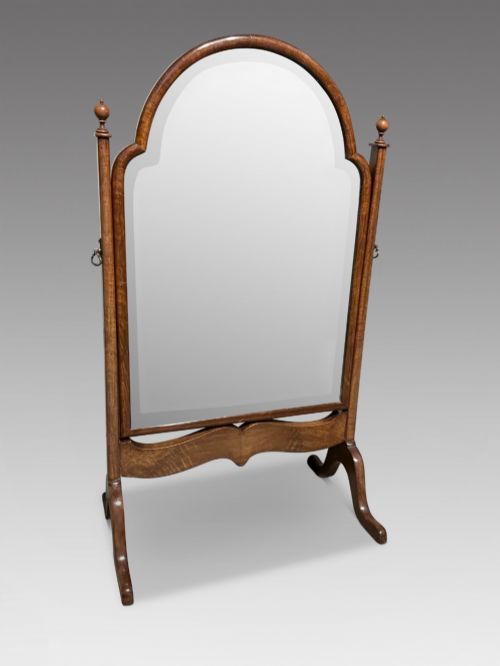
A cheval dressing table mirror offers a full-length reflection in a pivoting frame, bringing proportion and practicality to a dressing room.
Cheval Dressing Table Mirror
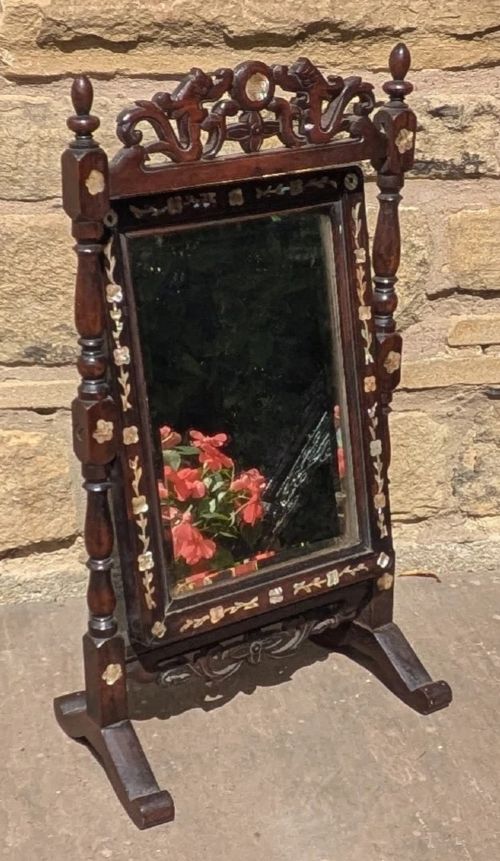
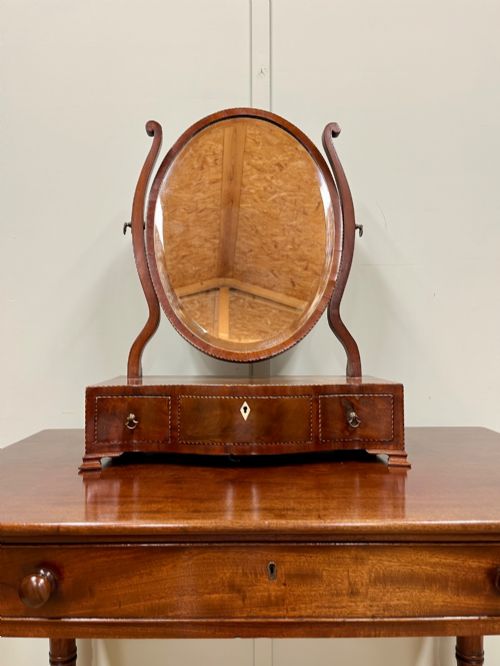
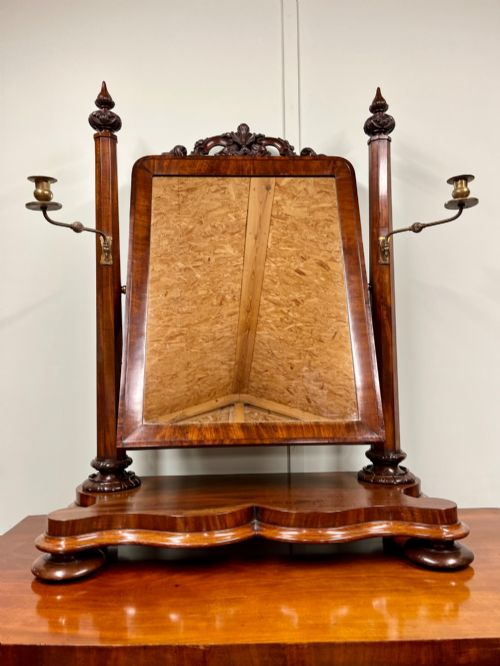
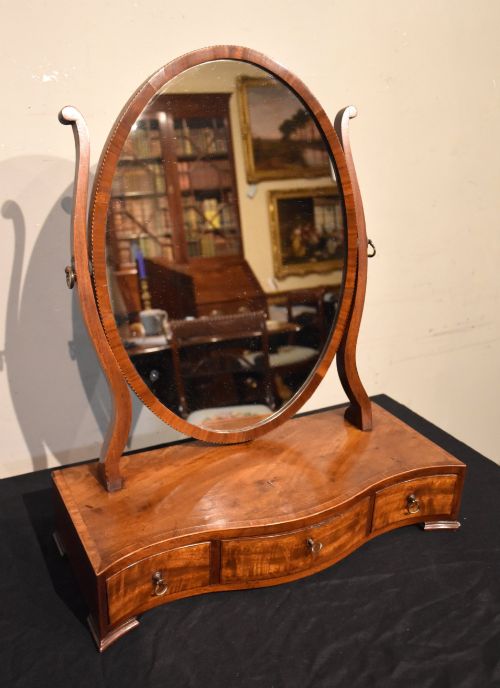
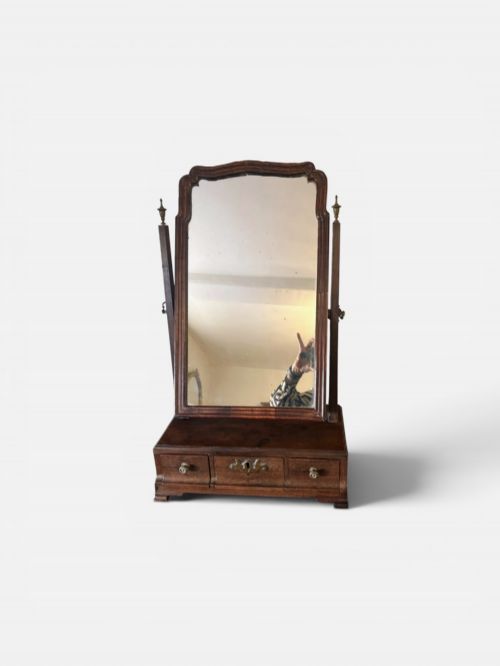
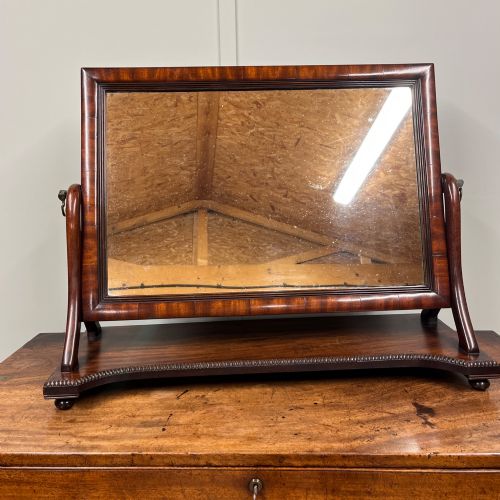
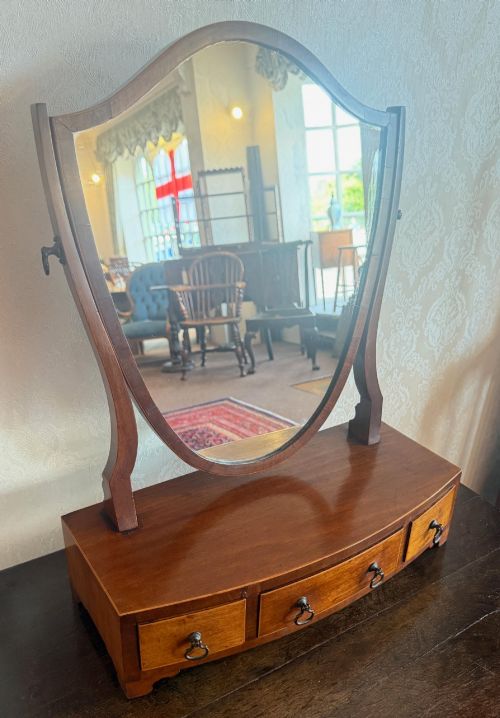
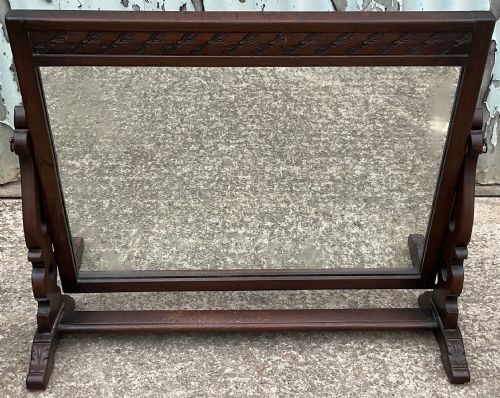
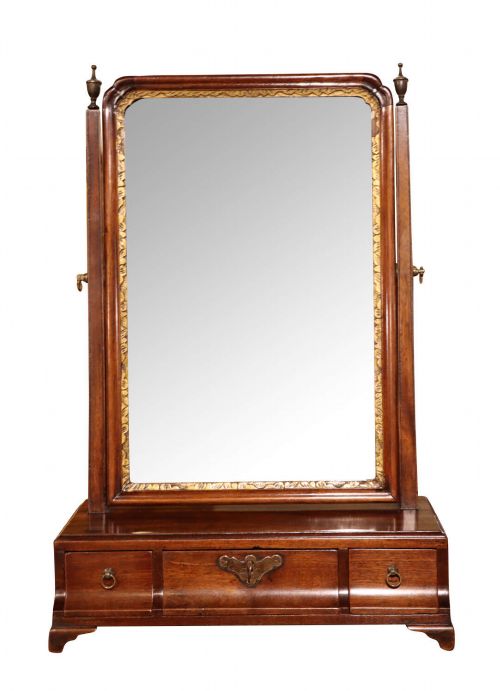
A cheval dressing table mirror stands upright on a floor frame or sits upon a table base, designed to pivot between two upright posts so the glass angle adjusts to the user. When searching for a cheval dressing table mirror, buyers encounter a range of forms, from large floor-standing units to compact table-top versions with built-in jewellery drawers.
The pieces appearing in this category span the Georgian, Regency, Victorian and Edwardian periods, stretching from the eighteenth century into the early twentieth century. Mahogany remains the predominant wood across these eras, alongside walnut, satinwood, oak and rosewood, often complemented by brass fittings and glass plates.
Materials and construction
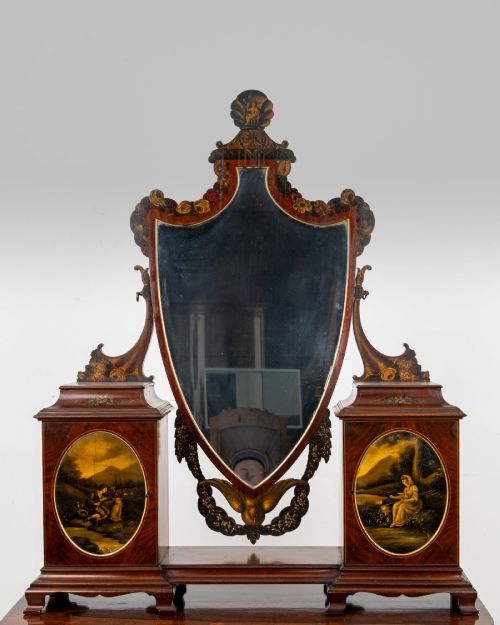
Cabinet makers utilised dense timbers such as mahogany and walnut, frequently selecting figured veneers and applying boxwood inlay, marquetry or brass details to enhance the surface. Frames were joined using traditional cabinet-making methods to support the weight of the heavy glass plate while allowing smooth pivoting action.
Hardware such as brass screw caps, adjustable arms and candle sconces were integrated into the design to secure the mirror glass at the desired tilt. The glass plates themselves, whether original mercury silvered or later replacements, were set into rebated frames to ensure stability.
Listings feature mahogany, walnut, satinwood, oak, and rosewood, alongside brass hardware and glass.
Assessing quality and craftsmanship
Quality in a cheval dressing table mirror rests on the selection of timber, the crispness of any inlay or carving, and the proportion of the frame to the mirror plate. Finer examples display carefully matched grain patterns, substantial brass pivots, and secondary timbers of equal quality used in the drawer linings.
The integration of functional elements, such as smoothly operating drawers beneath the mirror plate or finely turned upright supports, separates standard production pieces from exhibition-grade examples. Structural integrity in the pivoting mechanism ensures the glass remains balanced without slipping.
P & MA Nicholson·Jean Gille
The Cheval Dressing Table Mirror Glossary
- Cheval mirror
- A large floor-standing mirror mounted on a frame with four legs that allows the glass to swing freely. The term derives from the French word for horse.
- Toilet mirror
- A smaller mirror designed to sit on top of a dressing table or chest of drawers, often incorporating small storage drawers in the base.
- Swing mirror
- Any mirror plate hung on pivots between two upright posts, allowing the glass angle to tilt.
- Marquetry
- Decorative veneer work arranged in intricate patterns using various coloured woods, shells or metals to ornament the surface.
- Burl walnut
- Timber taken from the root growth of a walnut tree, yielding highly figured, swirling grain patterns prized for decorative cabinet fronts.
Cheval Dressing Table Mirror: Frequently Asked Questions
How do I clean the glass?
Wipe the mirror glass gently with a soft cloth dampened with a mild cleaning solution or distilled water, taking care to avoid letting moisture seep behind the plate.
Dry the surface immediately with a lint-free cloth to prevent streaking and protect the surrounding wooden frame from water damage.
Where should I place it?
Position the piece in a bedroom or dressing room against a sturdy wall where natural light can reflect across the space, enhancing both illumination and room depth.
Ensure the floor is level so the frame stands evenly and the pivoting mechanism operates without twisting the wood joints.
How do I tighten the mirror?
Locate the brass screws or thumbnuts situated on the side pivots where the mirror plate connects to the upright support posts.
Turn the fittings gently clockwise to increase friction, ensuring you do not overtighten and crack the wooden mounts or the glass frame.
Can the mirror plate be replaced?
A damaged or degraded glass plate can be replaced by a specialist restorer who understands how to remove the old mirror without harming the original rebate and backing.
Many collectors prefer retaining original glass with foxing and age spots, as these characteristics confirm the authenticity of the piece.