


Cherub Wood Relief Carving
A cherub wood relief carving brings the sculptural weight of Baroque and Renaissance revival interiors directly onto a wall.
Cherub Wood Relief Carving
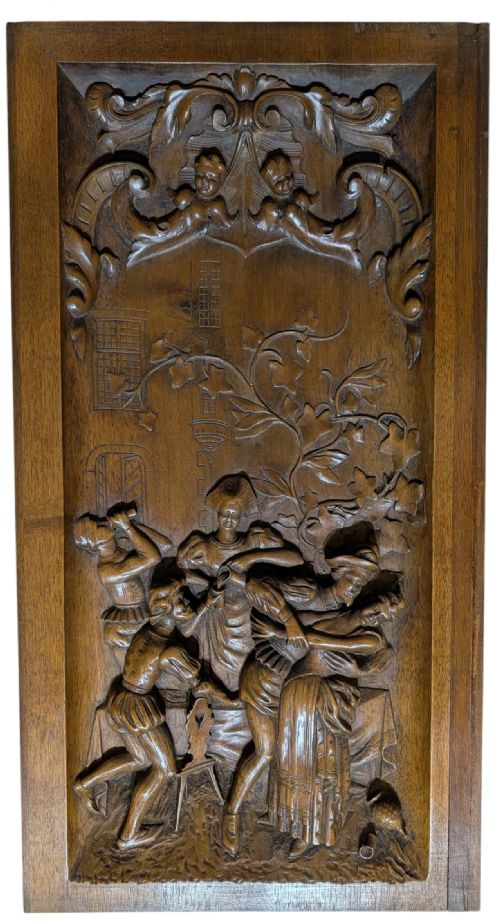
A cherub wood relief carving represents sculptural depictions of putti and angels executed across multiple centuries, primarily appearing as architectural fragments, wall panels, and overdoor decorations. These pieces originate from distinct periods spanning the seventeenth, eighteenth, and nineteenth centuries, reflecting diverse European design traditions from English Baroque to Italian Baroque.
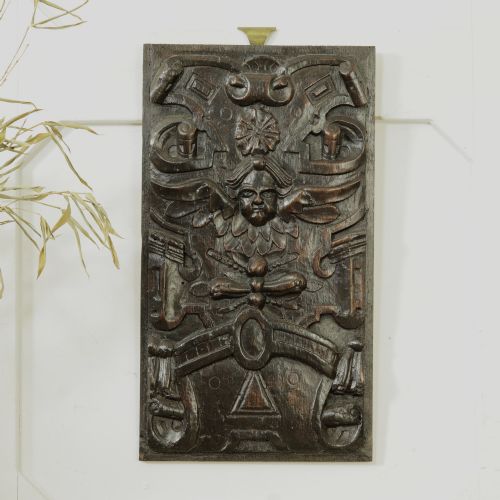
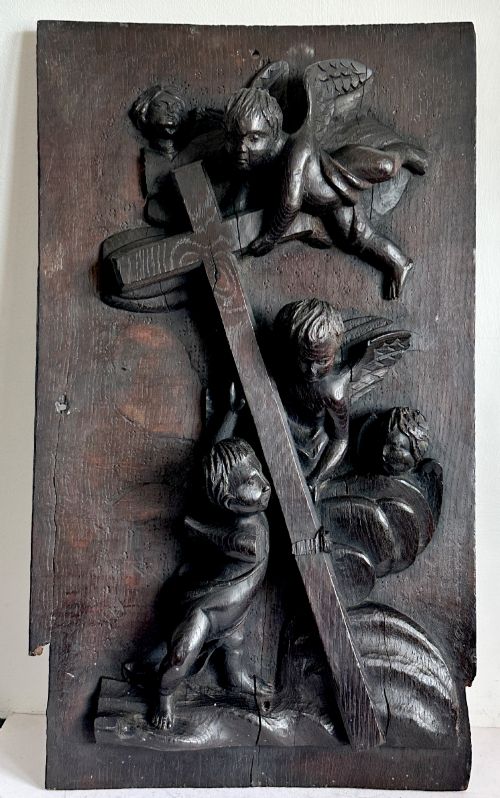
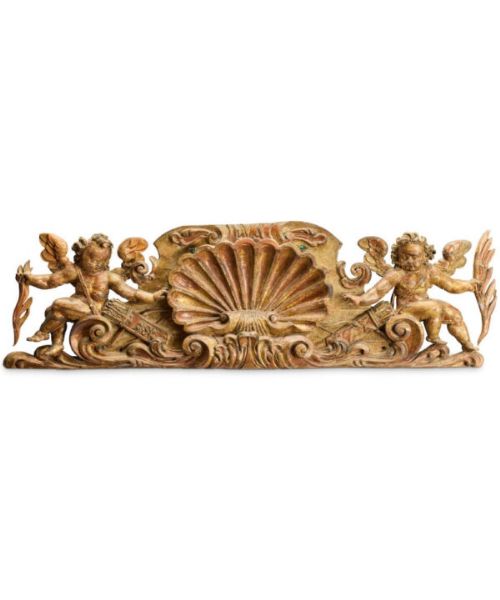
The version most frequently encountered on this page is the seventeenth-century carved oak panel, often deeply worked with acanthus leaves and armorial details. Alongside these heavy oak survivals, buyers also meet eighteenth-century polychrome panels, parcel-gilt architectural pediments, and nineteenth-century revivals.
Objects categorized under this search take the form of architectural salvage, wall reliefs, and decorative carvings rather than freestanding statues. They were originally integrated into larger architectural schemes such as staircases, overdoors, and ecclesiastical interiors before being removed as standalone decorative items.
How they were made
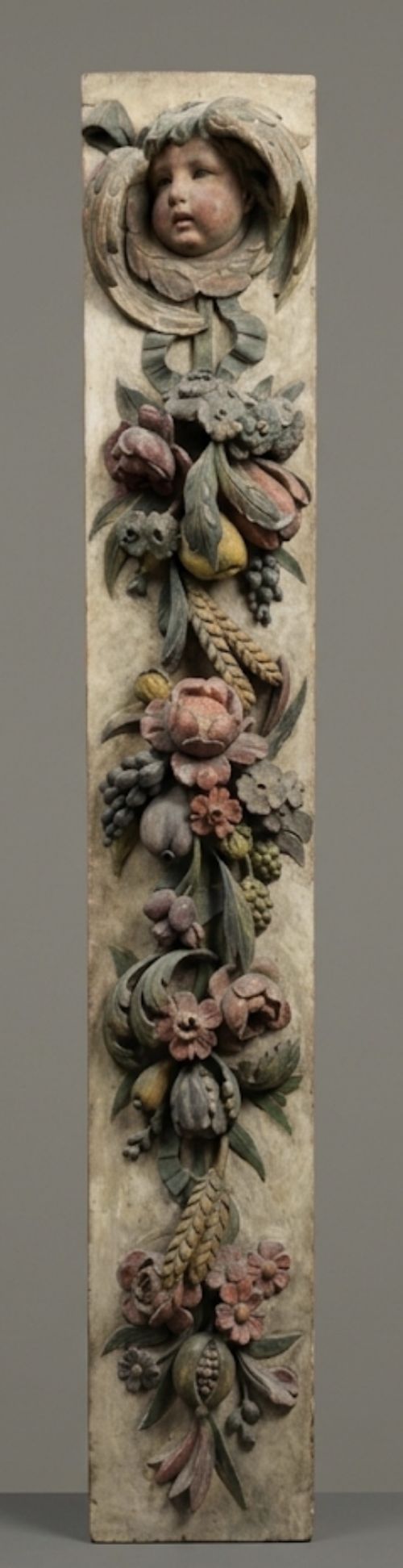
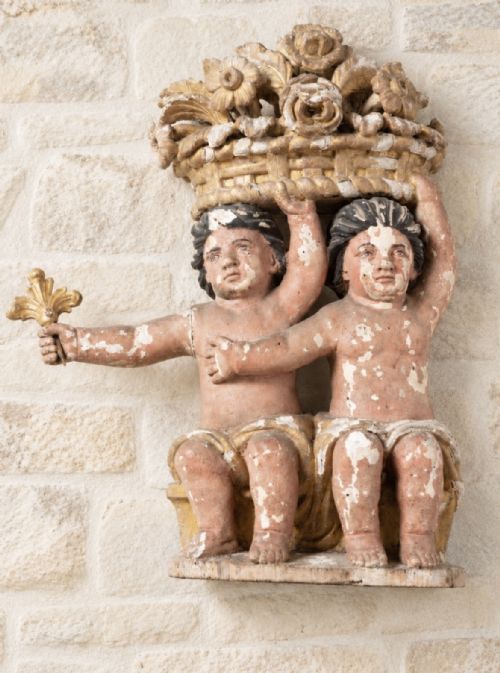
Surface enhancement often involved gesso and gold leaf to create parcel-gilt finishes, or polychrome pigments applied directly over the timber. These layers of preparation and colour added rich visual depth to architectural pediments and wall panels intended for grand rooms.
Objects span the seventeenth, eighteenth, and nineteenth centuries, taking the form of panels, pediments, and overdoors.
What varies in quality
Original surface treatments, such as untouched polychrome pigment or early parcel-gilding, determine the historical integrity of a piece. Later stripping or heavy re-polishing alters the visual weight and tactile presence of the wood.
Grinling Gibbons·Edward Pearce
The Cherub Wood Relief Carving Glossary
- Relief
- A sculptural technique where the figures project from a flat background. High-relief means the forms stand significantly out from the plane.
- Putto
- A representation of a plump, winged child figure found frequently in Renaissance and Baroque art. They often populate architectural carvings and panels.
- Parcel Gilt
- A decorative treatment where only specific portions of an object are covered with gold leaf. This technique highlights carved details against a contrasting wood or painted surface.
- Pediment
- A triangular or segmental architectural element placed above doors, windows, or panels. These often feature elaborate carved ornamentation.
- Polychrome
- The practice of decorating architectural elements in multiple colours. This finish adds vivid realism to wooden sculptures and panels.
Cherub Wood Relief Carving: Frequently Asked Questions
Where were these carvings originally placed?
These carvings originated as architectural elements integrated into grand domestic and ecclesiastical interiors. They typically appeared above doors, along staircases, or within wall panelling.
Over time, many of these architectural fragments were salvaged from buildings and mounted independently as wall art.
How do I clean a wooden relief carving?
Dust these pieces gently with a dry, soft brush to prevent accumulation in the carved recesses of the wood. Avoid using water, liquid cleaners, or modern polishes that can damage historic finishes like gesso or polychrome.
Keep the panels away from direct heat sources and strong sunlight to prevent the timber from drying out and splitting.
How do I tell seventeenth-century oak from later copies?
Seventeenth-century oak panels display deep patination, tool marks consistent with hand-carving, and shrinkage cracks appropriate for aged timber. The construction methods and joinery often reflect the structural requirements of early architectural salvage.
Later nineteenth-century revival pieces may feature machine-tooled elements or timber surfaces that lack the accumulated wear of centuries.
What is the difference between a putto and an angel?
A putto is a secular, classical motif depicting a chubby winged infant derived from mythological art. They appear frequently in Italian and English Baroque carvings.
An angel carries specific ecclesiastical or religious connotations, often shown with distinct wings and robes within church settings.