



Overdoor Wooden Carving
An overdoor wooden carving sits above a doorway to anchor a room's proportions with deep relief, architectural weight, and period character.
Overdoor Wooden Carving
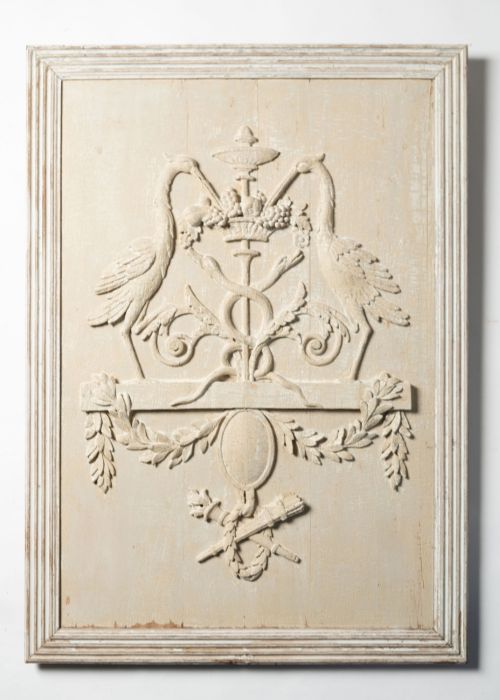
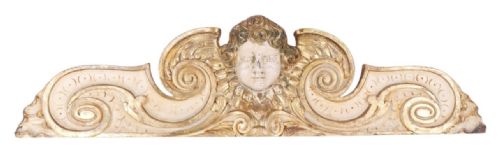
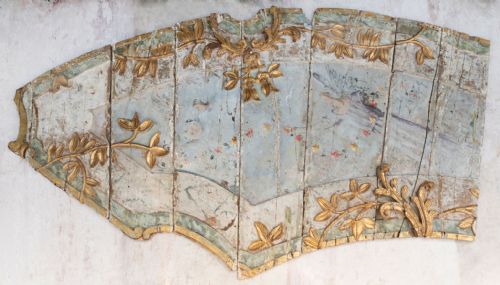
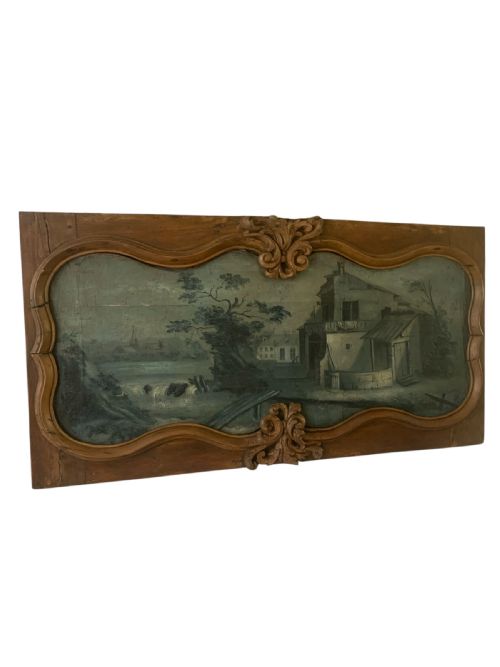
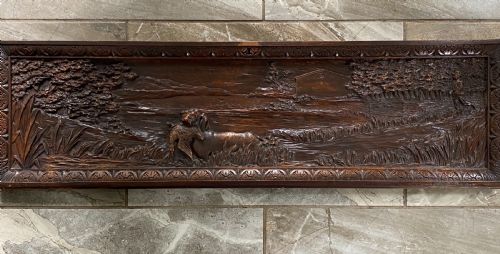
An overdoor wooden carving brings architectural presence to a room, functioning as a decorative pediment or panel positioned directly above a door frame. When you search for overdoor wooden carving, you encounter antique architectural salvage, wall reliefs, and pelmets spanning the seventeenth, eighteenth, and nineteenth centuries.
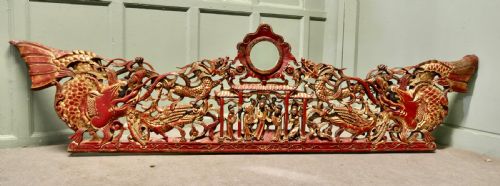
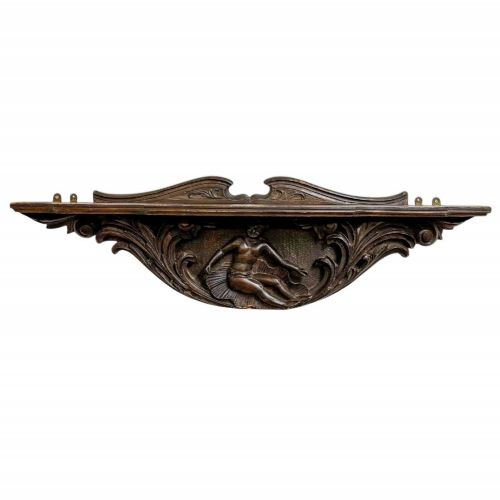
The pieces on this page originate from diverse European traditions, including French chateau, Italian rococo, Baroque, and Chinoiserie styles. Forms range from simple oak panels with integrated shelves to large pediments bearing cherubs, hunting scenes, and temple motifs.
Materials and construction
These architectural elements rely on solid timber foundations, predominantly oak, walnut, and mahogany, carved directly by hand. Artisans shaped the dense wood into deep relief scenes, decorative scrolls, and figural subjects.
Surface finishes applied to the timber include gold leaf, silver leaf, gesso, and traditional paint. These treatments highlight the carved details and protect the wood against environmental changes.
Listings feature wood, gold leaf, paint, gesso, oak, and timber across French, Italian, and British decorative traditions.
Assessing the work
Quality in these carvings rests entirely on the depth of the relief and the precision of the hand chisel work. Stronger examples display crisp undercutting and fluid movement across scrolls, foliage, and figures.
The integrity of the original surface finish, whether aged paint, gilt, or bare timber, dictates the visual authority of the piece. Integrated structural elements like shelves or pediment returns also influence how the carving meets the wall.
Edward Pearce
The Overdoor Wooden Carving Glossary
- Pediment
- A decorative architectural structure placed above a door, window, or mantel. In overdoors, this element carries the primary carved ornamentation of the composition.
- Gesso
- A plaster-like mixture applied to wood surfaces to prepare them for gilding or painting. It provides a smooth base that takes fine incisions and leaf application.
- Chinoiserie
- A European artistic style reflecting Chinese motifs and techniques, popular during the eighteenth and nineteenth centuries. It appears on carved temple pediments and decorative panels.
- Relief
- A sculptural technique where figures or patterns project from a flat background. High relief involves forms standing far out from the wood plane.
Overdoor Wooden Carving: Frequently Asked Questions
How were overdoor carvings originally used?
These carvings were mounted directly above interior doorways in grand houses, chateaux, and public buildings to create a sense of height and importance. They framed the threshold and visually connected the doorway to the room's ceiling height and decorative scheme.
Overdoors often mirrored the architectural style of the mantelpiece or window cornices within the same space. This created a unified interior design where the woodwork echoed across the room.
Can these panels be mounted on modern walls?
Many pieces function successfully as wall art or wall reliefs without needing a doorway beneath them. Their flat backs and substantial timber frames allow secure attachment to standard walls using appropriate fixings.
Heavier wooden panels require adequate wall anchors to support their weight safely. Placing them at a height similar to an original doorway helps maintain their intended visual perspective.
How do I identify the period of a wooden overdoor?
Dating relies on combining the timber species, the carving style, and the tool marks visible on the reverse. Seventeenth-century examples often feature heavy oak with deep, geometric or figural Baroque carving, while eighteenth-century pieces frequently show lighter French or Italian rococo asymmetry.
Surface treatments also provide clues, as older gesso and paint layers age with distinct craquelure and oxidation. Nineteenth-century revivals often incorporate eclectic mixes of Gothic, Renaissance, and Chinoiserie motifs.
What is the difference between a pediment and a pelmet?
A pediment is a rigid architectural ornament derived from classical building traditions, usually triangular or segmental in profile. It projects forward to crown a doorway or piece of furniture with solid carved wood.
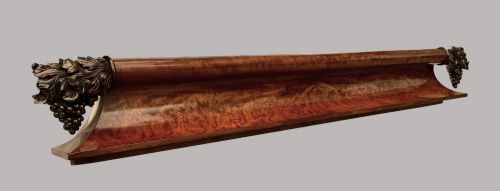
A pelmet is a narrow wooden board or frame traditionally placed above a window or door to conceal curtain fixtures. In these listings, pelmets show decorative hand carving and painted finishes comparable to architectural overdoors.