
Oak Carved Frieze
These oak carved frieze pieces bring seventeenth-century architectural presence and historic relief work directly into interior spaces.
Oak Carved Frieze
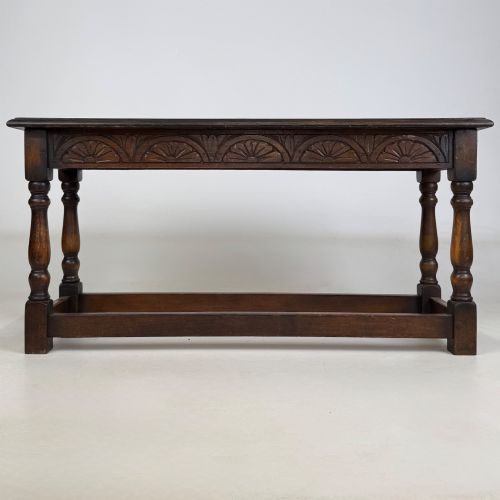
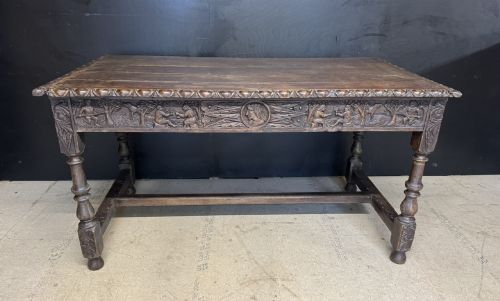
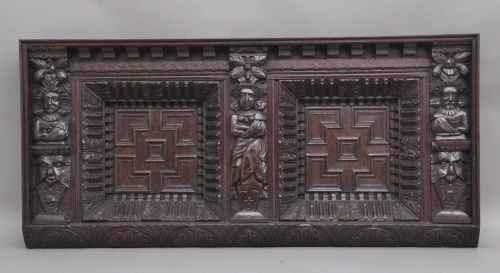
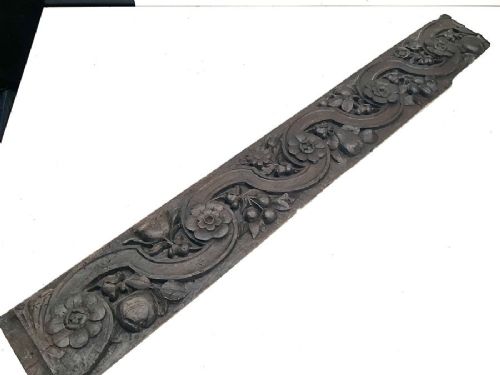
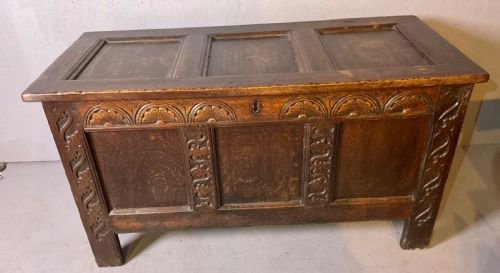
An oak carved frieze forms a decorative horizontal band of timber relief, appearing on furniture such as coffers, court cupboards, tables and architectural overmantles. The form spans seventeenth-century originals through to twentieth-century revival pieces modelled in Jacobean and Elizabethan styles.
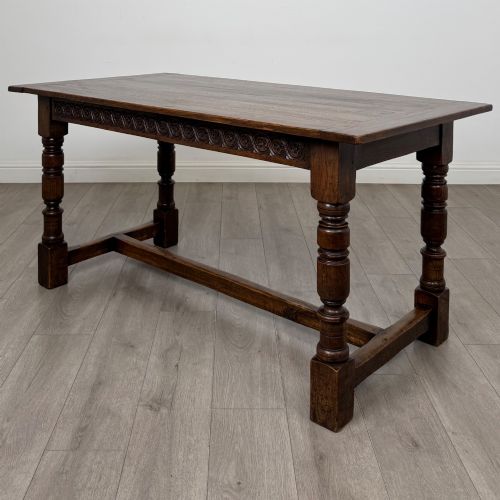
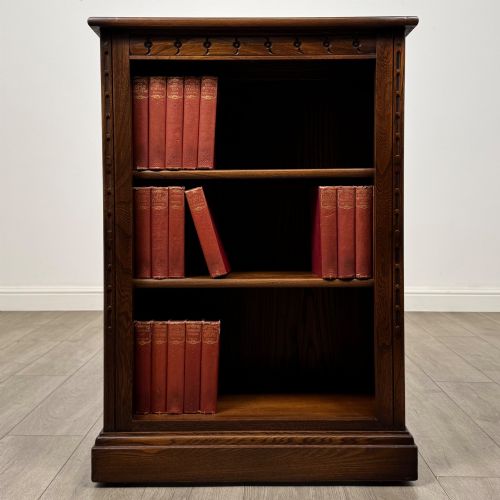
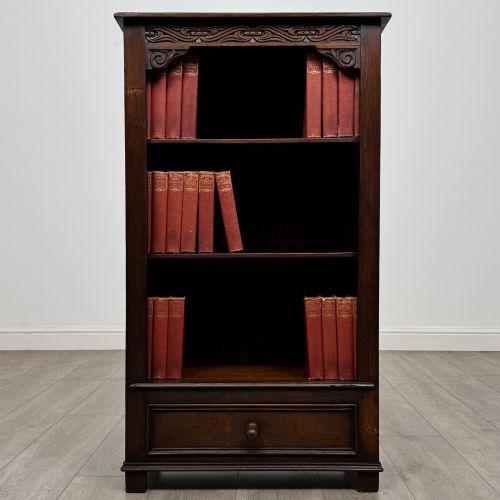
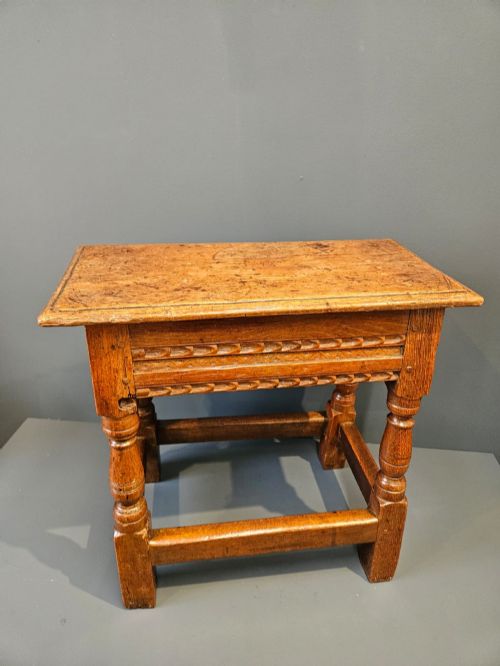
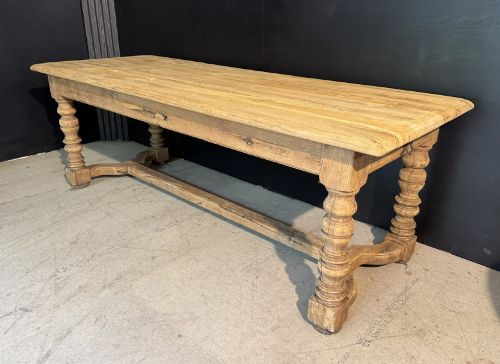
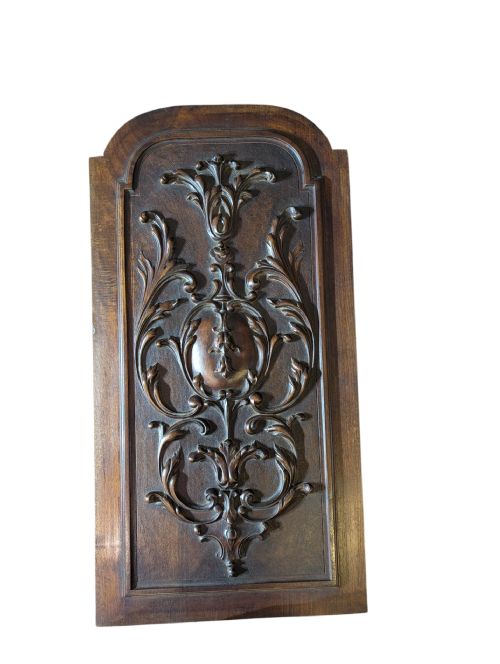
Buyers encounter this style on tables with carved frieze drawers, wall panels, bookcases and storage chests. The decorative band sits beneath a tabletop, cornice or lid, providing a distinct focal point of geometric or figurative carving.
The materials centre on solid oak, alongside walnut and timber, complemented by iron and brass hardware on functional items like drawers and cabinets.
Materials and technique
Makers utilised solid oak and walnut, shaping timber through traditional joinery methods including mortise and tenon joints. The decorative friezes were hand-carved using gouges and chisels directly into the structural wood or onto applied panels.
Surface treatments range from natural waxed finishes to historical paint and leaf gilding, allowing the grain and chisel marks to remain visible across the panels and structural supports.
Some seventeenth-century panels depict unexpected subjects, including wild boar hunts, devil-winged cherubs and mischievous chicken thieves hiding in the woodwork.
Judging quality
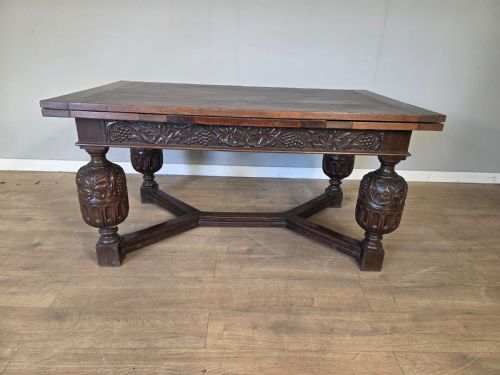
The standard of carving defines the tier of the piece, distinguishing crisp, deep relief work featuring motifs like cherubs, mythical creatures and foliate scrolls from shallow, mechanical shaping. The integration of the frieze into the broader furniture form, such as a coffer or console table, indicates the maker's competency.
The age of the timber and the integrity of the joinery set early seventeenth-century examples apart from later nineteenth-century revivals and twentieth-century interpretations.
Edward Pearce
The Oak Carved Frieze Glossary
- Frieze
- A decorative horizontal band situated along the upper section of a piece of furniture or architectural interior. It typically receives the most elaborate carved ornament.
- Coffer
- A large wooden chest used for storage, often featuring carved panels and friezes across the front elevation. These heavy receptacles frequently date from the seventeenth and eighteenth centuries.
- Court Cupboard
- An antique enclosed storage piece featuring tiers and a prominent carved frieze, often bearing a specific construction date. They serve as substantial display and storage furniture.
- Draw-leaf Table
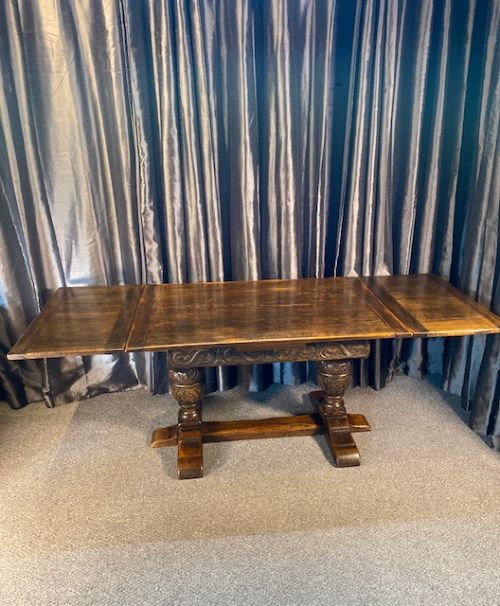
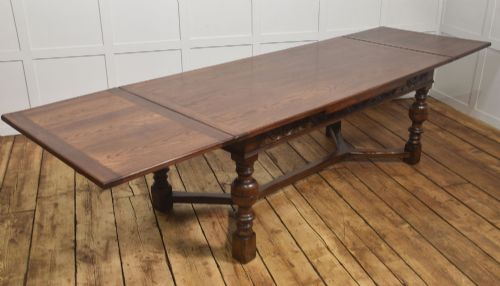
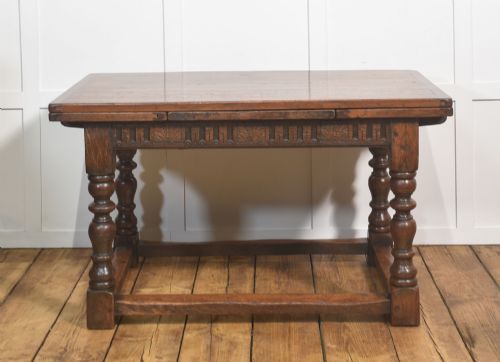
- A dining table equipped with pull-out leaves beneath the main surface that extend the top. The surrounding frieze conceals the extension mechanism.
- Refectory Table
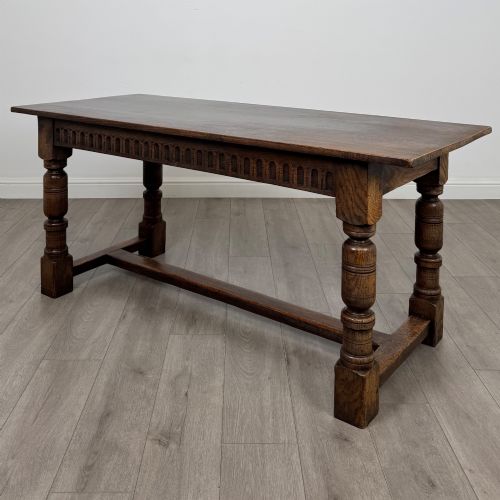
- A long, narrow dining table constructed from solid timber with sturdy legs and structural stretchers. The frieze often displays linear or geometric carving.
Oak Carved Frieze: Frequently Asked Questions
What is an oak carved frieze?
An oak carved frieze is a decorated horizontal wooden band found on antique furniture and architectural elements. It displays relief carving such as foliage, geometric patterns or figurative motifs.
These bands appear on the upper sections of tables, chests, bookcases and overmantles, dating from the seventeenth century through to later revival periods.
How are these pieces dated?
Dating relies on timber characteristics, joinery techniques and the style of the carving. Seventeenth-century examples exhibit hand-tooled surfaces and pegged joints.
Revival pieces from the nineteenth and twentieth centuries often copy earlier Jacobean or Elizabethan designs while employing machine assistance or later hardware.
Where were friezes used?
Friezes functioned as decorative architectural elements on interior wall panels and overmantles, as well as structural components on furniture. They added ornamentation to the upper borders of storage chests and dining tables.
Makers positioned these carved bands at eye level or just beneath tabletops to draw attention to the craftsmanship.
How do I care for antique oak?
Antique oak requires stable environmental conditions away from direct heat sources and extreme humidity fluctuations. Regular dusting with a soft cloth prevents particle buildup.
Application of traditional beeswax preserves the natural moisture and sheen of the timber without sealing the surface.