



Cherub Table Lamp
When you search for a cherub table lamp, you are looking at figural lighting that pairs decorative sculpture with domestic illumination.
Cherub Table Lamp
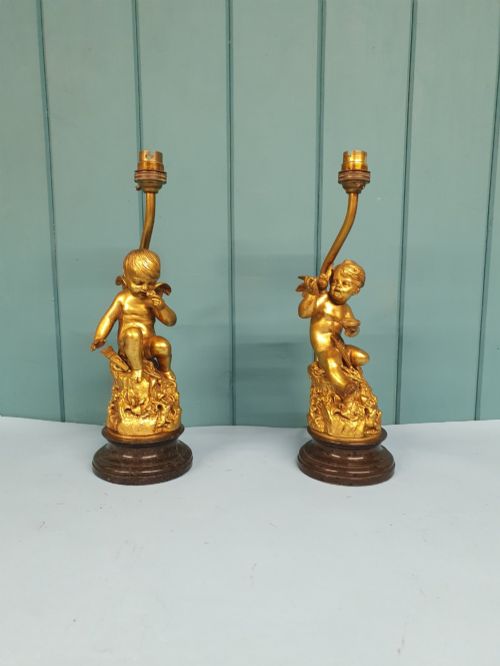
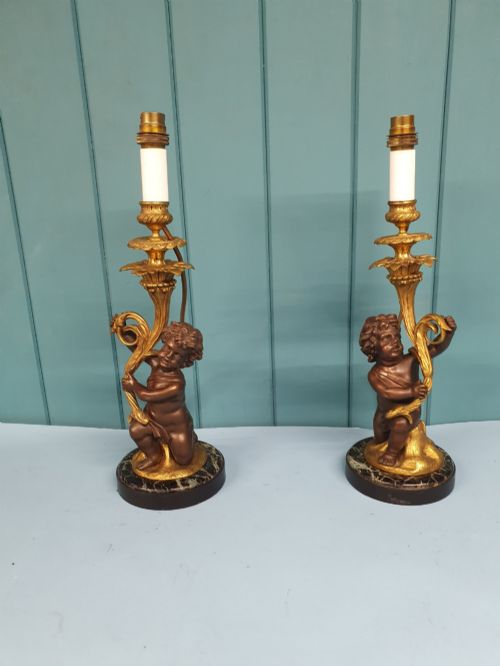
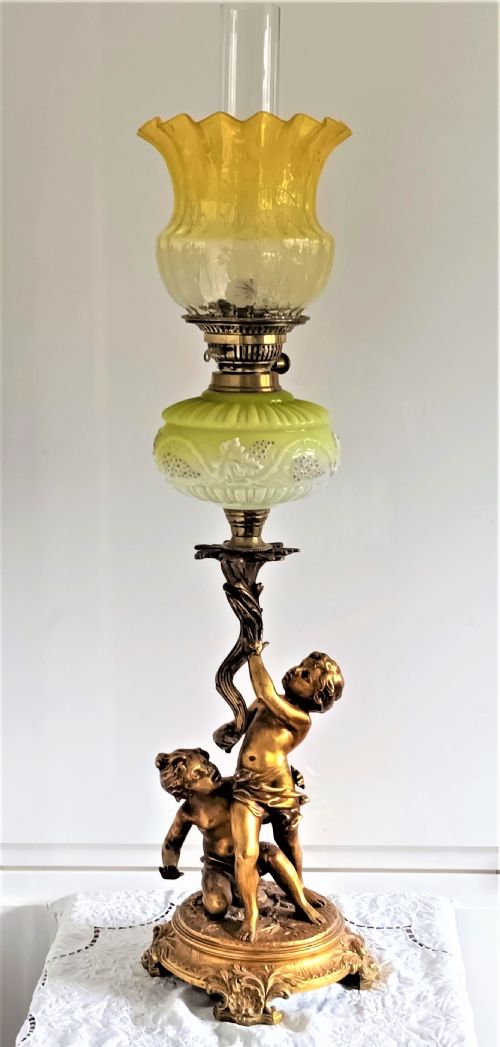
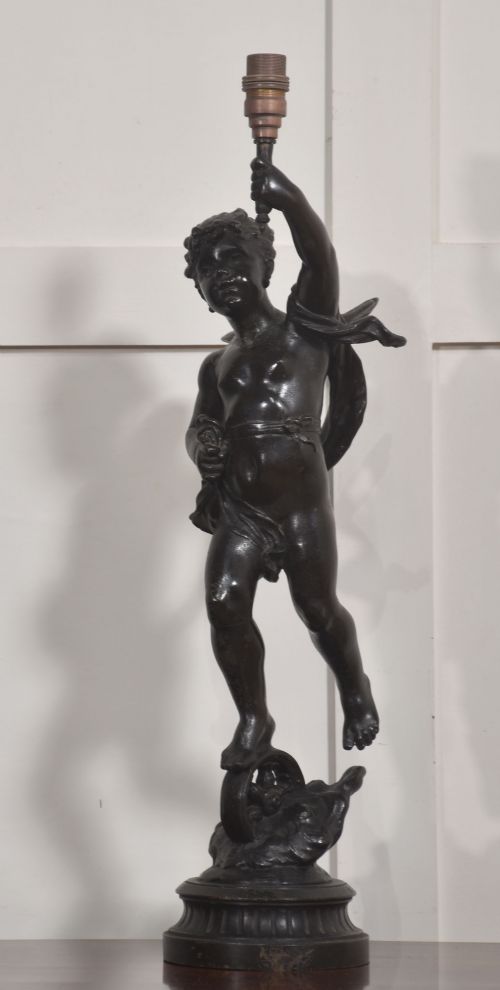
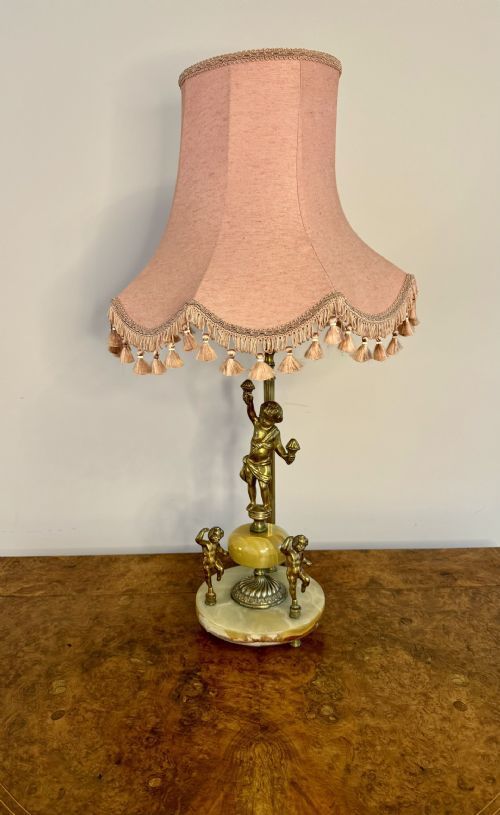
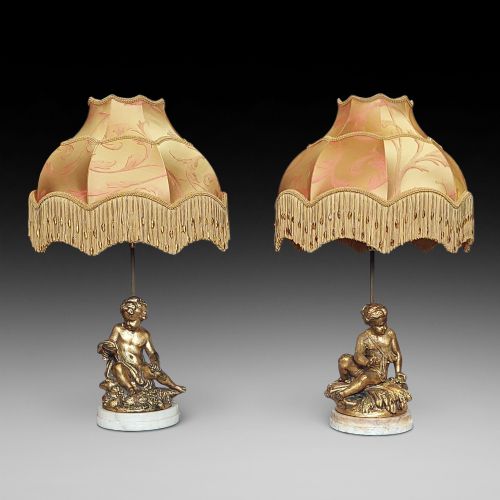
A cherub table lamp brings figurative charm and soft lighting into a room through sculptural figures of winged youths holding or accompanying light sources.
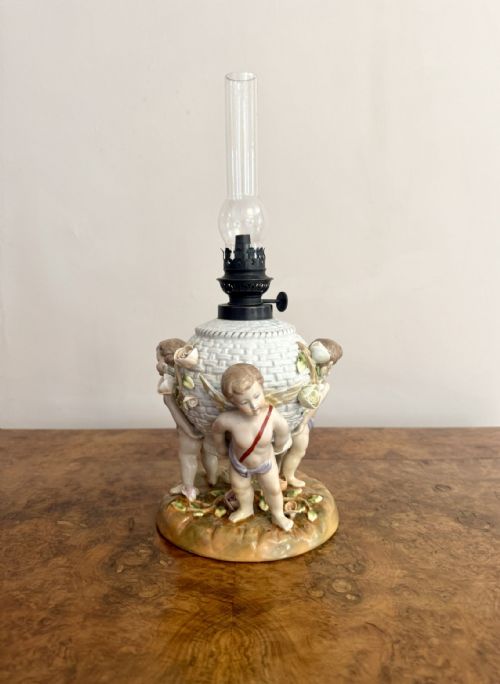
The versions most common on this page are French and continental pieces cast in bronze, ormolu, or brass, alongside porcelain models from European factories.
Many examples originate from the nineteenth century and the early decades of the twentieth century, reflecting revivalist styles such as Rococo and Neoclassical designs.
How they were made
Foundry workers utilised bronze, brass, ormolu, and spelter to cast the figurative bases, often finishing the metal with patination or fire gilding.
Porcelain elements from makers like Sitzendorf or Meissen were shaped, fired, and hand-painted before incorporation into lamp mounts.
Designers combined these metal and ceramic bodies with materials such as marble bases, alabaster mounts, and fabric or toleware shades.
Stylistic influences span French Rococo, Neoclassical revival, and continental Baroque decorative arts from the nineteenth and early twentieth centuries.
What varies in quality
The clarity of the metal chasing and the smoothness of the bronze or ormolu finish separate finely articulated castings from softer, simpler forms.
The delicacy of the hand-painted details on porcelain figures and the integration of stone bases like marble or onyx dictate the overall refinement of the piece.
Sitzendorf porcelain·Meissen porcelain·Sevres·Schierholz porcelain
The Cherub Table Lamp Glossary
- Ormolu
- Gilded bronze, where a mercury and gold amalgam is applied to cast bronze and heated to leave a durable gold coating.
- Spelter
- A zinc alloy used as a less expensive alternative to bronze for figural casting, often painted to resemble bronze or patinated metal.
- Toleware
- Painted or lacquered sheet metal used historically for lamp shades and decorative canisters.
- Putto
- A plump, naked child figure, often winged, frequently depicted in Renaissance and revival art as a cherub.
- Torchère
- A stand or lamp modelled on a torch-bearer, designed to elevate a light source.
Cherub Table Lamp: Frequently Asked Questions
What periods do these lamps come from?
The pieces span from the nineteenth century through the early twentieth century, with notable representation from Victorian and Edwardian decades.
Design influences draw heavily on earlier French royal styles, including Louis XVI and continental Baroque revivals.
How were these lamps used originally?
These lamps provided functional illumination for reception rooms, boudoirs, and parlours, often sitting on side tables or mantelpieces.
Many examples started life as oil lamps, candelabra, or bronze statuettes before being converted to electricity at a later date.
Are the shades original?
Fabric, toleware, and beaded shades found on these lamps frequently date from later restorations rather than the original manufacture of the base.
Finding a shade that complements the period of the cherub figure requires attention to proportion and historical style.
How do I identify a bronze lamp from spelter?
Bronze exhibits greater weight, crisp detail in the casting, and a warm metallic depth beneath its patination.
Spelter is softer, lighter, and tends to show duller surface textures where the painted or plated finish has worn away.