




Gilded Putto Lamp
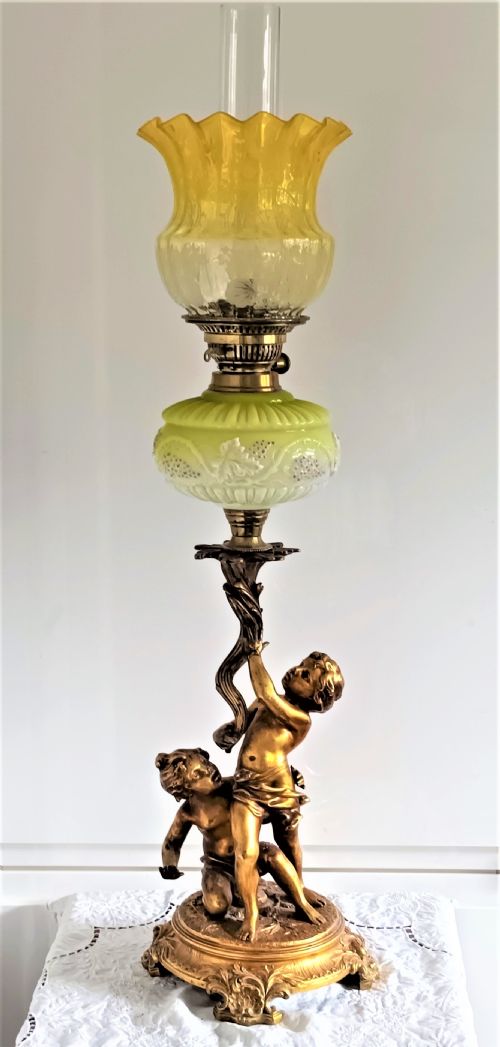
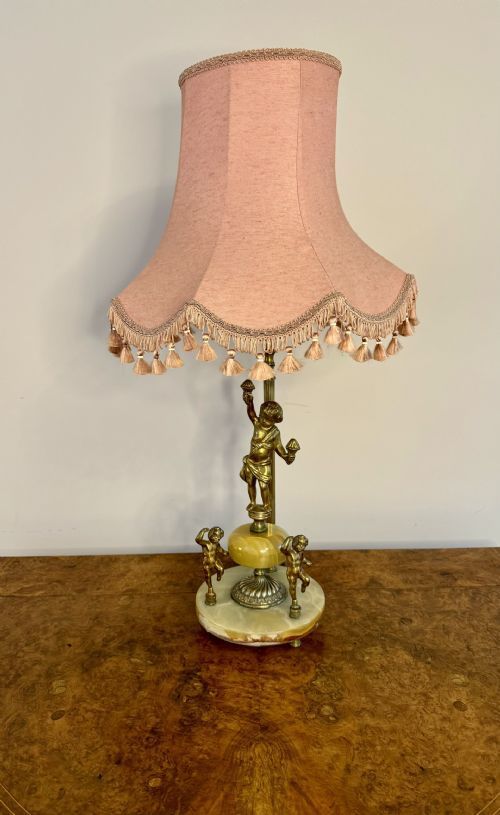
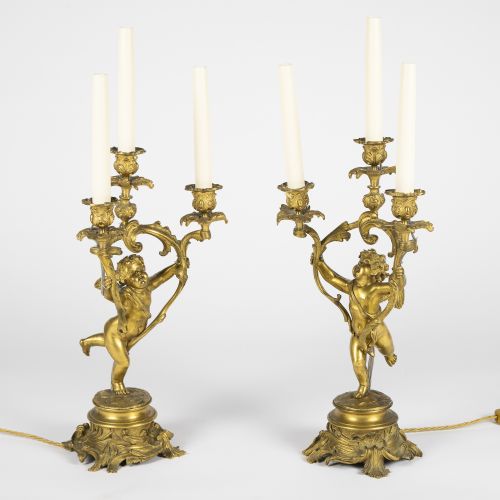
These gilded putto lamps bring a classical figurative presence to a room, cast in bronze, brass, or carved wood.
Gilded Putto Lamp
A gilded putto lamp combines carved or cast figurative elements with lighting utility, drawing on French Rococo, Victorian, and Edwardian design traditions. These decorative items frequently utilise cherubs or putti figures holding or supporting light fittings, originating from continental workshops as well as English makers.
The objects listed on this page span the nineteenth and early twentieth centuries, appearing primarily as table lamps, candelabra, and occasional hanging or ceiling lights. Buyers will frequently encounter pieces fashioned from ormolu, gilt bronze, and carved giltwood, sometimes paired with onyx bases or fabric shades.
Materials and construction
Alternative examples employ carved giltwood, particularly within Florentine or Italian traditions, where timber is shaped and coated in gold leaf. Heavier pieces occasionally incorporate natural stone elements such as onyx to provide stability and visual contrast to the gilded surfaces.
Gilded Putto Lamp Retail Price Guide 2026
Typical asking prices for gilded putto lamp among the pieces listed under this phrase on Sellingantiques today, from the lower quarter to the upper quarter. They describe what is for sale here now, not the wider market.
Materials across these listings include gilt bronze, brass, fabric, glass, onyx, giltwood, and ormolu.
Assessing quality and craftsmanship
Quality reveals itself in the crispness of the chasing and the depth of the gilding across the figures. Finer examples display lively modelling in the putti, with distinct facial expressions and well-defined feather work on the wings, whereas lesser pieces show softer, more generalised contours from worn moulds.
The choice of secondary materials also dictates the standing of a piece, with solid bronze or carved wood representing more substantial craftsmanship than lighter brass constructions. Original patination and the integrity of the gilt surface distinguish untouched examples from later interventions.
The Gilded Putto Lamp Glossary
- Putto
- A representation of a plump, naked child, often winged, derived from classical art and frequently seen in Renaissance and later revival decorative schemes. They form the central figurative motif in these lamps.
- Ormolu
- Finely ground high-carat gold applied to a bronze base using a mercury amalgamation process, or later through electroplating. This technique produces a durable, rich golden lustre characteristic of French decorative metalwork.
- Giltwood
- Timber, commonly lime or pine, that has been carved and covered with thin sheets of gold leaf or gilt composition. It appears frequently in Italian and French lighting fixtures from the nineteenth century.
- Candelabra
- A branched candlestick or lamp holder designed to hold multiple lights simultaneously. These pieces often feature putti figures supporting the candle arms or electrical fittings.
Gilded Putto Lamp: Frequently Asked Questions
What is a putto?
A putto is a chubby, often winged infant figure originating from classical art and revived during the Renaissance and later decorative periods.
In lighting design, these figures are typically cast in bronze or carved from wood to support the lamp structure.
How do I date a gilded lamp?
Dating relies on stylistic clues, casting techniques, and the materials combined with the metalwork, such as onyx bases or fabric components.
Nineteenth-century examples often lean towards heavy French ormolu, while early twentieth-century pieces incorporate Edwardian or later revival aesthetics.
Where were these lamps made?
Many of these pieces originate from French and Italian workshops, though English Victorian examples also appear in the record.
Continental centres like Paris and Florence were particularly prolific in producing gilt bronze and carved giltwood lighting.
How should I clean gilded bronze?
Gilded bronze requires gentle dusting with a soft, dry cloth to prevent damage to the delicate metallic surface.
Avoid using chemical polishes or abrasive cleaners, which can strip the thin layer of gold leaf or ormolu.