


Gold Putto Light
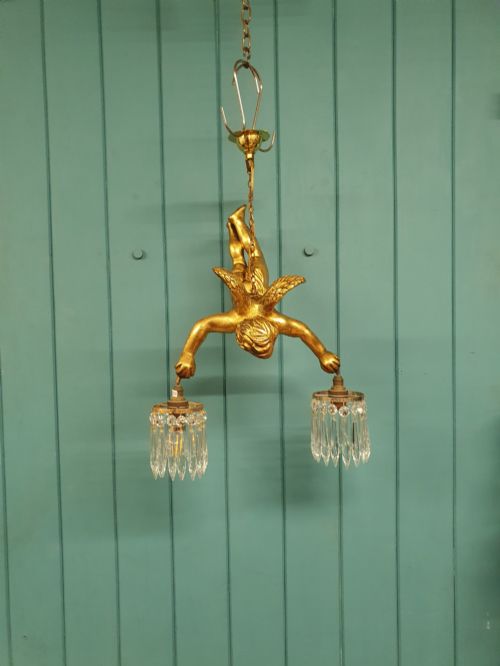
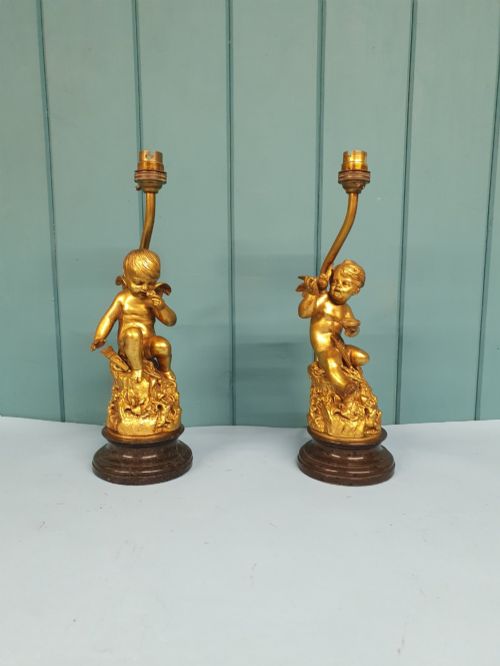
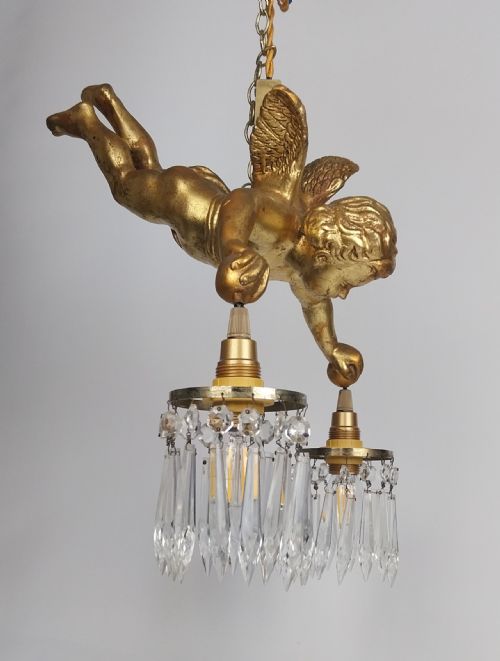
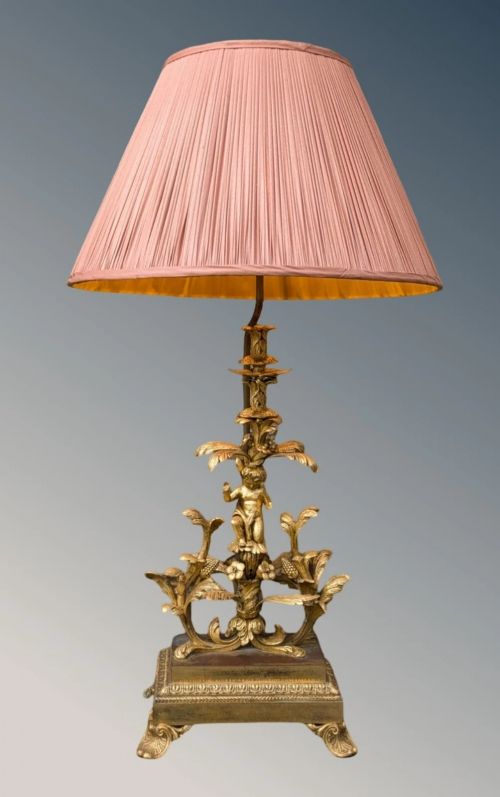
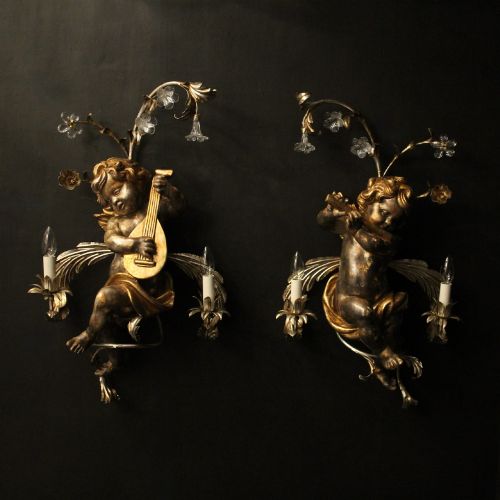
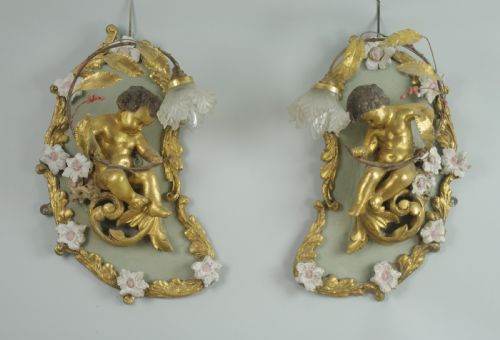
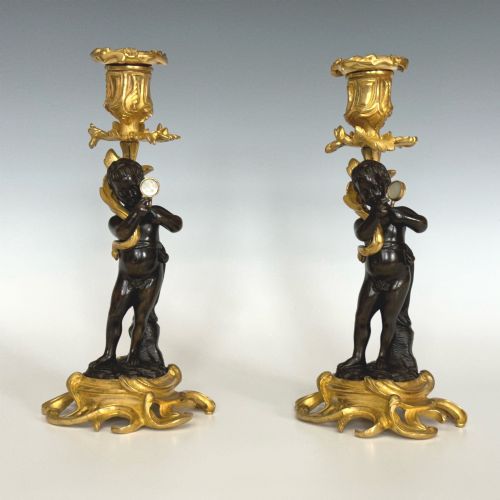
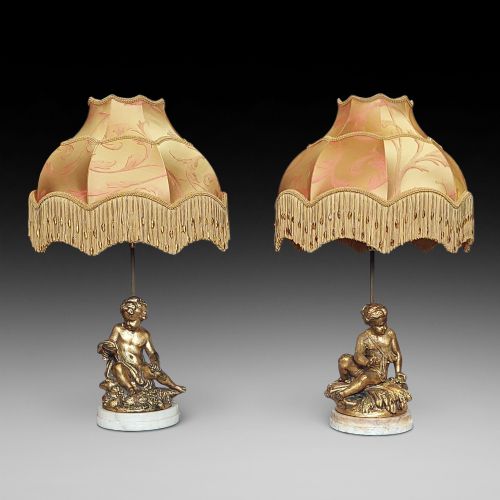
A gold putto light brings sculptural charm to a room through cast metal figures holding branches, sockets or crystal drops.
Gold Putto Light
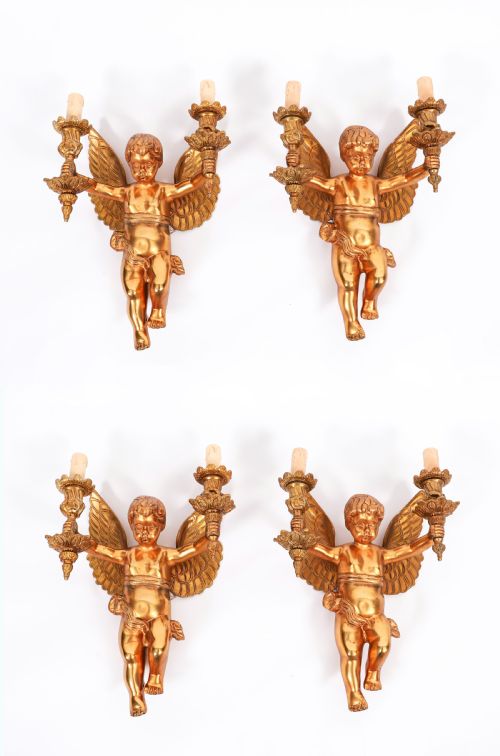
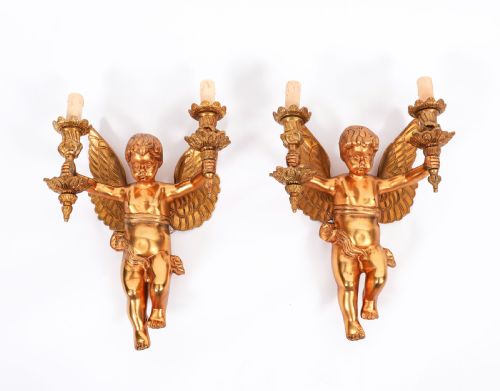
A gold putto light takes the form of table lamps, wall sconces, candelabra and chandeliers modelled with winged cherubs or putti figures. These decorative pieces emerge mainly across nineteenth-century revival styles and early twentieth-century lighting designs.
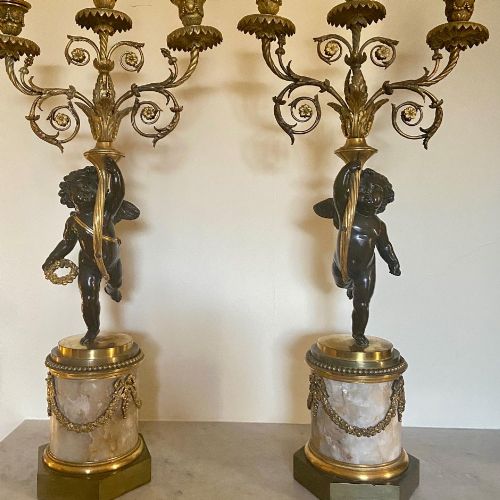
The most common examples on this page are French and Italian wall lights, table lamps and candelabra pairing cast figures with multi-branch fittings. They combine classical sculptural motifs with functional illumination for domestic interiors.
Materials and construction methods
Maker workshops utilised metal casting techniques to form the figures and mounts in gilt bronze, ormolu, brass and gilt metal, often combined with carved giltwood or alabaster. These gilded and patinated surfaces provide the characteristic metallic sheen.
Many designs incorporate mineral bases such as marble and porphyry, alongside glass elements like cut glass crystal spikes, lustre drops and Murano components to hold and reflect the light.
Listings span the nineteenth century through the 1930s, featuring gilt bronze, ormolu, marble, and Murano glass components.
Assessing quality in figural lighting
Quality rests in the crispness of the metal chasing and the anatomical definition of the putti figures, where superior examples display sharp hand-finished details rather than soft, mass-cast contours. The weight and stability of the supporting marble or bronze bases also indicate higher grade manufacturing.
Integration between the sculptural figure and the functional lighting arms reveals the maker's skill. Finer pieces maintain balanced proportions and secure joints across multi-branch sconces and candelabra.
Francois Redmond·Claude Clodion
The Gold Putto Light Glossary
- Putto
- A plump, often winged child figure derived from classical art. These cherubic motifs appear frequently as the central sculptural support in lighting fixtures.
- Ormolu
- Gilded bronze produced through a mercury amalgamation process common in French decorative arts. This technique yields a deep, warm gold surface finish.
- Candelabra
- A branched lighting fixture designed to hold multiple candles or bulbs. They often feature figural stems and removable arms.
- Sconce
- A wall-mounted light fixture secured by a backplate. They project arms forward to illuminate hallways and living spaces.
- Patinated Bronze
- Bronze treated with chemicals or heat to alter its surface colour. This process creates dark brown or greenish tones that contrast with gilt highlights.
Gold Putto Light: Frequently Asked Questions
What is a gold putto light?
A gold putto light is a decorative fixture featuring a gilded or brass cherub figure combined with lamps, candles or crystal drops. These pieces function as both sculpture and illumination.
They appear across various nineteenth-century and early twentieth-century styles, originating primarily from French and Italian workshops.
How were these lights used originally?
These fixtures provided functional illumination in grand reception rooms, hallways and boudoirs. Table lamps, candelabra and wall sconces served to light dark corners and dining surfaces.
Many designs held candles before being adapted for electricity, while others were built as electrified table lamps and chandeliers from the outset.
How do I live with one safely?
Place these heavy bronze, marble and gilt fixtures on stable, weight-bearing surfaces or secure wall anchors. Ensure older wiring is inspected by a qualified electrician before daily use.
Dust the intricate gilt bronze and crystal elements gently with a soft brush to preserve the delicate metal finishes and glass components.
How do I tell periods apart?
Nineteenth-century pieces often display heavy cast bronze, detailed chasing and natural marble or porphyry bases reflecting Rococo or Neoclassical revivals. Twentieth-century examples frequently incorporate lighter brass or gilt metal with simplified forms.
Stylistic cues like Louis XVI swags or Victorian ornamentation help narrow down the decade of manufacture alongside mounting construction methods.