

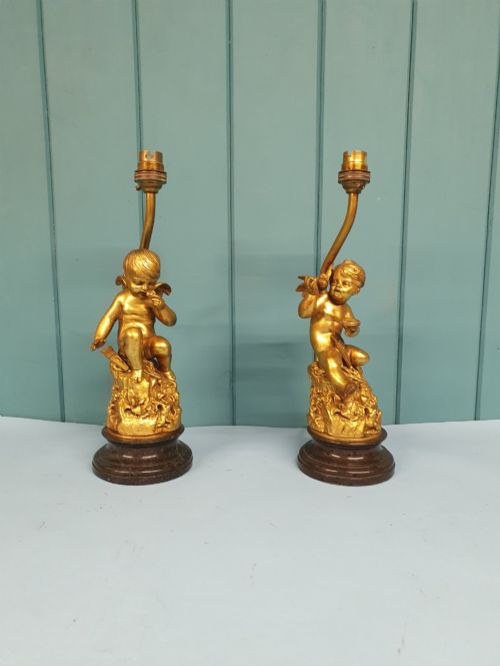



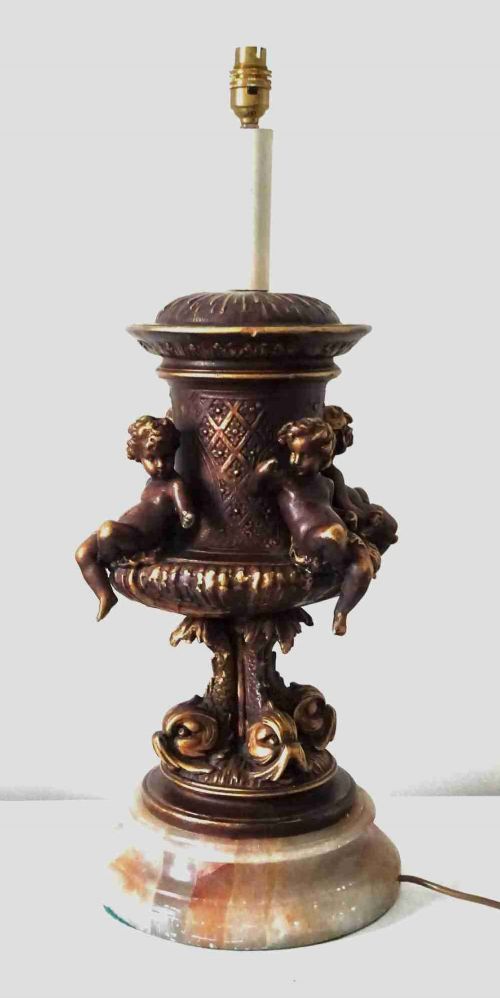


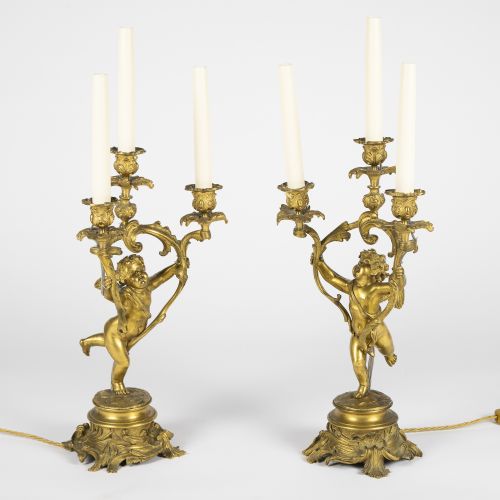
Gold Cherub Desk Lamp
These gold cherub desk lamp pieces combine figural bronze work with functional lighting, bringing sculptural presence to a room.
Gold Cherub Desk Lamp
When you search for a gold cherub desk lamp, you encounter table lighting featuring figural putti or cherubs cast in metal. The examples available span from the Victorian era into the early twentieth century.
Most pieces on this page originate from French workshops or adopt French styles such as Rococo Revival and Second Empire. They function primarily as table lamps or lamp bases, often incorporating fabric shades.
You will find single lamp bases alongside matched pairs, rendered in sizes from modest desk models to monumental floor or large table versions. The figures themselves take various forms, sometimes paired with dolphins or porcelain elements.
How they were made
The construction relies heavily on metal casting, predominantly utilising gilt bronze, ormolu, brass, and gilt brass. These metals provide a heavy foundation and allow for intricate chasing of the figural details.
Many bases incorporate natural stone elements like marble and onyx to add weight and contrast to the metallic finish. Wiring and fittings were typically adapted or added later to accommodate electrical lamp components.
Shades, where present, are constructed from fabrics such as silk or standard textiles to diffuse the light cast by the illuminated figural base.
Gold Cherub Desk Lamp Retail Price Guide 2026
Typical asking prices for gold cherub desk lamp among the pieces listed under this phrase on Sellingantiques today, from the lower quarter to the upper quarter. They describe what is for sale here now, not the wider market.
Listings on this page span several decades, featuring materials such as onyx, marble, silk, and gilt bronze across table lamp forms.
What varies in quality
The choice of base materials also dictates the grade of the object, with dense marbles and heavy ormolu commanding greater presence than lighter brass alternatives.
The Gold Cherub Desk Lamp Glossary
- Ormolu
- Gilded bronze produced by applying a mercury and gold amalgam to bronze, creating a durable golden surface. This technique was widely practiced in France during the eighteenth and nineteenth centuries.
- Putto
- A plump, naked male child figure often depicted in classical art and architectural decoration. In these lamps, they serve as the central figural support.
- Rococo Revival
- A nineteenth-century design movement that emulated the ornate, asymmetric curves and natural motifs of the eighteenth-century Rococo period. It heavily influences many of these French-style lamps.
- Gilt Bronze
- Bronze metal that has been coated with a thin layer of gold leaf or gold paint. It provides the characteristic golden sheen seen across the lamp bases.
- Second Empire
- The architectural and decorative style associated with the reign of Napoleon III in France, characterised by eclectic and opulent revivals of historic designs.
Gold Cherub Desk Lamp: Frequently Asked Questions
What periods do these lamps come from?
The pieces span the nineteenth century and the early twentieth century, with Victorian examples and items dating from the 1870s to the 1920s.
French Rococo Revival and Neoclassical styles dominate this period, reflecting popular revival aesthetics of the era.
Are these lamps sold as pairs?
Some listings offer matched pairs of cherub lamps, while others are sold as individual table lamps or lamp bases.
Pairs typically originate from the same workshop and share identical casting and decorative details.
What materials are used in the bases?
The primary structural materials are gilt bronze, ormolu, brass, and gilt brass, which form the figures and mounts.
Many designs incorporate marble or onyx sections into the base to provide additional weight and visual contrast.
Did these always have electric bulbs?
Original nineteenth-century pieces were manufactured before the widespread adoption of electric lighting and were subsequently adapted for modern electrical use.
Wiring, fittings, and fabric shades are often modern replacements fitted to antique metal bases.