

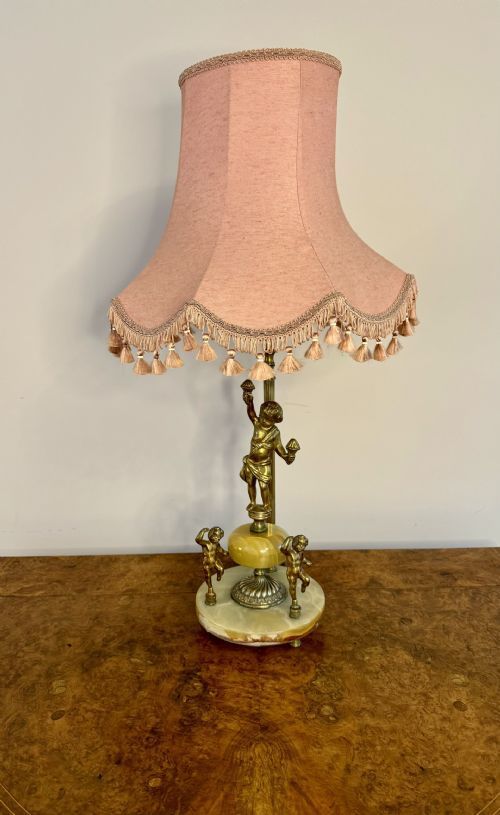


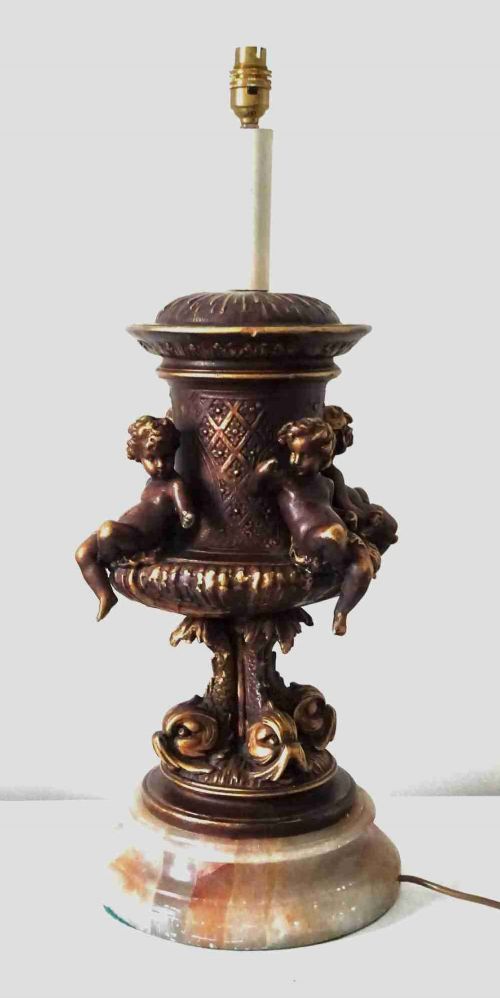


Vintage Putto Desk Light
A vintage putto desk light brings sculptural charm and classical warmth to a workspace, combining figural bronze or brass with functional illumination.
Vintage Putto Desk Light
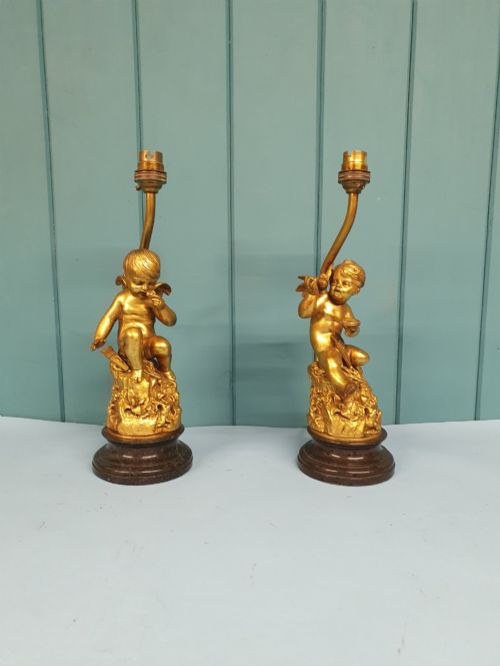
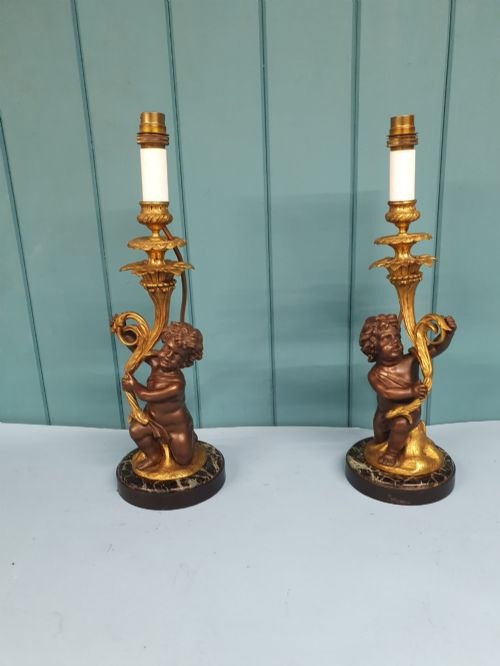
When you search for a vintage putto desk light, you encounter figural table lamps featuring cherubs, putti, and dolphins cast in metal or carved from stone. These pieces draw primarily from the Victorian era, the nineteenth century, and the early decades of the twentieth century.
The selection on this page centres heavily on French Rococo Revival, Neoclassical Revival, and Baroque Revival styles. Most examples function as table lamps, utilising patinated bronze, gilt bronze, brass, or ormolu paired with marble or onyx bases.
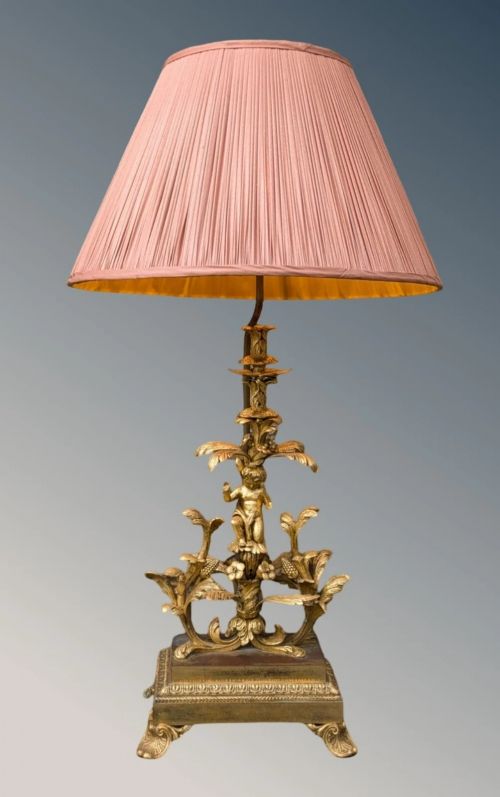
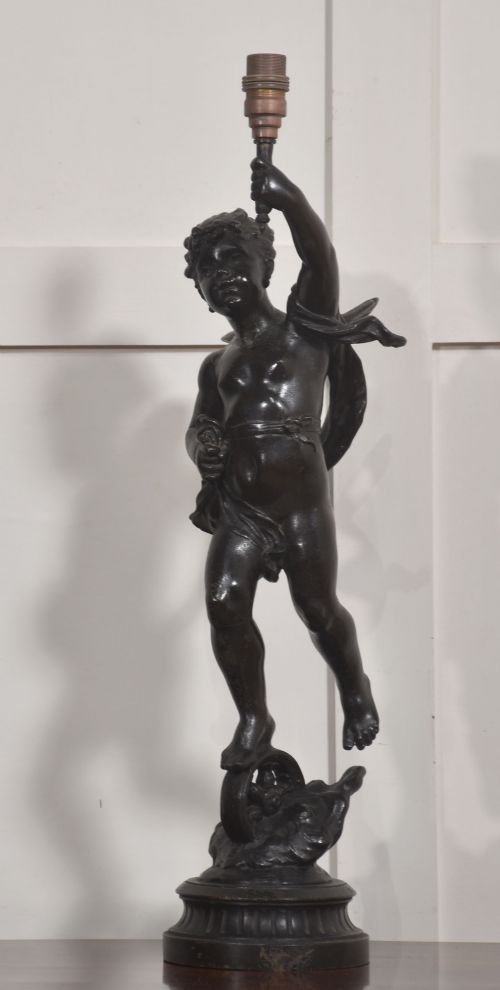
Buyers frequently find pairs of cherub table lamps alongside single statues converted into lamps. The forms range from compact desk companions to taller decorative fixtures incorporating fabric shades and moulded plaster elements.
Materials and construction methods
Foundry work dominates these pieces, utilising bronze, brass, ormolu, and gilt metal cast to capture the delicate contours of cherubic figures. Many items combine heavy metal castings with natural stone bases such as marble and onyx for stability.
Finishing techniques involve patination, gilding, and the integration of fabric shades or porcelain components. Converted statuettes demonstrate how earlier sculptural figures were adapted for electrical lighting during subsequent decades.
Vintage Putto Desk Light Retail Price Guide 2026
Typical asking prices for vintage putto desk light among the pieces listed under this phrase on Sellingantiques today, from the lower quarter to the upper quarter. They describe what is for sale here now, not the wider market.
Listings feature items spanning the nineteenth century through the 1930s, utilising bronze, brass, marble, onyx, and fabric.
Assessing quality in figural lighting
The definition and depth of the metal casting distinguish finer pieces from simpler productions, particularly in the rendering of facial expressions and anatomical detail. Superior items display crisp chasing and careful finishing across the bronze, brass, or ormolu surfaces.
The choice of base materials also indicates tier, with dense natural marble and onyx elevating an object above standard metal mountings. Furthermore, the integration of original porcelain elements or harmonious fabric shades points to higher workshop standards.
The Vintage Putto Desk Light Glossary
- Putto
- A plump, naked child depicted in classical art, often winged. These figures form the primary sculptural subject of the lamps listed here.
- Ormolu
- Gilded bronze produced by applying a finely ground high-carat gold-mercury amalgam to a bronze object. This technique creates a rich, warm metallic finish seen on many nineteenth-century pieces.
- Patinated bronze
- Bronze that has been chemically treated or aged to produce a specific surface colour and tone. It enhances the depth and texture of figurative castings.
- Rococo Revival
- A nineteenth-century design movement characterised by asymmetrical scrollwork, naturalistic motifs, and exuberant ornamentation. It heavily influences the French styles on this page.
Vintage Putto Desk Light: Frequently Asked Questions
What is a putto desk light?
A putto desk light is a decorative table lamp featuring a sculptural figure of a cherub or putto, typically cast in bronze, brass, or gilt metal. These pieces serve as functional desk lighting while displaying classical figural art.
Most examples originate from the nineteenth and early twentieth centuries, drawing on French Revival and Victorian design traditions to bring historical character to an interior.
How do I identify the period?
Identifying the period involves examining the casting quality, the materials used for the base, and the overall stylistic vocabulary. Nineteenth-century pieces often feature heavier patinated bronze or fire-gilt ormolu mounted on natural marble.
Later pieces from the early twentieth century may incorporate onyx, alternative metal alloys, or components adapted from earlier decorative statues during electrification.
Were these originally electric?
Many items from the nineteenth century started life as decorative bronze or spelter statuettes before being converted into table lamps during later periods. Converted pieces retain their sculptural integrity while accommodating modern electrical fittings.
Twentieth-century productions were frequently manufactured specifically as lighting fixtures, integrating wiring channels directly through the cast metal or stone bases.
How do I care for gilt bronze?
Caring for gilt bronze and ormolu requires gentle dusting with a soft, dry cloth to prevent the accumulation of grit in the recesses of the casting. Avoid using commercial metal cleaners, harsh abrasives, or chemical polishes that can strip the delicate surface gilding.
Maintaining a stable indoor environment away from excessive moisture preserves both the metal finishes and any integrated stone or fabric elements.