
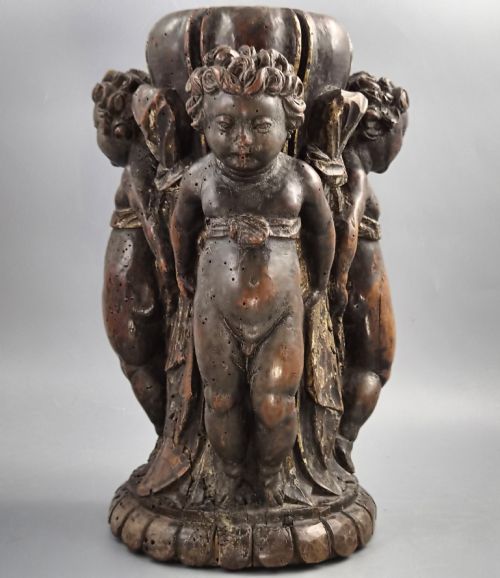


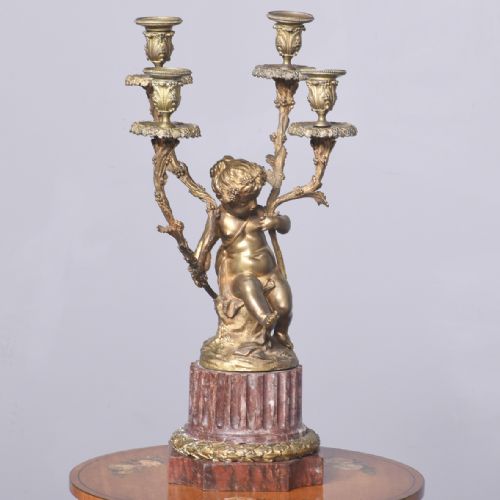


Cherub Candle Stands
Cherub candle stands bring winged figures holding lights into your room, combining sculptural charm with practical illumination.
Cherub Candle Stands
Cherub candle stands encompass figural candlesticks and candelabra featuring putti, angels, or winged figures supporting light fittings. When you search for cherub candle stands, you encounter pieces designed to hold tapers or multiple candles atop sculptural bases.
The selections span multiple eras, including the seventeenth, eighteenth, and nineteenth centuries, with French Rococo Revival, Baroque, and Regency examples appearing frequently. Materials range from gilt and patinated bronze to ormolu, marble, porcelain, and carved walnut.
Most examples take the form of paired mantel or desk ornaments, alongside occasional torchiere bases and pricket sticks. These objects merge decorative sculpture with functional lighting, reflecting the tastes of various European workshops.
How they were made
Metal versions rely on bronze casting, utilising both gilt and patinated finishes to create contrast between the figures and their mounts. Ormolu application involves mercury gilding or gold leaf applied to bronze elements, adding bright metallic lustre.
Stone and ceramic components incorporate carved marble and porphyry bases alongside porcelain bodies. Carved wooden examples utilise walnut for structural integrity and detailed figural work.
Assembly techniques join cast metal figures to heavy stone plinths using threaded rods or pins, ensuring stability for candle holders and multi-armed candelabra branches.
Listings feature items spanning the 17th, 18th, and 19th centuries, executed in bronze, ormolu, porcelain, and carved walnut.
What varies in quality
Finishing separates standard production from exceptional work, particularly in the sharpness of the chasing on bronze figures and the crispness of carved details in wood or stone. Smoother, softer contours often indicate secondary casting or later reproduction work.
The choice of materials dictates the tier of the piece, with genuine ormolu and heavy porphyry bases commanding higher regard than simple brass alloys and plain timber. Weight, balance, and the integration of components reveal the maker's original ambition.
Triebner ENS and Eckert Volkstedt·Clodion
The Cherub Candle Stands Glossary
- Putti
- Plural of putto, representing plump, winged infant figures commonly depicted in art and sculpture. They frequently appear supporting candle nozzles or dancing on bases.
- Ormolu
- Finely ground high-carat gold applied to a bronze object through a mercury amalgam technique or modern electroplating. It provides a rich, warm golden surface.
- Torchiere
- A tall stand or candlestick designed to hold a light high above the floor or surface. These often feature carved wooden figures.
- Pricket
- A sharp metal spike in the centre of a drip pan designed to impound and hold large candles securely. This form is common in earlier ecclesiastical pieces.
- Porphyry
- An extremely hard igneous rock with large crystals, highly prized for decorative bases and architectural details. Its deep purple-red hue adds visual weight.
Cherub Candle Stands: Frequently Asked Questions
What are cherub candle stands?
These decorative objects combine figural sculpture with functional lighting by incorporating winged putti or angels holding candle holders.
They serve as table ornaments, desk accessories, or mantel garnitures across various historical periods.
How do I date a pair?
Dating relies on examining the casting quality, the tooling marks on metal, and the style of the base and figures. Nineteenth-century revival pieces often mimic earlier Baroque or Rococo forms.
Material analysis of the bronze, marble, or porcelain provides further clues regarding the manufacturing era.
Are these items functional?
Most pieces retain their original capacity to hold standard taper candles or multiple wax lights safely. Users often deploy them for ambient lighting during dinners or quiet evenings.
Care must be taken with wax drips to protect the gilt bronze, ormolu, and delicate stone surfaces.
What is the difference between sticks and candelabra?
Candlesticks feature a single nozzle for one candle, typically mounted directly above the figural support. Candelabra branch out into multiple arms holding several lights simultaneously.
Both formats utilise cherub figures as the central structural or decorative element.