


Antique Putti Candlesticks
These antique putti candlesticks combine sculptural metalwork and ceramics with figural charm, bringing classical mythological motifs directly into nineteenth-century domestic interiors.
Antique Putti Candlesticks
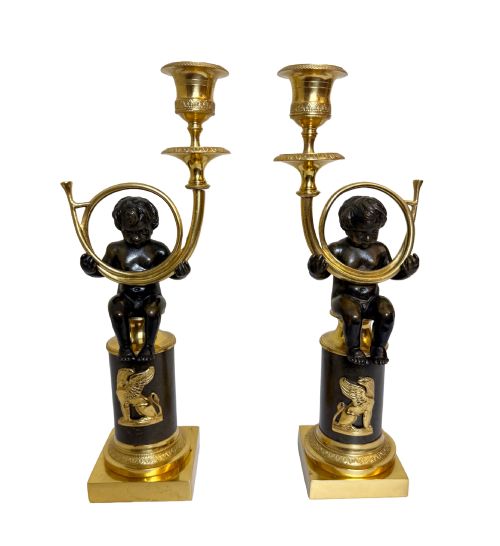
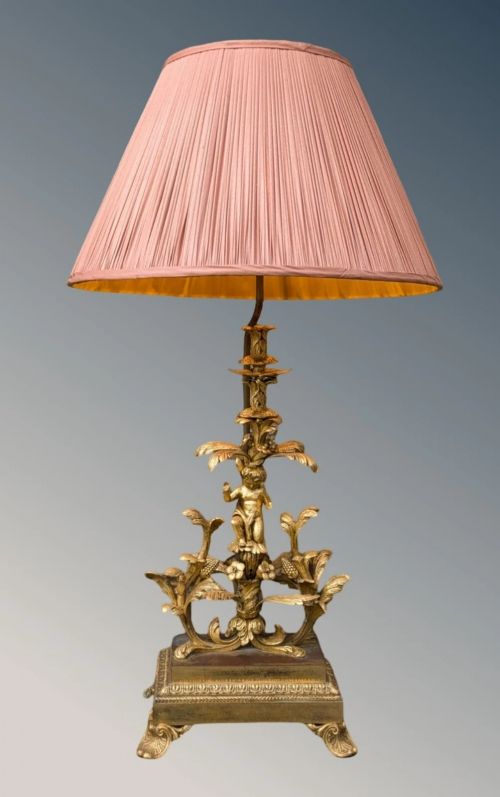
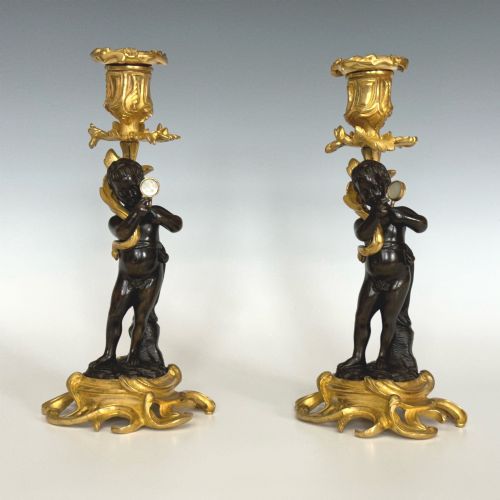
Antique putti candlesticks represent figural lighting devices cast in bronze, brass, or modelled in porcelain, featuring winged cherubic children supporting sockets or branch arms. These decorative objects draw heavily on French Rococo Revival, Louis XVI, and Empire styles, reflecting classical mythology and baroque sculptural traditions.
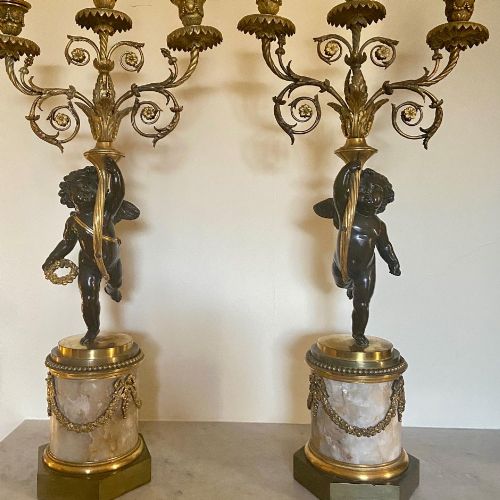
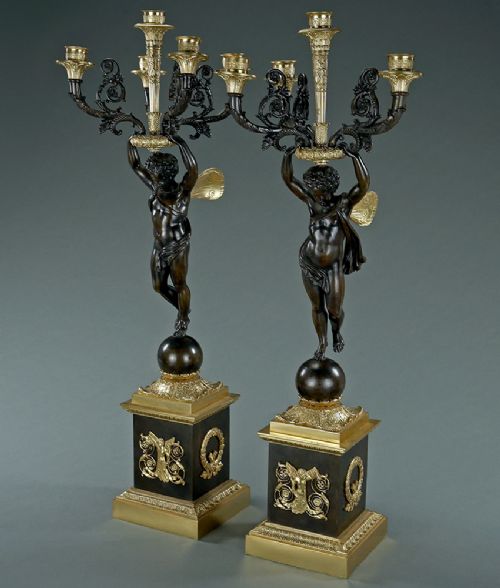
Buyers meet nineteenth-century pairs most frequently, often cast in gilt and patinated bronze mounted on marble plinths, alongside porcelain examples from continental factories. Many pieces function as twin-light or multi-light candelabra, combining candleholders with decorative statuettes of dancing or supporting cherubs.
The historical scope spans from eighteenth-century models through to late nineteenth-century revivals, including Italian Grand Tour souvenirs and German porcelain productions. These items served as ornamental mantel and desk lighting in formal European drawing rooms.
How they were made
Foundry workers utilised the lost-wax method or sand casting to shape bronze and brass figures, applying mercury gilding, or ormolu, to create golden highlights alongside dark patination. Stoneware and porcelain pieces involved slip casting or hand modelling at factories before receiving glazed enamel finishes and painted details.
Casting bronze components required assembling multiple individual parts, including the putti figures, drip pans, and candle nozzles, which were then pinned or screwed together above marble bases. Marble plinths were turned on lathes and polished, while porcelain models were fired in kilns with intricate hand-applied floral elements.
Some winged putti balance heavy candle branches with expressions of comical strain, turning functional lighting into miniature theatrical performances.
What varies in quality
The crispness of the chasing on metal casts dictates the distinction between standard production items and superior workshop pieces, where facial expressions and hair strands remain sharply defined. Smooth, even fire-gilding without patchy wear or dark base metal bleed indicates higher initial craftsmanship.
Porcelain quality rests upon the delicacy of the modelling, the translucency of the paste, and the precision of the hand-painted enamel colours. Heavy, poorly balanced marble bases or crude joins between metal figures and sockets separate mass-market items from finer sculptural examples.
Chelsea·Minton·Meissen·Triebner, ENS & Eckert Volkstedt·Sitzendorf·Claude Clodion
The Antique Putti Candlesticks Glossary
- Putti
- Plumb, wingless or winged infant figures derived from classical art and Renaissance putto representations. They appear frequently in sculpture and decorative metalwork.
- Ormolu
- Finely ground high-carat gold applied to a bronze object using a mercury amalgamation technique. This process produces a durable, bright golden surface finish.
- Candelabra
- Branching lighting fixtures designed to hold multiple candles simultaneously. They often feature central figural stems or columns.
- Patinated Bronze
- Bronze surfaces treated with chemicals or heat to create controlled coloration and ageing. This technique enhances the depth of sculptural details.
- Grand Tour
- Cultural travel undertaken by wealthy Europeans through France and Italy during the eighteenth and nineteenth centuries. Tourists collected small bronzes and souvenirs.
- Blanc de Chine
- White porcelain produced in China, which inspired European factories to create unglazed or white-glazed figures. The term translates as white from China.
Antique Putti Candlesticks: Frequently Asked Questions
How were these candlesticks used originally?
Households placed these objects on dining tables, mantelpieces, and desks to provide localized illumination during evening hours. Multi-arm versions lit larger reception rooms, while single-socket desk candlesticks served private studies.
Candlelight reflected off the ormolu surfaces and polished marble bases, maximising the available light in nineteenth-century interiors.
How do I distinguish French Empire from Rococo Revival?
French Empire pieces display classical symmetry, military motifs, and austere geometric lines influenced by ancient Rome. Rococo Revival items feature asymmetrical scrolls, naturalistic foliage, and dynamic, twisting putti figures.
Examining the base styling and casting depth usually clarifies which stylistic period influenced the workshop.
Can modern candles fit antique sockets?
Standard modern candle diameters occasionally differ from nineteenth-century European sizing specifications. Many collectors use fitted beeswax adapters or carefully pare down candle bases to secure them safely.
Forcing oversized candles into antique metal or porcelain sockets risks cracking delicate materials or loosening the fitted pins.
What indicates an Italian Grand Tour piece?
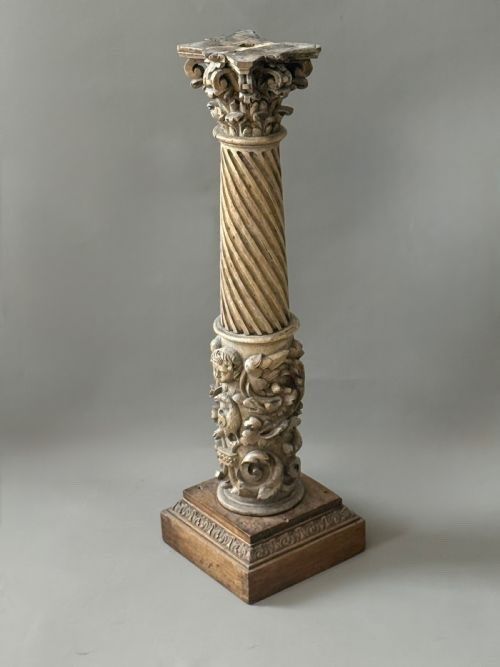
Italian Grand Tour pieces typically feature dark patinated bronze putti mounted on distinct decorative marble or alabaster columns. These souvenirs were purchased by travellers in Rome and Florence during the nineteenth century.
The casting style often reflects local Italian workshop interpretations of classical sculpture rather than domestic French foundry output.