




Putti Brass Candlesticks
Putti brass candlesticks are sculptural domestic lights cast in metal and modelled with winged infants, offering tactile warmth and classical theatre to a room.
Putti Brass Candlesticks
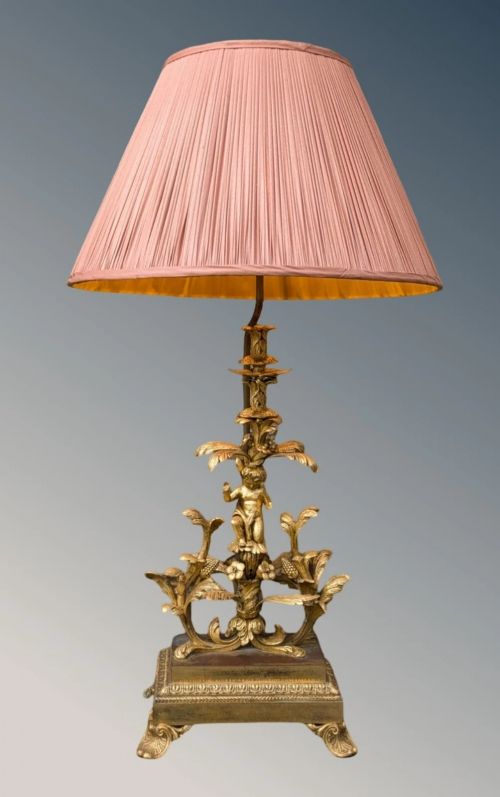
When you search for putti brass candlesticks, you are looking at figural lighting cast in copper alloys and gilt metals, depicting winged infants derived from classical mythology. The pieces appearing here span the nineteenth century, including Victorian examples alongside earlier Regency and French Restoration pieces.
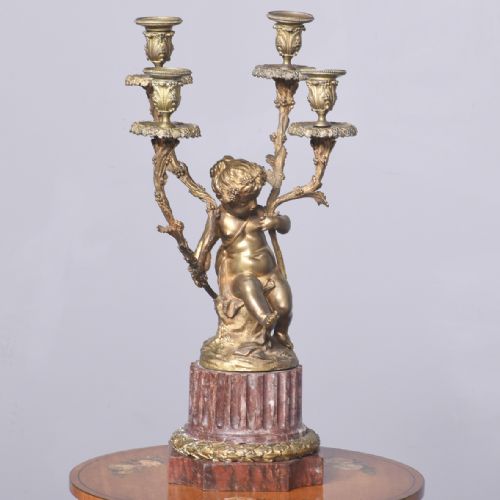
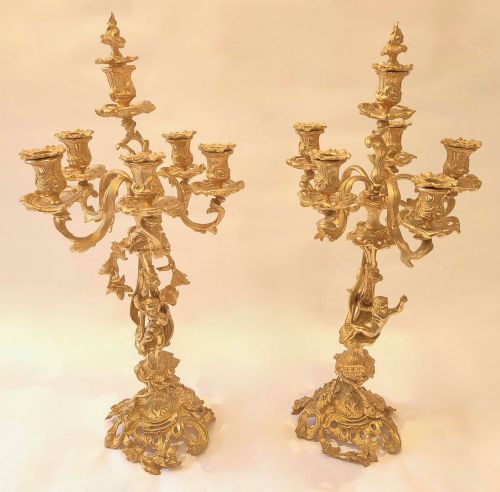
The dominant forms are pairs designed for mantelpieces and tables, often combining metal figures with contrasting stone plinths or incorporating multiple scrolling arms. These range from simple single-socket holders featuring dancing cherubs to elaborate multi-arm candelabra influenced by French Rococo Revival and Louis XVI styles.
Makers drew heavily on continental European design vocabularies, producing works where cast cherubs support candle nozzles or stand beside central shafts. The selection relies on materials such as ormolu, patinated bronze, and marble to create decorative contrast.
How they were made
Foundries produced these objects using traditional sand casting or lost-wax methods, pouring molten brass and bronze into detailed moulds before hand-chasing the cooled metal surfaces. Figures of cherubs and putti required careful assembly of separately cast arms, wings, and bodies fastened with threaded pins.
Gilding was applied via mercury amalgamation to achieve deep ormolu finishes, or through modern electroplating methods on later nineteenth-century pieces. Components were then mounted onto turning bases of white or black marble to add physical weight and visual dignity.
Dancing putti on nineteenth-century desk candlesticks frequently clutch tiny bunches of grapes or musical instruments instead of standard drip pans.
What varies in quality
The distinction between ordinary and exceptional work lies in the crispness of the chasing and the depth of the metal finishing. Superior examples display sharply defined facial expressions, individually textured hair, and clean drapery folds on the putti figures, whereas lesser pieces exhibit softened details from worn moulds.
Integration of materials also dictates standing, with high-grade items featuring heavy fire-gilded ormolu that retains its golden lustre alongside solid, well-polished marble bases. Poorer castings often show visible seams, crude solder joints, or thin, flaky surface treatments that reveal base metals underneath.
The Putti Brass Candlesticks Glossary
- Putti
- Plumed or unwinged infant boys used in classical art and decoration. They derive from ancient Roman Cupid figures and appear frequently in Renaissance and nineteenth-century revivals.
- Ormolu
- Finely ground high-carat gold mercury-gilded onto a bronze base. The technique creates a rich, matte yellow finish characteristic of luxury French metalwork.
- Candelabra
- Branched lighting fixtures holding multiple candles. They evolved from single candlesticks to accommodate several stems branching from a central column.
- Patinated bronze
- Metal darkened or coloured through chemical treatment or natural oxidation. This process highlights sculptural contours by creating contrast against brighter gilt elements.
Putti Brass Candlesticks: Frequently Asked Questions
Are these candlesticks safe to use with real candles?
Most antique candlesticks accommodate standard taper candles securely within their drip pans or sockets. Checking the stability of the base and ensuring the candle sits upright prevents drips onto surrounding surfaces.
For valuable or gilded pieces, many collectors prefer using dripless beeswax candles or converting the holders temporarily with fitted sleeve adapters to protect delicate metal finishes.
How do I clean nineteenth-century ormolu and bronze?
Dusting gently with a soft, dry microfibre cloth removes everyday particles without harming the metal. Avoid commercial chemical dips or abrasive metal polishes, which strip away thin historic gilding.
If grime accumulates, a very lightly dampened cloth with distilled water can be applied sparingly, followed immediately by thorough drying with a soft towel.
Why are some cherub figures paired with marble bases?
Marble adds necessary physical weight to tall or top-heavy figural designs, keeping the candlesticks stable when loaded with candles. It also introduces a neoclassical architectural element that contrasts with the warm tones of bronze and ormolu.
Foundries selected contrasting white, grey, or black stone plinths to ground the playful movement of the sculptural putti above.
How can I tell a Regency pair from a Victorian one?
Regency metalwork often shows lean, strict classical lines influenced by French Empire design, featuring crisp patination and restrained decorative motifs. Victorian pieces, particularly those from the mid-nineteenth century onwards, frequently embrace exuberant Rococo Revival curves with more heavily ornamented bases.
Maker marks, casting styles, and the type of marble used help narrow down the decade of production when comparing similar designs.