



Checkerboard Side Table
These checkerboard side tables bring together surface play and domestic utility across centuries of cabinet making.
Checkerboard Side Table
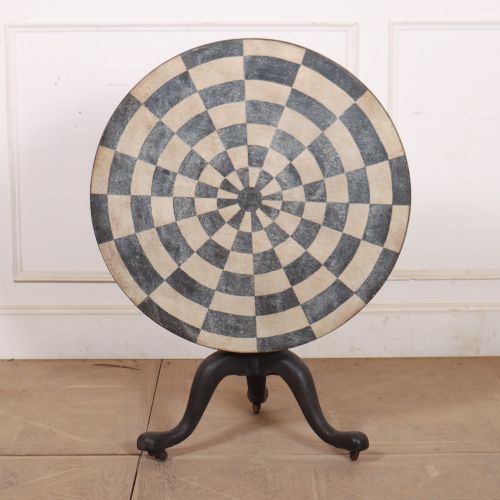
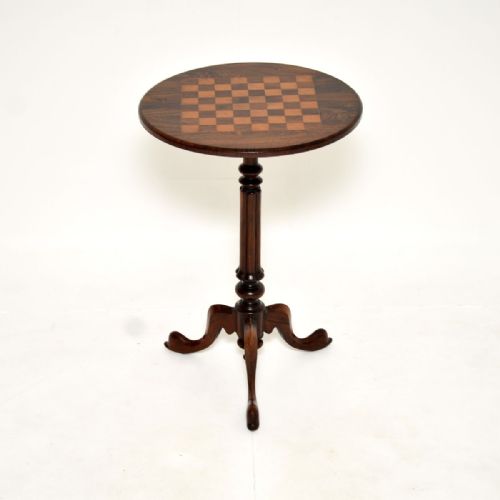
A checkerboard side table combines a compact support surface with an integrated playing grid for chess, draughts or general games. These pieces function primarily as occasional or side tables within a room, offering a surface for lamps or decorative objects when not in active use for play.
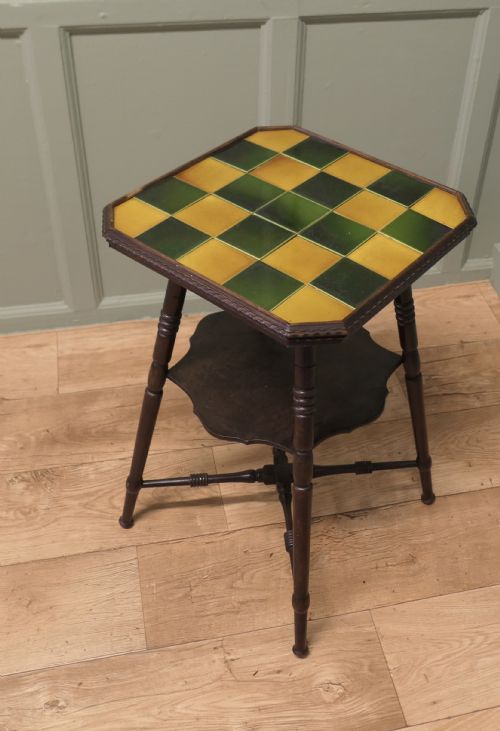
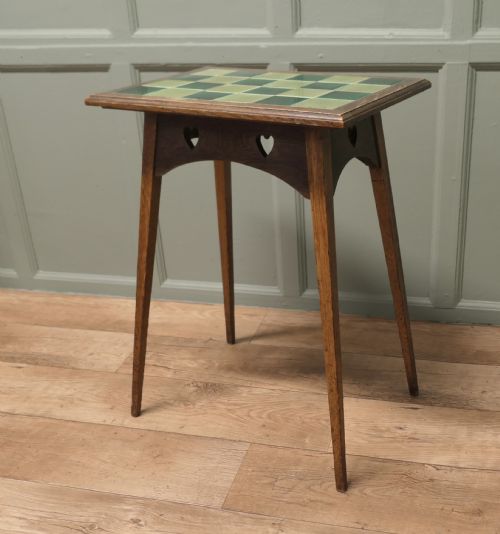
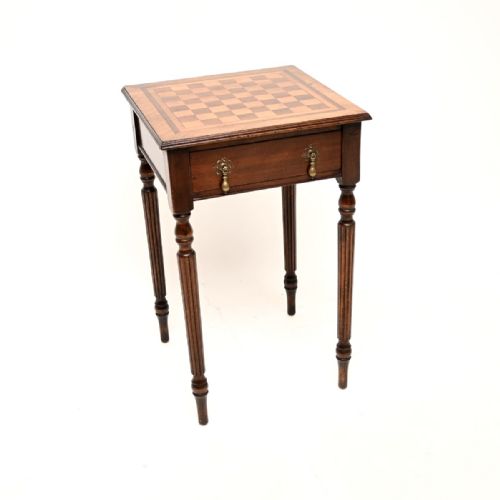
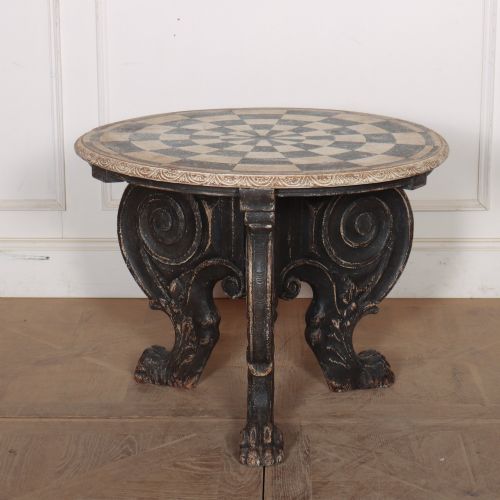
The selections available here range from formal Regency tripod tables and Victorian inlaid rosewood chess tables to Arts and Crafts designs featuring tiled tops. Cabinet makers utilise woods such as mahogany, walnut, rosewood and oak alongside mixed wood inlay and ceramic components.
Makers from the eighteenth century onwards approach this form with varying degrees of ornamentation, from simple turned supports to elaborate tripod bases and brass-mounted details. The domestic function remains consistent even as the decorative vocabulary shifts through the Georgian, Victorian and Edwardian periods.
How they were made
Cabinet makers construct these tables using solid timbers and decorative veneers such as walnut, rosewood, satinwood and mahogany. Parquetry and marquetry techniques form the contrasting squares of the playing surfaces using timber species chosen for natural tone and grain variation.
Specialised workshops employ penwork, brass mounts, carved details and ceramic tiles to decorate the table tops and structural supports. Tripod bases utilise turned pedestals secured to three legs, while four-legged side tables and nest configurations rely on stable frame construction.
Checkerboard Side Table Retail Price Guide 2026
Typical asking prices for checkerboard side table among the pieces listed under this phrase on Sellingantiques today, from the lower quarter to the upper quarter. They describe what is for sale here now, not the wider market.
Materials span walnut, rosewood, mahogany, oak, brass, ceramic tiles and mixed wood inlay across Georgian, Victorian and Edwardian periods.
What varies in quality
The precision of the inlay work marks the distinction between standard production and finer cabinet making, particularly where multiple timber species meet at the corners of each square on the board. Sharp geometric alignment and tight joints across the playing surface demonstrate superior hand skills.
Choice of primary and secondary timbers dictates the grade of the piece, with richly figured rosewood, satinwood and kingwood reserved for high-status examples. The integration of decorative elements such as brass mounts, hand-carved supports or ceramic tiles reflects the ambition of the original workshop.
Liberty London·Shapland & Petter
The Checkerboard Side Table Glossary
- Parquetry
- Geometric wood mosaic work used to create repeating patterns and checkerboard surfaces on table tops. This technique involves fitting thin pieces of timber precisely together.
- Marquetry
- The art of applying pieces of veneer to a structure to form decorative designs, often floral or figurative. Craftsmen select contrasting woods to achieve tonal depth.
- Penwork
- Decorative surface embellishment created using ink applied to wood, often mimicking more costly inlay. This technique appears on Regency examples.
- Tripod base
- A central pedestal support standing on three individual feet or legs. This configuration provides stability on uneven floors.
- Occasional table
- A small, movable table designed for specific, intermittent uses within a room. These pieces supplement larger dining and writing furniture.
Checkerboard Side Table: Frequently Asked Questions
What periods do these tables come from?
The pieces span from the eighteenth century through the Regency, Victorian and Edwardian eras up to the early twentieth century. Styles shift accordingly from classical revival forms to Arts and Crafts designs.
Craftsmen of each period adapt the checkerboard format to contemporary tastes using prevailing woods and decorative techniques of their workshop traditions.
How were these tables used originally?
These tables served a dual purpose as everyday furniture for lamps or ornaments and as dedicated boards for chess or draughts. They occupied prominent positions in parlours, drawing rooms and libraries.
When not in use for games, the surface functioned as a standard side table, making the form practical for smaller sitting rooms.
What materials appear on the tops?
Surfaces feature inlaid timber squares in woods such as walnut, rosewood, mahogany and mixed wood marquetry or parquetry. Some examples incorporate ceramic tiles alongside wood or brass mounts.
The choice of material reflects both the date of manufacture and the decorative ambitions of the maker.
How do tripod tables differ from four-legged tables?
Tripod tables rely on a central turned pedestal supported by three feet, a common configuration in Regency and eighteenth-century design. Four-legged side tables and centre tables offer a more traditional rectangular or octagonal frame.
Each base type suits different interior spaces and reflects distinct regional and period cabinet making practices.