



Occasional Chess Table
An occasional chess table brings a dual function to a room, serving as a display surface and a board for play.
Occasional Chess Table
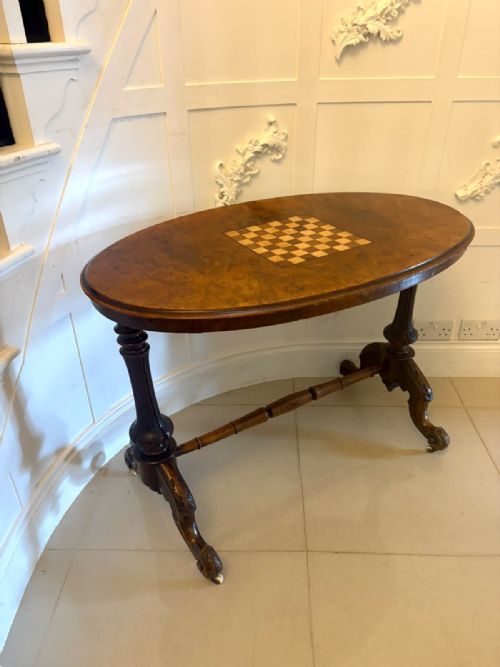
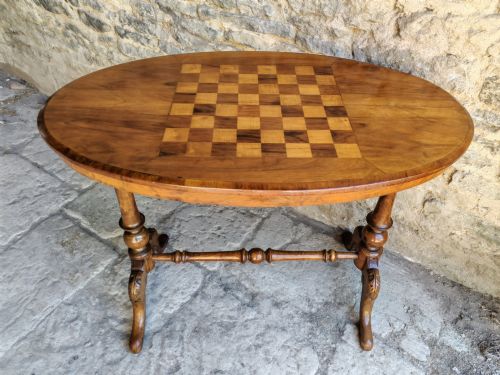
An occasional chess table combines the practical surface of a standard small table with an integrated playing grid on the top. When searching for an occasional chess table, you encounter pieces designed primarily for sitting rooms, libraries, and parlours where space permitted versatile furnishings.
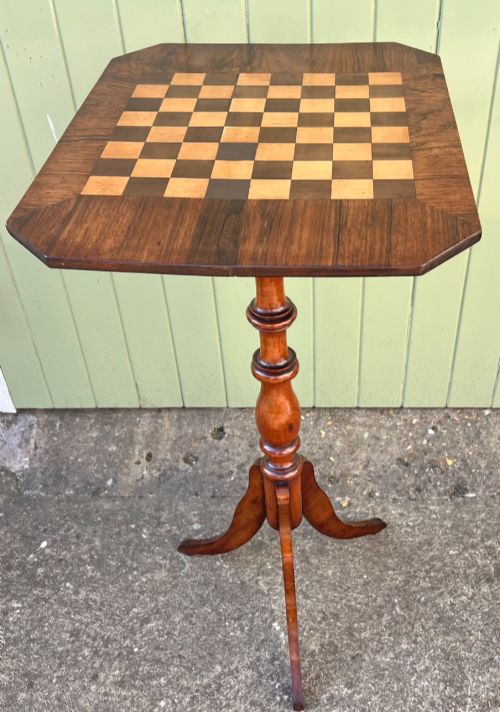
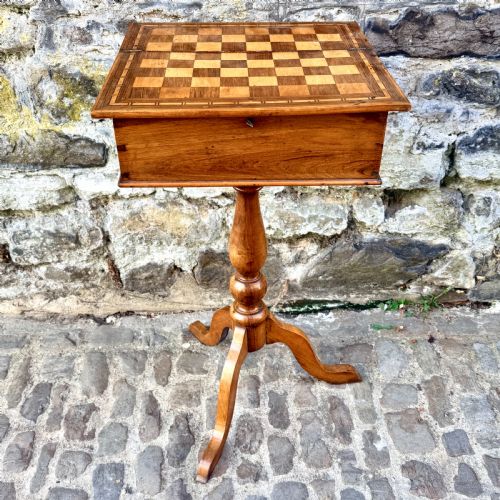
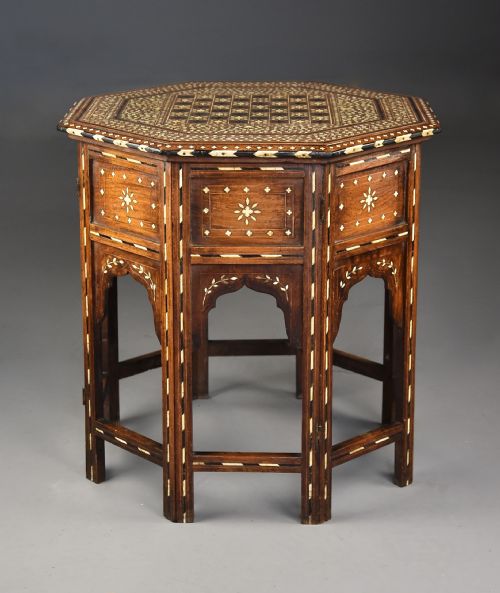
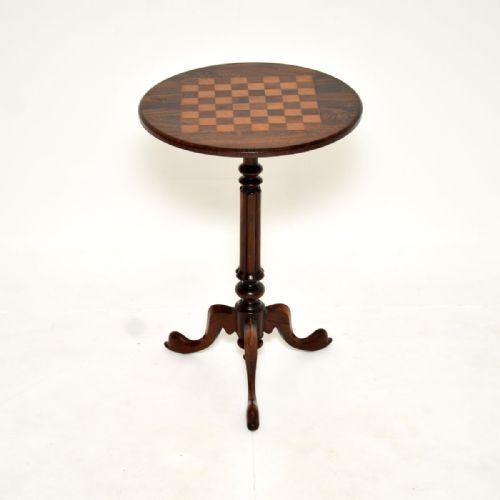
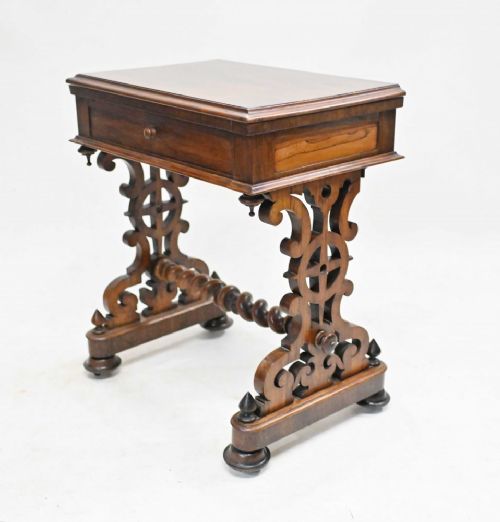
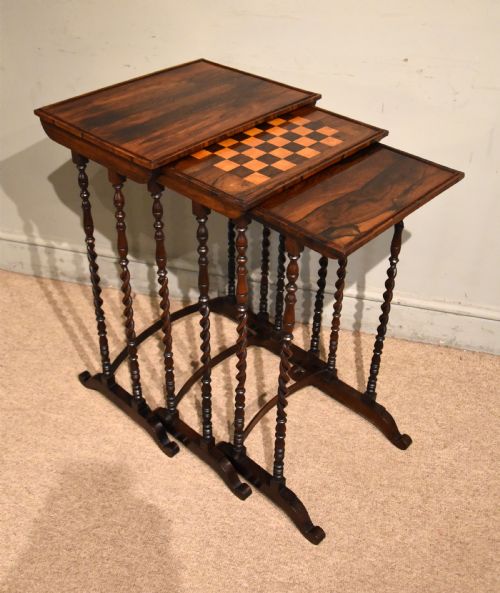
The versions most frequently met on this page date from the nineteenth century, spanning Regency, Georgian, and Victorian periods. Forms range from tripod tables and nests of tables to octagonal occasional pieces and multi-functional work tables.
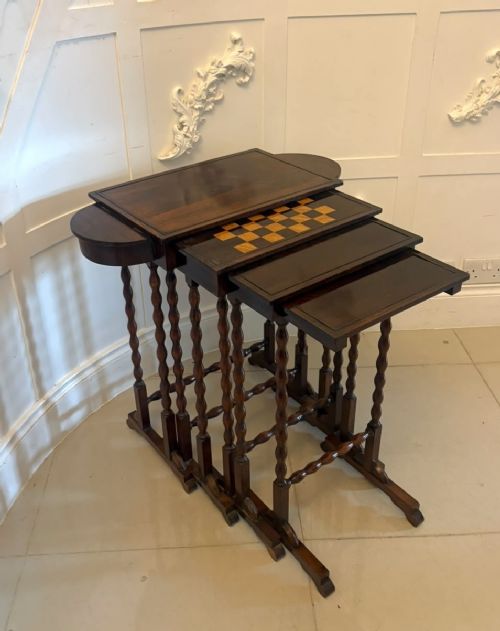
Makers often integrated boards into tables intended for multiple pastimes, adding backgammon boards or reversible leather tops alongside the standard chequer pattern. Others built these surfaces into specialised forms such as Hoshiarpur tables or quartetto nests.
How they were made
Cabinet makers utilised dense hardwoods such as rosewood, walnut, and mahogany for the primary structures, often shaping them into tripod bases, turned columns, or rectangular frames. These woods provided the structural stability needed for tables that were frequently moved around a room.
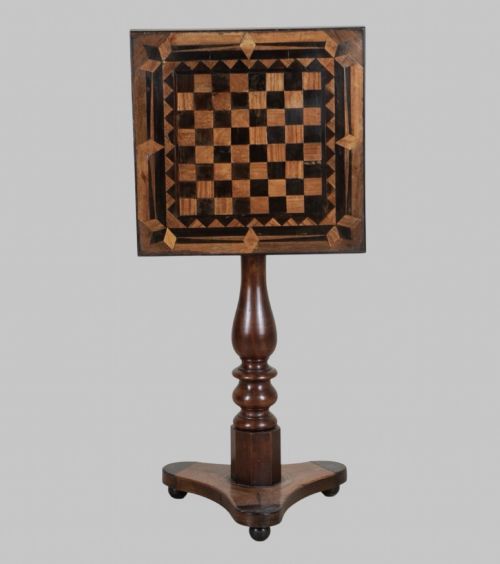
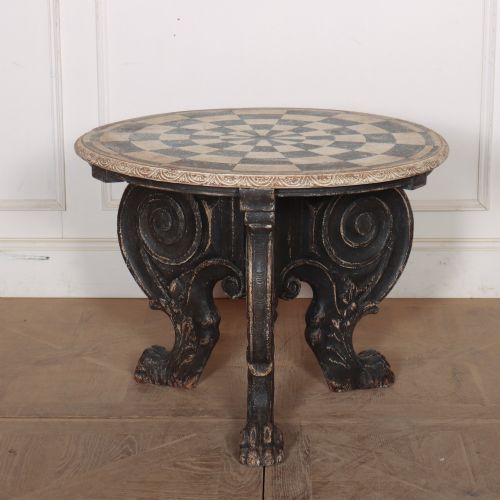
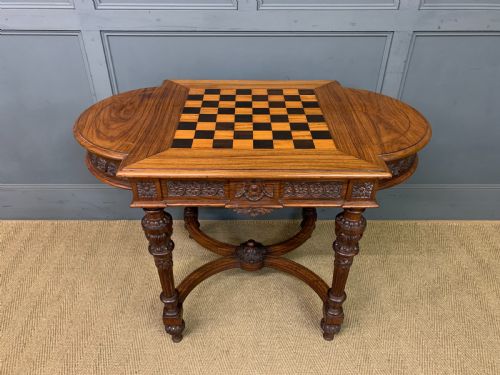
Surfaces relied on contrasting timbers for the chequer-board pattern, incorporating boxwood, ebony, satinwood, sycamore, and birch through marquetry, parquetry, and inlaid techniques. Some examples also incorporated penwork decoration, brass mounts, or specimen marble tops to achieve decorative contrast.
Listings feature rosewood, walnut, mahogany, and oak alongside specialised inlays like boxwood and satinwood across the nineteenth century.
What varies in quality
The standard of execution in the inlay work separates ordinary pieces from finer examples, particularly in the precision of the alternating light and dark squares on the playing surface. Sharp, tight mitres and clean joins between contrasting timbers indicate careful bench work.
Material selection also dictates the standing of a piece, with figured burr walnut, rich rosewood, or specialist regional timbers such as Killarney yew and Anglo-Indian woods representing more ambitious production. The complexity of the table base, whether a carved tripod, turned pedestal, or integrated nest of four tables, further distinguishes the grade of manufacture.
The Occasional Chess Table Glossary
- Chequer-board
- A squared grid pattern of alternating dark and light tiles used for games such as chess and draughts. This pattern forms the central decorative and functional element on the top of these tables.
- Marquetry
- The art of applying small pieces of veneer to a structure to form decorative patterns or pictures. Cabinet makers used this technique to build intricate borders and playing surfaces.
- Parquetry
- A geometric mosaic of wood pieces used for floors and furniture surfaces. It appears frequently on the tops of these tables to create the grid pattern.
- Penwork
- A decoration technique using ink drawn directly onto a wooden surface before sealing. This method creates fine, detailed line work found on Regency period tables.
- Quartetto nest
- A set of four graduating tables designed to stack inside one another. Some Regency examples incorporate a chess board onto the top surface of the main table.
Occasional Chess Table: Frequently Asked Questions
How were occasional chess tables used?
These tables served a double purpose in historic interiors, acting as a standard surface for lamps or ornaments while remaining ready for a game. Owners placed them beside seating areas where they could be moved easily.
Because they functioned as ordinary furniture when not in play, they suited formal entertaining rooms and private studies alike.
What periods do these tables come from?
Most surviving examples date from the nineteenth century, including the Regency, William IV, and Victorian eras. Earlier pieces from the Georgian period also appear.
Stylistic details such as penwork decoration, carved tripod bases, or heavy walnut frames help indicate the specific era of manufacture.
Are all the chess boards built into the wood?
Many tables feature inlaid wood boards using timbers like boxwood and ebony, but others employ alternative methods. Some Victorian examples include reversible tops with leather inserts or backgammon layouts underneath.
Specimen wood tables often incorporate numerous regional timbers to form the playing squares.
How do I fit one into a modern room?
An occasional chess table works well beside a sofa or armchair, functioning just like any small side table. The built-in board adds texture and pattern to a room even when the table is left empty.
Their compact scale, particularly tripod and nest formats, makes them adaptable to smaller spaces.