

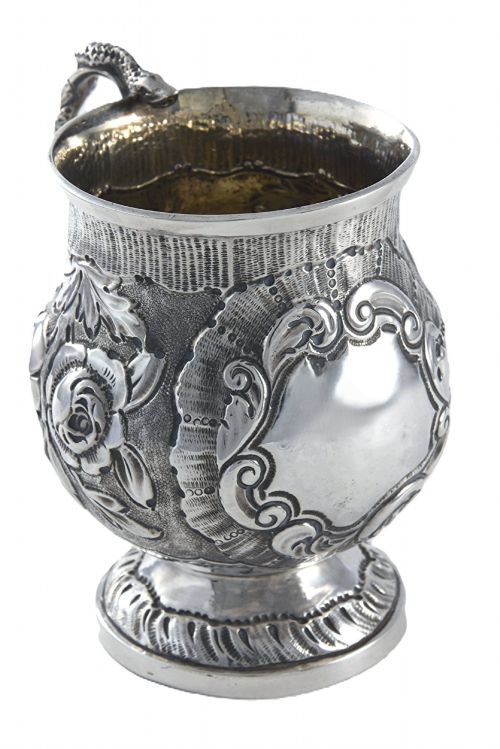


Chased Silver Mug
A chased silver mug brings tactile weight and bright reflection to a desk or sideboard.
Chased Silver Mug
When you search for a chased silver mug, you encounter vessels shaped for drinking, display, and presentation across several centuries. The selection spans Georgian, Victorian, and Edwardian eras, alongside later twentieth-century pieces.
Most examples take the form of small drinking vessels, christening cups, or lidded tankards fashioned from sterling silver or silver-gilt. Forms range from straight sides and campana profiles to baluster shapes decorated with hammered surface work.
Makers designed these items for everyday use, celebratory toasts, or significant family milestones such as christenings. You will find pieces originating from London, Chester, and Newcastle bearing distinct period hallmarks.
Silversmithing and chasing techniques
Silversmiths shaped sterling silver and silver-gilt into robust vessels using hammering and soldering techniques. They formed bodies into baluster, campana, or straight profiles suited to daily handling.
Craftsmen decorated the exterior surfaces using chasing tools, pushing the metal from the front to raise motifs such as rococo flowers, scrolling foliage, laurel leaves, and spiral fluting. This technique added texture and depth without removing material from the wall of the vessel.
Listings feature sterling silver and silver-gilt items spanning Georgian, Victorian, and Edwardian periods, alongside twentieth-century examples.
Assessing quality in chased silver
Quality rests upon the crispness of the chased decoration and the balance of the vessel form. Deeply hammered floral and scroll work shows the skill of the silversmith, while shallow or worn chasing indicates heavy polishing over time.
The weight of the sterling silver and the sturdiness of the handle attachment distinguish finer vessels from lighter production pieces. Crisp hallmarks and well-proportioned baluster or campana profiles further mark out superior examples.
The Chased Silver Mug Glossary
- Chasing
- A silversmithing technique where metal is worked from the front with hammers and punches to sink the background and raise decorative motifs. This creates low-relief surface designs without cutting into the silver.
- Sterling silver
- An alloy consisting of pure silver and other metals, usually copper, standardised for strength and durability. Most British items from the Georgian and Victorian periods are made from this standard.
- Baluster
- A curved, vase-like architectural or vessel shape that swells near the base and tapers toward the top. It provides a comfortable grip and a stable foundation for drinking mugs.
- Campana
- A bell-shaped vessel profile that curves outward toward the rim. This classical form appears frequently on presentation and christening cups.
- Hallmark
- A series of official marks stamped into precious metal objects to guarantee purity and origin. These marks typically indicate the maker, assay office, and year of manufacture.
Chased Silver Mug: Frequently Asked Questions
What is a chased silver mug used for?
These vessels served as functional drinking cups, presentation pieces, and gifts for family milestones like christenings. Many were kept as family heirlooms rather than used for daily dining.
Today, they function as decorative objects, desk accessories, or traditional keepsakes. Their durable sterling silver construction allows them to be displayed on shelves or sideboards.
How do I clean a chased silver mug?
Clean silver using a soft cloth and a specialised silver polish designed to lift tarnish gently. Avoid harsh abrasive pads that can wear down the chased surface details.
Work carefully around the recesses of floral and scroll chasing to prevent polish residue from building up in the grooves. Rinse with warm water and dry thoroughly with a soft cloth.
How can I tell the age of a silver mug?
Examine the hallmarks stamped into the metal to find the assay office mark and date letter. These official stamps provide reliable clues to the exact year of manufacture.
Stylistic elements like rococo floral chasing, spiral fluting, or baluster silhouettes also point to specific periods such as the Georgian, Victorian, or Edwardian eras.
What is the difference between a mug and a tankard?
Mugs generally feature an open top and a single handle, designed for everyday beverage consumption. They often display decorative chased patterns suited to domestic settings.
Tankards frequently include a hinged lid and a more robust handle, originating as heavy-duty drinking vessels. Lidded versions provide extra security for the contents.