


Charles II Coffer
When you encounter a charles ii coffer, you are looking at substantial seventeenth-century storage furniture built to endure.
Charles II Coffer
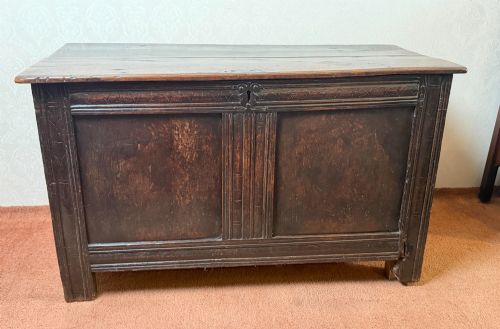
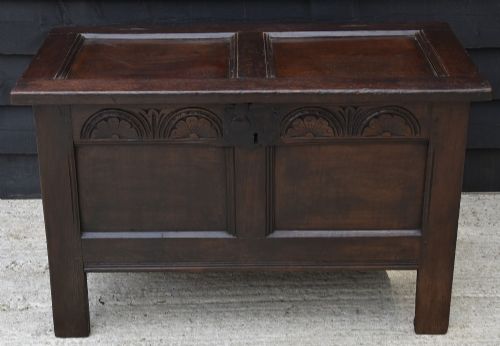
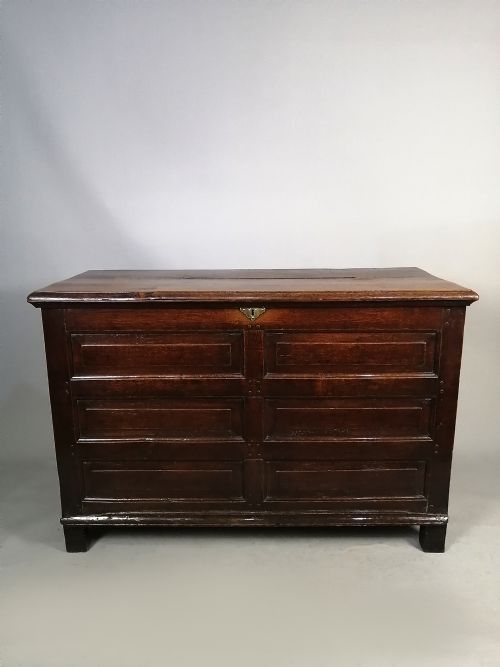
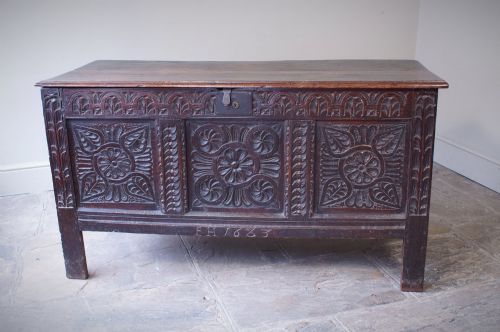
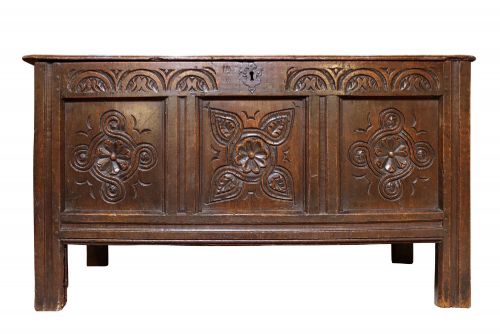
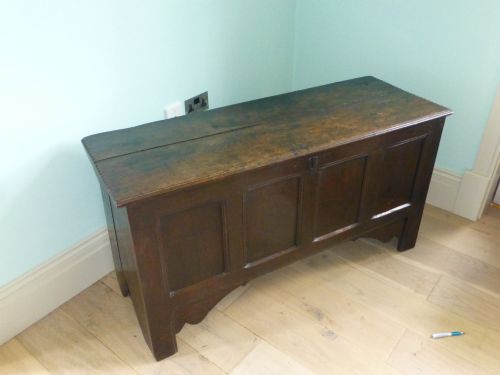
A charles ii coffer is a sturdy wooden chest dating from the seventeenth century, typically constructed with panelled sides and a solid lid. These pieces served practical domestic storage needs for textiles, valuables, and documents in English households.
The versions most frequently found on this page display traditional regional characteristics such as carved panels or plain board construction from Welsh and West Country workshops. Collectors encounter various formats ranging from small bible boxes to robust triple-panel blanket chests.
Materials and construction
Makers relied primarily on native oak, joined together using traditional mortice and tenon framing secured with wooden pegs. Some examples incorporate walnut highlights or wood inlay alongside scratch-carved surface decoration.
Hardware components such as hinges, latches, and complex steel locks are forged from iron and brass, providing functional security to the heavy lids and internal compartments.
Surviving miniature child coffers show that seventeenth-century cabinetmakers built scaled-down storage for the youngest household members.
Assessing quality and authenticity
The standard of a piece depends heavily on the integrity of its timber, the depth and crispness of the original carving, and the survival of primary structural elements. Unaltered panel construction and surface texture separate standard examples from finer survivals.
Proportions also dictate desirability, with smaller proportions and miniature child coffers commanding particular attention from collectors seeking domestic scale over large utility chests.
The Charles II Coffer Glossary
- Coffer
- A large wooden chest used for storing valuables, textiles, or documents. These storage pieces often feature hinged lids and sturdy boarded or panelled construction.
- Joined oak
- Furniture constructed using interlocking mortice and tenon joints secured by wooden pegs rather than simple nailed boards. This technique defines seventeenth-century joinery standards.
- Scratch carving
- A simple form of surface decoration executed by scraping or gouging linear patterns directly into the wood. It appears frequently on vernacular seventeenth-century regional pieces.
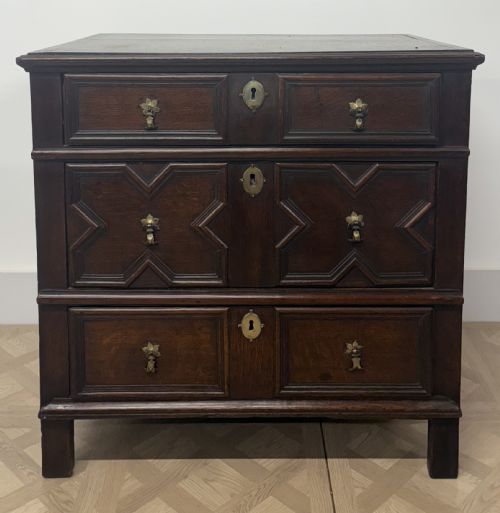
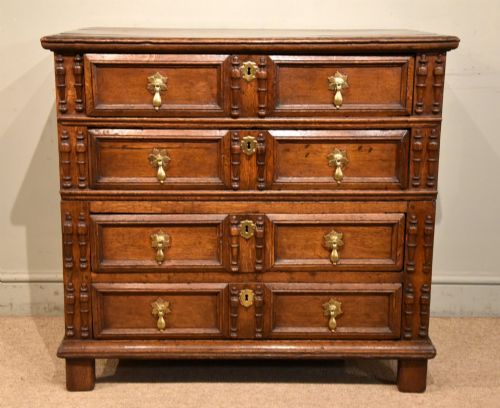
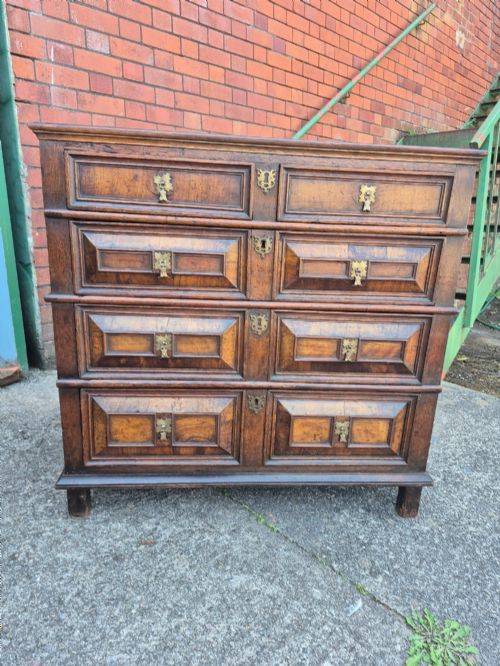
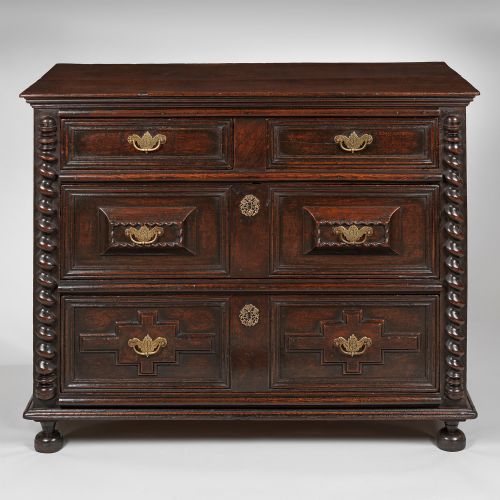
- Geometric mouldings
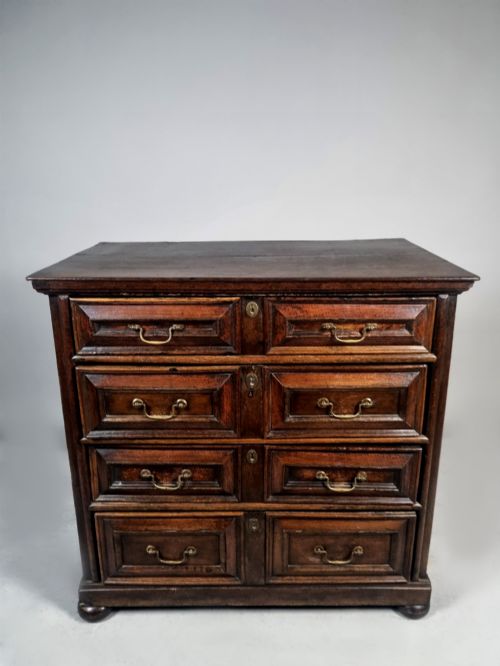
- Raised decorative wooden profiles applied in symmetrical patterns to drawer fronts and panels. This ornamentation characterises many walnut and oak pieces from the later seventeenth century.
- Six-plank chest
- A primitive trunk design constructed from six individual boards joined simply at the edges. These represent the earliest and most utilitarian form of box storage.
Charles II Coffer: Frequently Asked Questions
What were these coffers originally used for?
Households utilised these heavy wooden chests primarily for storing valuable textiles, household linen, and important family documents securely.
The solid lids and sturdy locks ensured that contents remained protected from dust, dampness, and theft in seventeenth-century homes.
How do I date a seventeenth-century coffer?
Dating relies upon examining the construction methods, tool marks, joinery techniques, and timber shrinkage visible across the panels.
Original hardware like forged iron hinges and complex steel locks also provide reliable physical evidence of the period of manufacture.
Where were these pieces made?
English regional workshops produced these items, with specific examples originating from areas like Yorkshire, Wales, and the West Country.
Local timber supplies and distinct carving traditions often reveal the specific geographic provenance of individual coffers and chests.
How should I care for an oak coffer?
Maintain stable indoor humidity and temperature levels to prevent the historic oak timber from splitting or warping over time.
Apply occasional traditional wax polish to nourish the wood surface and preserve the authentic patina built up over centuries.