


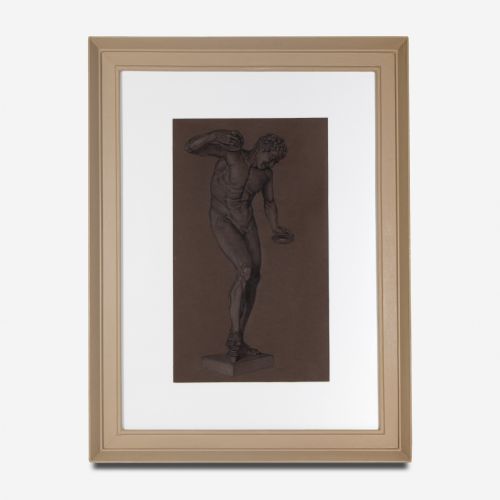


Charcoal Drawing on Paper
When you search for a charcoal drawing on paper, you enter a world of direct mark-making, monochrome nuance and intimate studio practice.
Charcoal Drawing on Paper
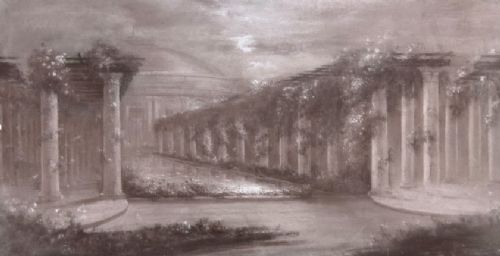
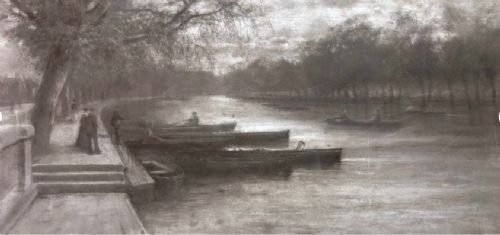
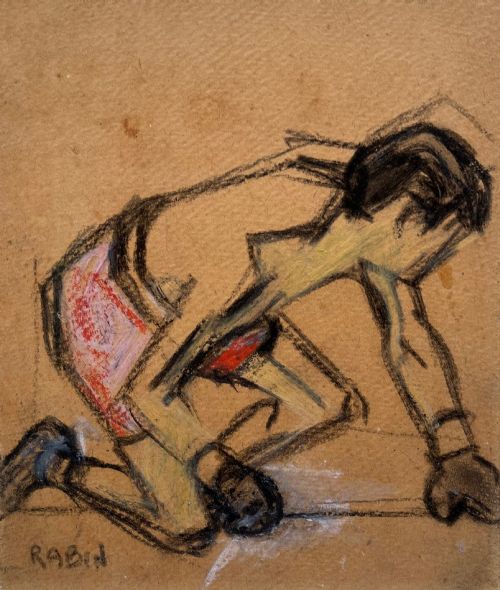
A charcoal drawing on paper captures the immediacy of an artist's hand, recording rapid studio sketches and finished academic studies alike. You will encounter works spanning from the eighteenth century through to the mid-twentieth century, encompassing French schools, British landscapes and continental portraits.
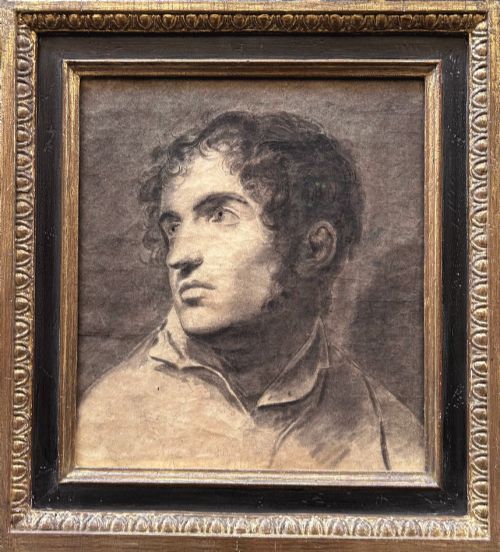
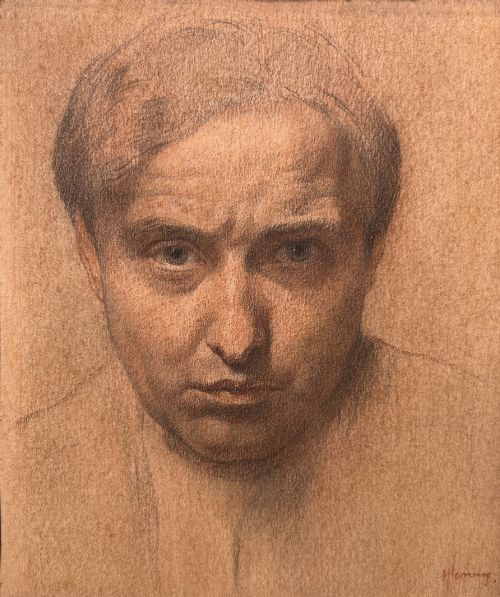
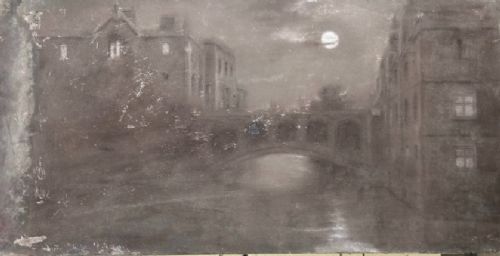
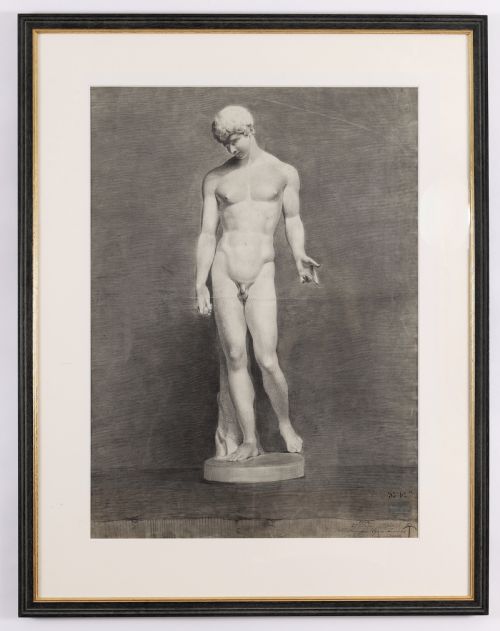
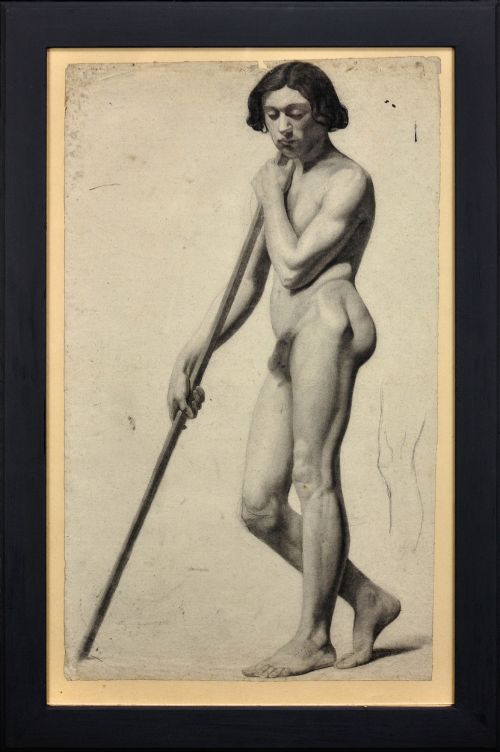
The selections on this page lean heavily toward nineteenth-century academic life studies, early twentieth-century tonalist landscapes and figurative portraits. These pieces frequently appear mounted in wood frames under glass, preserving the friable nature of the medium.
Subjects range from male and female nude life studies to architectural street scenes, mythological interpretations and intimate portraits of named and anonymous sitters. Each sheet records the tactile interplay between compressed carbon and the grain of the paper surface.
How they were made
Artists relied primarily on carbon-rich vine or compressed charcoal applied directly to paper, often combining it with chalk, graphite or pastel to build tonal depth and highlights. Many sheets utilise toned paper or tinted grounds to accentuate the contrast between deep shadows and illuminated passages.
The support material typically consists of laid or wove paper, occasionally mounted onto canvas stretchers or backing boards for structural stability. Protective glazing secured within carved wood frames safeguarded the soft, easily smudged charcoal particles from environmental damage.
Dusting off a nineteenth-century academic nude reveals charcoal smudges from an anonymous student's thumb, left behind two centuries ago.
What varies in quality
Quality rests upon the sureness of the draughtsmanship and the artist's command of light, shadow and atmospheric perspective. The finest examples demonstrate anatomical precision in life studies or a palpable sense of place in landscapes, avoiding stiff or hesitant lines.
The preservation of the delicate medium significantly influences the standing of a piece. Stronger works retain their original tonal contrast without excessive fading, foxing or surface abrasion, and often benefit from historic framing that complements the period of execution.
Herbert Johnson Harvey·Samuel Rabin·Henry Arthur Roberts·Demetrios Galanis·Winifred Eugene Ballard·John Hoppner·Frank Dobson
The Charcoal Drawing on Paper Glossary
- Academic Realism
- A style of painting and drawing produced under the influence of European academies of art, prioritising strict anatomical accuracy and traditional compositional rules.
- Toned Paper
- Paper that possesses a natural colour or tint other than white, such as grey, buff or blue, allowing artists to work up highlights with white chalk.
- Life Study
- A drawing executed directly from a live human model, serving as a foundational exercise or a finished work in its own right.
- Deux Crayon
- A drawing technique utilising two distinct coloured drawing media, most commonly black and red chalk or charcoal and white heightening on tinted paper.
Charcoal Drawing on Paper: Frequently Asked Questions
How should I frame and display a charcoal drawing?
Charcoal works require framing behind glass with a mat or mount to prevent the paper surface from touching the glazing directly. This separation protects the friable carbon particles from smudging and allows the paper to breathe.
Keep these artworks away from direct sunlight and high humidity to prevent the paper from yellowing or developing mould. Acid-free backing materials during framing will preserve the paper integrity over decades.
What is the difference between charcoal and graphite in old drawings?
Charcoal produces a deep, velvety matte black mark that absorbs light, making it ideal for dramatic contrasts and atmospheric shadows. It sits loosely on the paper surface unless fixed.
Graphite yields a shinier, metallic grey line that can achieve finer, sharper details and resists smudging slightly better than compressed carbon. Artists often combined both media on toned paper to balance broad tonal areas with precise linear highlights.
How do I identify a nineteenth-century academic life study?
These works typically depict a single nude figure, often male, posed in a studio setting with carefully orchestrated directional lighting. The focus lies entirely on musculature, proportions and tonal gradation rather than narrative storytelling.
Paper stock from this era often bears watermarks, and the drawings frequently originate from French or British art schools. The handling displays rigorous discipline, derived from hours of working under the supervision of master painters.
Why are some charcoal drawings mounted on canvas?
Artists occasionally backed fragile or oversized sheets of paper with canvas stretched over wooden frames to prevent warping, tearing or sagging. This historic conservation method provided a stable, rigid surface for large-scale charcoal and pastel compositions.
Such reinforcement indicates that the drawing was treated as a finished painting rather than a mere preliminary sketch. It requires the same structural consideration as an oil painting while retaining the unique graphic qualities of the medium.