



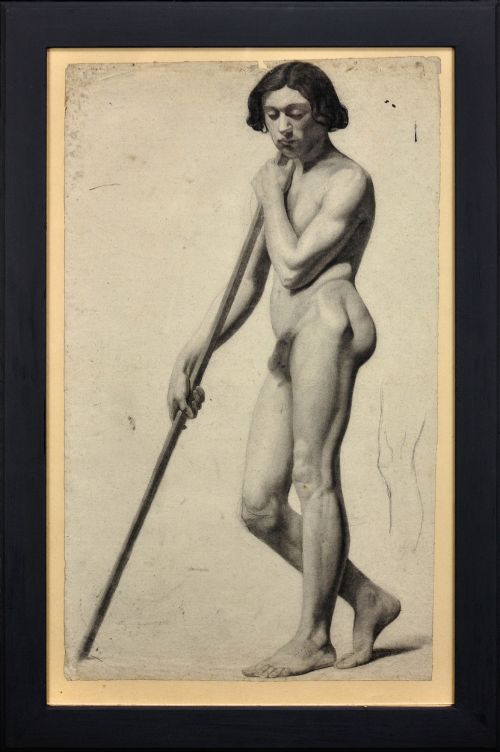


19th Century Figure Study
A 19th century figure study captures the raw observation of human or animal form, prized by collectors for its immediacy and foundational draftsmanship.
19th Century Figure Study
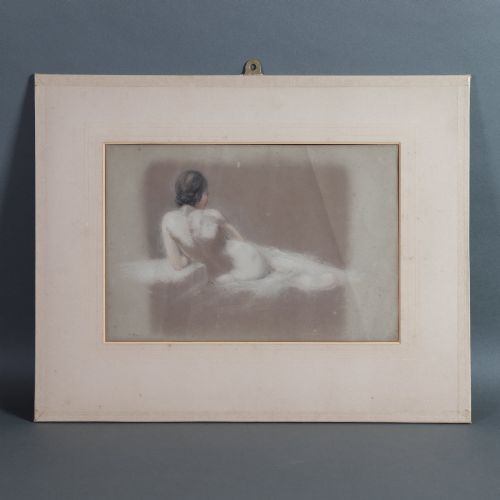
A 19th century figure study encompasses framed works on paper, oil paintings, and bronze sculptures created to explore anatomy, character, or gesture. These pieces range from rapid preparatory sketches for larger compositions to finished academic life studies produced in European schools.
Collectors frequently encounter works executed in graphite, charcoal, watercolour, and ink alongside cast metal sculptures and carved wooden figures. The selection reflects diverse European and British traditions, spanning neoclassical sensibilities through to academic realism and orientalist subjects.
The material ranges from intimate portrait drawings and marine sketches to animalier bronzes and classical derivations. Each object records the observational discipline of the period, serving as a direct link to the artist's working method.
Materials and techniques
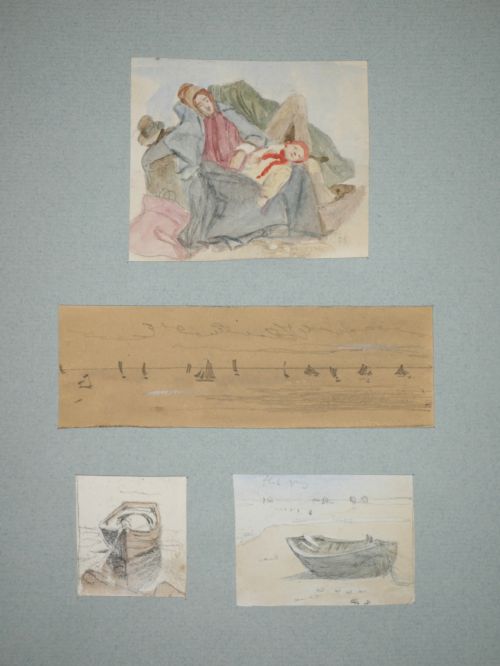
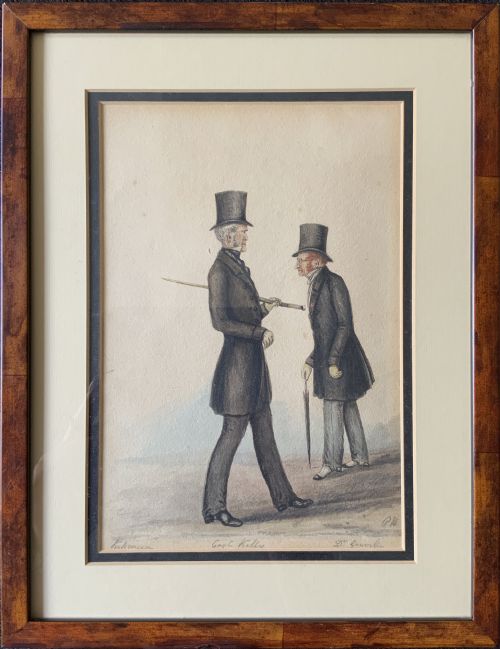
Works on paper rely on traditional media such as graphite, charcoal, pen and ink, and watercolour applied to textured sheets. These materials allowed artists to capture rapid shifts in light, shadow, and gesture during live observation sessions.
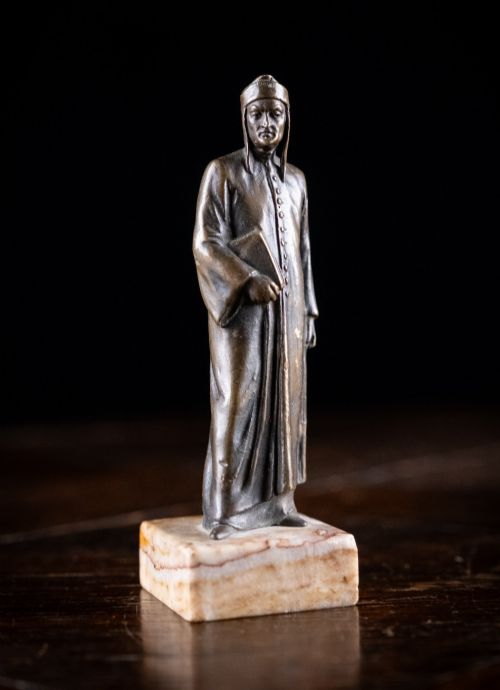
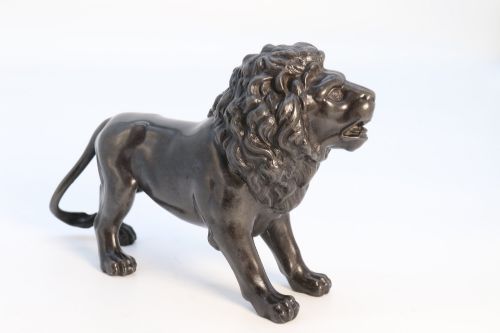
Three-dimensional examples utilise cast bronze, parian porcelain, carved oak, walnut, and pewter. Bronze castings often incorporate fine chasing and patination, occasionally mounted on marble bases to present sculptural weight.
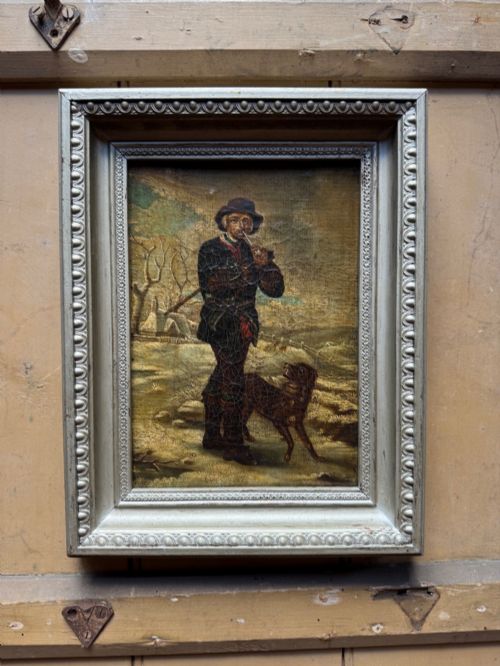
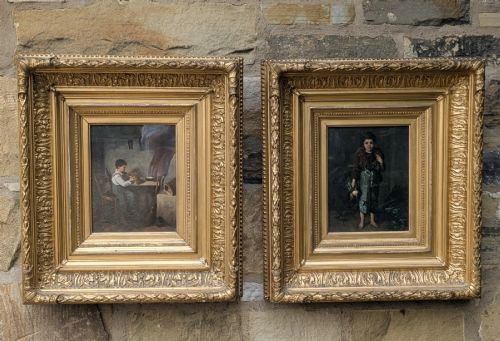
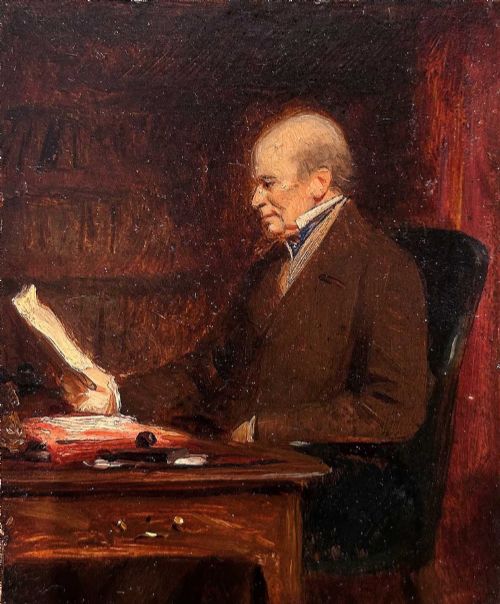
Painted studies employ oil paint on canvas, panel, or paper supports, prioritising tonal modelling and brushwork over highly polished surface finishes.
Listings feature paper, bronze, wood, watercolour, charcoal, glass, marble, and oil paint across various 19th-century schools.
Differences in quality
Quality rests upon the sureness of the line, the accuracy of anatomical proportion, and the vitality captured in the subject's posture. Superior works demonstrate an economy of marks that conveys underlying bone structure and muscular tension without hesitation.
In cast metal and carved examples, definition in the chasing, clean casting seams, and the subtlety of the patina distinguish the superior production from routine commercial output. The skill of the hand behind the chisel or the fidelity to the classical model determines the standing of the piece.
James Smetham·William Etty·Stephen Pearce·Johann Heinrich Dannecker·Honore Cavaroc·Alfred Dubucand·Henry Arthur Roberts·Pierre-Paul Prud'hon·Alfred Dehodencq·James Clark·William Edward Frost·Robert Richard Scanlan·A L Barye
The 19th Century Figure Study Glossary
- Academic Life Study
- A drawing, painting, or sculpture executed from a live model within an instructional studio setting. These exercises formed the backbone of 19th-century artistic training.
- Animalier
- A style of sculpture focusing on the realistic depiction of animals, particularly prevalent in 19th-century bronze casting. Artists captured creatures in motion or repose with careful attention to musculature.
- Grand Tour
- A cultural journey undertaken by wealthy young Europeans to view classical antiquities, inspiring the acquisition of small-scale souvenir bronzes and architectural studies. These objects reflect a deep engagement with classical heritage.
- Parian Porcelain
- A fine-grained, unglazed porcelain developed in the 19th century to imitate white marble. It was frequently utilised for classical figure and sculptural group reductions.
19th Century Figure Study: Frequently Asked Questions
What is an academic life study?
An academic life study is a rigorous drawing, painting, or sculpture created from a live human model within a formal training environment. These works prioritise anatomical accuracy, tonal graduation, and structural understanding above decorative appeal.
Artists utilised these sessions to master the complexities of the human form before executing ambitious historical or allegorical compositions. Consequently, surviving examples offer insight into the rigorous pedagogical standards of 19th-century European academies.
How do I display works on paper safely?
Works on paper require careful framing utilising acid-free mounts and conservation-grade backing materials to prevent deterioration over time. Direct sunlight causes fugitive watercolours and inks to fade permanently.
Position these delicate drawings and watercolours away from direct heat sources and strong ambient light. Glazing with UV-filtering glass provides an essential barrier against environmental damage.
What distinguishes an animalier bronze?
An animalier bronze depicts animals with anatomical precision, capturing creatures in naturalistic poses such as walking, hunting, or resting. These sculptures emerged from a 19th-century fascination with wildlife and natural history.
Master founders paid close attention to surface texture, musculature, and realistic patination. Many bear the distinct signature or foundry mark of the artist, adding documentary weight to the physical sculpture.
How are preparatory studies different from finished paintings?
Preparatory studies are spontaneous, working drafts created to resolve specific compositional problems, lighting effects, or anatomical details prior to a major commission. They often display visible corrections, grid lines, and rapid brushwork.
Finished paintings, conversely, present a polished, resolved surface intended for public exhibition. Collectors often prize preparatory studies for their directness and intimacy.