




Academic Charcoal Figure Drawing
An academic charcoal figure drawing captures the disciplined study of the human form through meticulous draftsmanship and tonal depth.
Academic Charcoal Figure Drawing
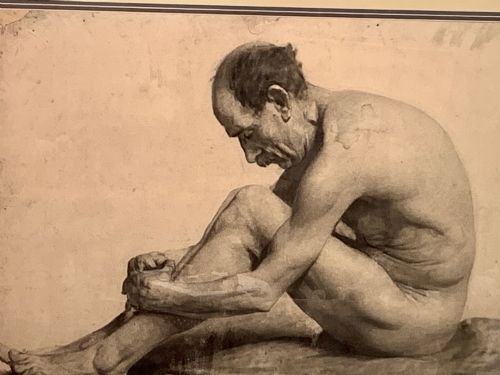
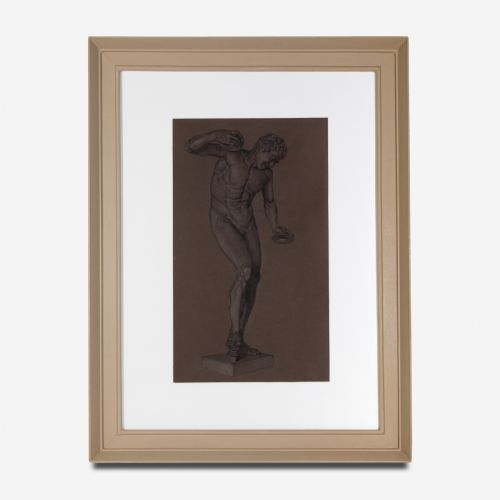
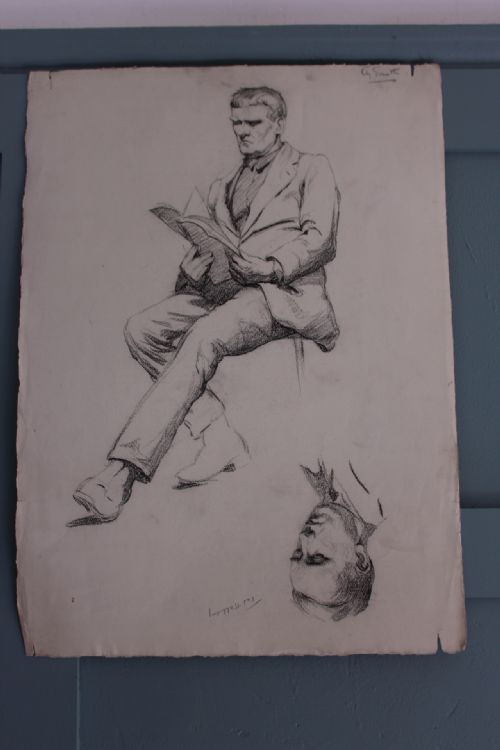
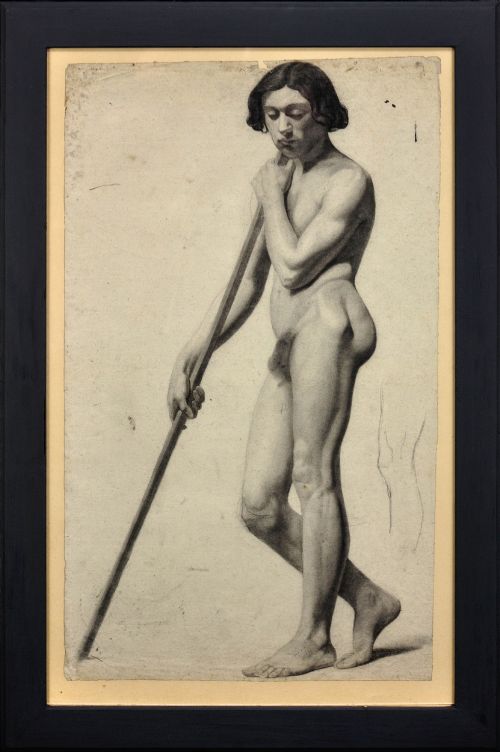
Academic charcoal figure drawings represent rigorous studies of the human body produced within traditional art training systems across the eighteenth, nineteenth, and twentieth centuries. These works frequently depict life studies of male and female nudes, alongside classical figure interpretations rendered in charcoal, graphite, and chalk.
Buyers encounter framed pieces originating from English, French, and Italian schools, spanning periods from the eighteenth century through to mid-century modern examples. Common formats include framed artworks and wall art presented behind glass in wood frames.
Materials and Technique
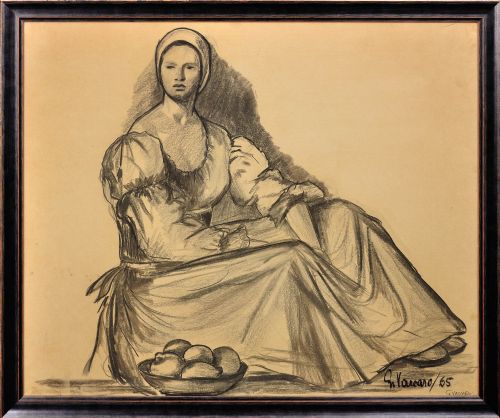
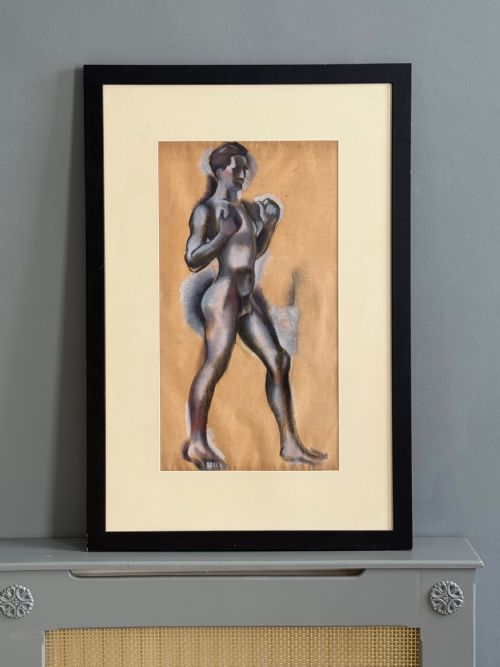
Draftsmen utilised charcoal as the primary medium for building deep shadows and soft tonal transitions on paper surfaces. Artists frequently combined charcoal with chalk and gouache on toned paper to heighten highlights and create dimensional contrast.
Works are typically executed on paper supports, sometimes mounted within period wood frames paired with glass for preservation. Graphite also appears alongside charcoal in detailed life studies and portrait drawings.
Academic Charcoal Figure Drawing Retail Price Guide 2026
Typical asking prices for academic charcoal figure drawing among the pieces listed under this phrase on Sellingantiques today, from the lower quarter to the upper quarter. They describe what is for sale here now, not the wider market.
The collection includes pieces from English, French, and Italian schools, encompassing academic realism, neoclassical styles, and mid-century modern examples.
Evaluating Quality
Quality rests in the precision of anatomical rendering and the subtlety of tonal gradation achieved across the figure. Masterful handling of light and shadow distinguishes accomplished life studies from standard academy exercises.
The preservation of the paper support and the integration of period framing significantly influence the overall character of the piece. Works exhibiting confident lines and sophisticated use of chalk highlights demonstrate superior draftsmanship.
George Frederick Hinchliff·Henry Arthur Roberts·Pierre Paul Prud hon·Winifred Eugene Ballard·George Richmond
The Academic Charcoal Figure Drawing Glossary
- Academic Realism
- A style of painting and drawing produced under the influence of European academies of art, emphasising precise anatomical accuracy and classical proportions.
- Life Study
- A drawing or painting executed directly from a live nude or clothed model, forming a core component of traditional art education.
- Toned Paper
- Paper that possesses a light brown, grey, or yellowish tint rather than pure white, allowing artists to work up darks and lights simultaneously.
- Chalk
- A soft drawing material used alongside charcoal to add opaque highlights and bright accents to figure studies.
Academic Charcoal Figure Drawing: Frequently Asked Questions
What is an academic charcoal figure drawing?
These works are traditional studies of the human form created by artists within structured academic training environments. They document the rigorous process of learning human anatomy through tonal rendering.
Drawings range from eighteenth-century portraits to mid-twentieth-century life studies executed in charcoal, chalk, and graphite.
How were these drawings used historically?
Students and masters produced these life studies to understand muscular structure, proportion, and light distribution on the human body. They served as foundational exercises for larger painted compositions.
Many drawings remained within studio archives or passed down through generations of artists before entering collections.
How should I frame and display them?
Charcoal and chalk drawings require protection behind glass to prevent smudging and environmental damage to the delicate media. Displaying them away from direct sunlight preserves the tone of the paper and the integrity of the charcoal.
Matching period wood frames complement the historical context of eighteenth and nineteenth-century works.
How can I tell periods apart?
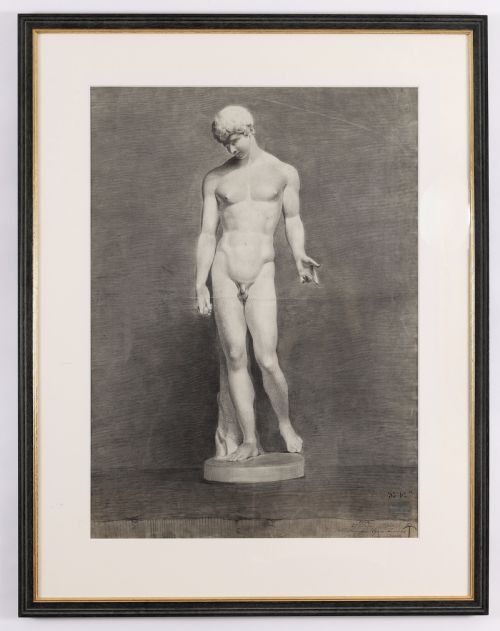
Earlier pieces from the eighteenth and early nineteenth centuries often reflect Neoclassical or Renaissance Revival influences and classical sculpture studies. Later nineteenth and twentieth-century examples show shifts toward expressive modernism and varied handling of toned paper.
Artist signatures, dated inscriptions, and framing styles also provide clear chronological indicators.