




Figure Drawing Charcoal
Figure drawing charcoal works capture the human form through direct mark-making, offering collectors intimate records of academic study and expressive portraiture.
Figure Drawing Charcoal
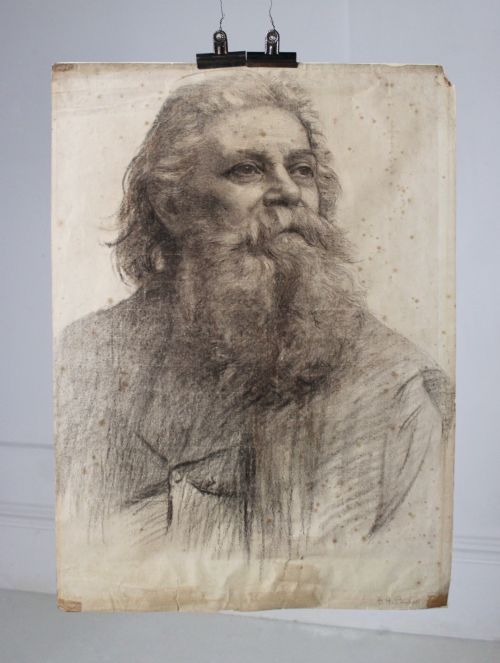
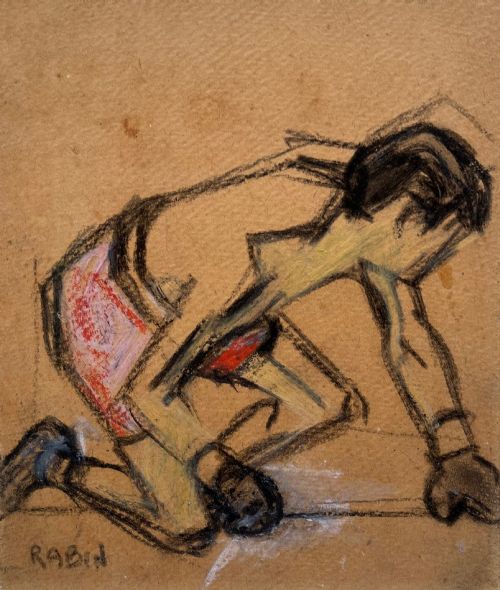
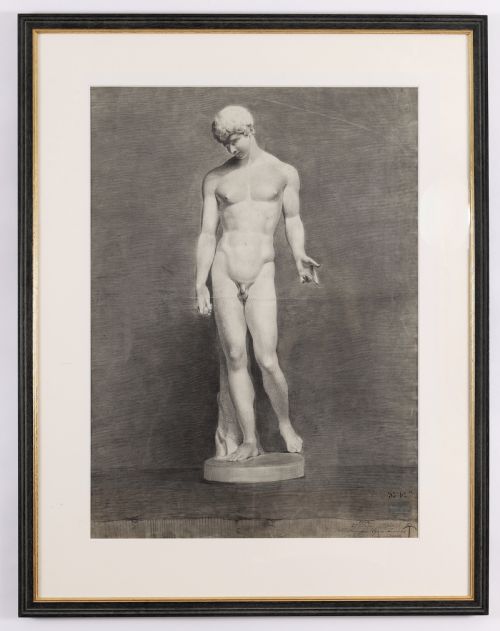
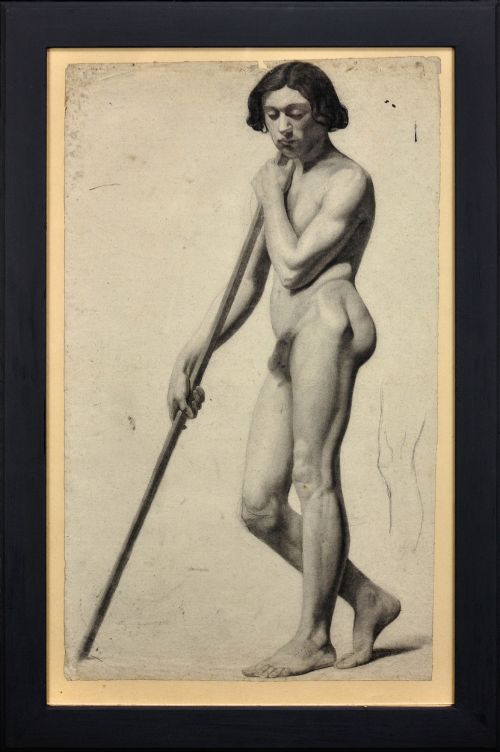
Figure drawing charcoal works encompass life studies, academic portrayals of the human form, and expressive portraiture executed across multiple centuries. These original drawings range from detailed nineteenth-century academic studies to twentieth-century avant-garde interpretations.
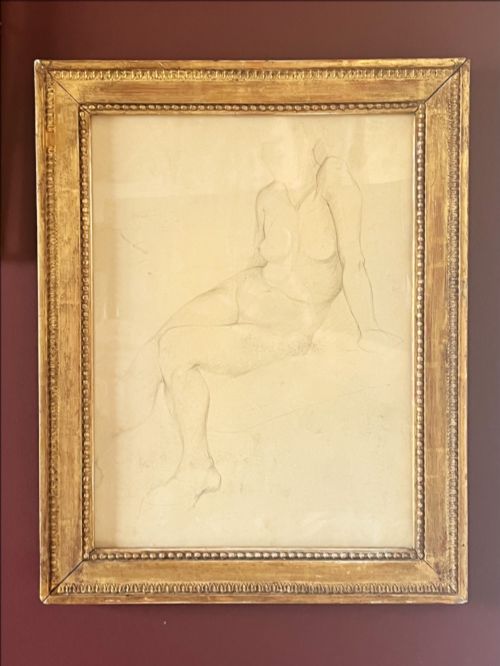
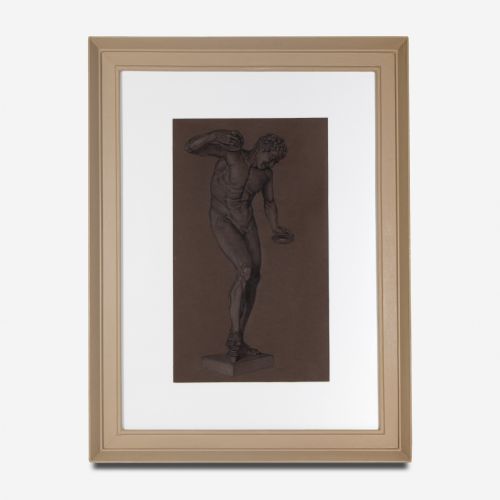
The selection here frequently presents framed original artwork, including life studies of male and female nudes alongside character portraits. Pieces span from the eighteenth century through to the mid-twentieth century, featuring British, French, Italian, and African school origins.
Collectors encounter works housed in period enclosures such as antique gilt frames or carved Florentine woodwork. These formats highlight the traditional presentation methods utilised for fine art drawings on paper.
Materials and technique
Artists executed these works primarily with charcoal on paper, frequently combining media such as chalk, graphite, and pastel to build tonal depth and highlight contours. Toned paper surfaces provided a mid-tone ground that allowed highlights to emerge sharply against darker charcoal passages.
Academic studies often relied on meticulous layering of dry media to render anatomical precision and shadow graduation. Draughtsmen utilised both soft charcoal for deep shadows and sharper pencils or chalk for structural definition.
Elders, pets, and petanque players share wall space with reclining nudes and Parisian daydreamers.
Qualities of execution
The strength of a drawing rests in the confidence of the line and the accuracy of anatomical understanding, where master draughtsmen command volume with minimal strokes. Academic rigour separates routine student exercises from accomplished works by recognised practitioners.
Condition of the paper surface and the preservation of friable charcoal and pastel media heavily influence desirability. Intact framing, particularly original period surrounds, contributes to the historical integrity of the piece.
Samuel Rabin·Henry Arthur Roberts·Demetrios Galanis·John Hoppner·Frank Dobson·Sonia Lawson·Francis O A Haviland·George Richmond·Francis Dodd·Cecil CP Lawson·Jacob Kramer
The Figure Drawing Charcoal Glossary
- Academic Realism
- A style of painting and drawing produced under the influence of European academies of art, emphasising precise anatomical rendering and classical subjects.
- Charcoal
- A dry drawing medium made from finely ground organic materials held together by a gum or wax binder, producing deep black marks on paper.
- Life Study
- A drawing or painting executed directly from a live nude or clothed model, forming a core component of traditional artistic training.
- Deux Crayon
- A drawing technique utilising two different coloured pencils or chalks, typically black and red or white, on tinted paper to create highlights and shadows.
Figure Drawing Charcoal: Frequently Asked Questions
How do I care for charcoal drawings?
Charcoal is a friable medium that remains vulnerable to smudging and detachment if subjected to physical vibration or impacts. Keep these works securely glazed behind glass and avoid touching the paper surface directly.
Maintain stable environmental conditions by protecting the drawings from direct sunlight and excessive humidity. Framing should utilise acid-free mounts to prevent paper degradation over time.
What is an academic life study?
An academic life study is a rigorous drawing of a human model produced within an instructional setting or studio practice. These exercises tested an artist's ability to render light, shadow, and proportion accurately.
Such drawings frequently document the foundational training of nineteenth and early twentieth-century artists before they undertook major commissioned works.
How can I date an antique drawing?
Dating relies on stylistic markers, paper watermarks, inscriptions, and framing characteristics associated with specific periods. Signatures and dates inscribed by the artist provide the most direct chronological evidence.
Examining the type of paper and the framing materials helps narrow down the era when the artwork was executed and mounted.
Why are some drawings executed on toned paper?
Toned paper provides a pre-colored mid-tone ground that eliminates the need to cover every square inch of white paper with shading. This background allows the artist to build up dark charcoal shadows and apply bright white chalk highlights simultaneously.
This technique accelerates the sketching process and adds atmospheric depth to portraits and figure studies.