

Vintage Paper Drawing
When you search for a vintage paper drawing, you are looking at original works spanning from the Edwardian era through the mid-twentieth century.
Vintage Paper Drawing
A vintage paper drawing covers original works on paper produced across the late nineteenth and twentieth centuries, encompassing portraits, landscapes, and figure studies. You will find pieces reflecting early twentieth century, Art Deco, and mid-century modern movements alongside traditional academic studies.
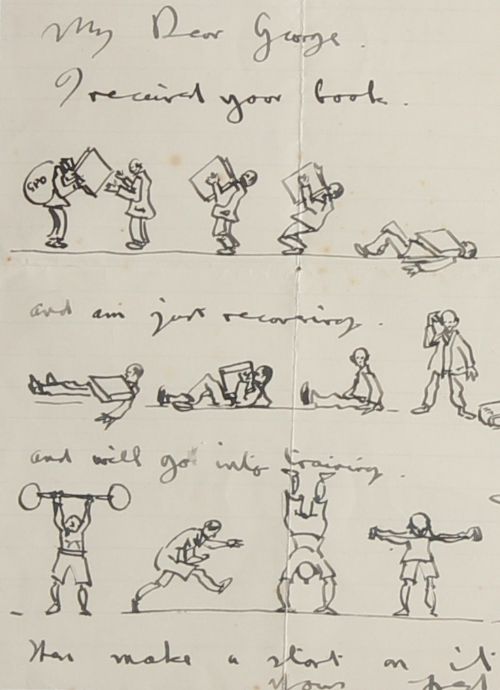
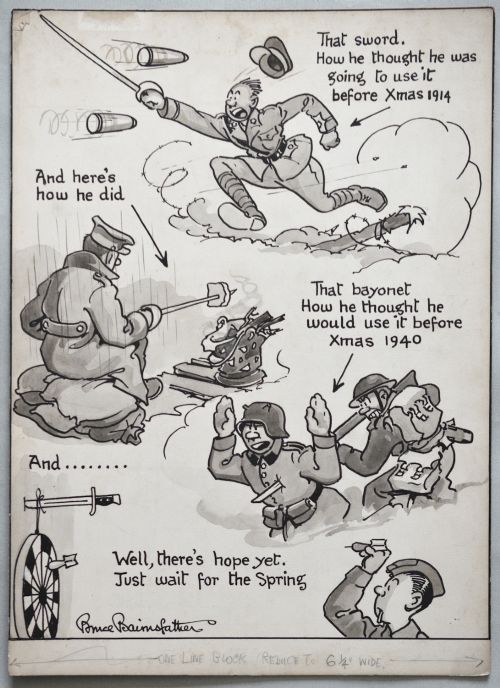
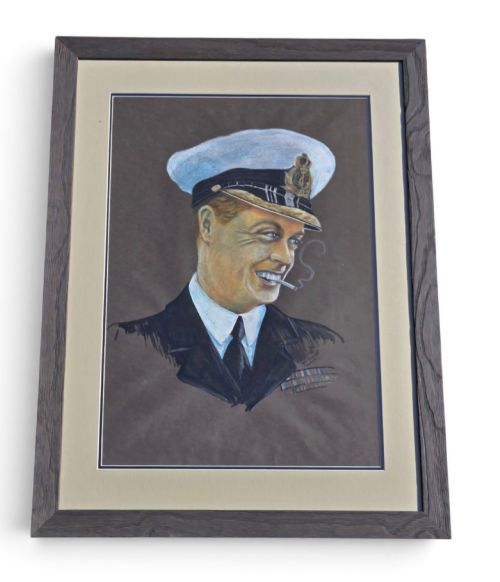
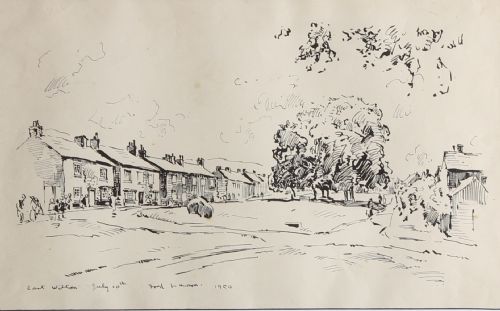
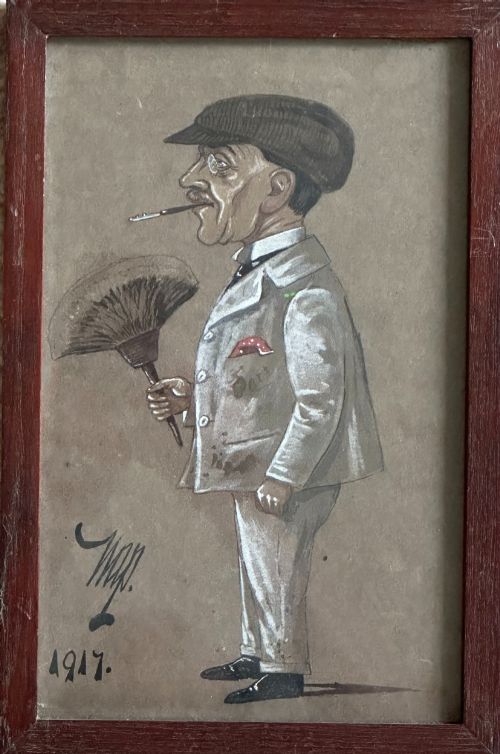
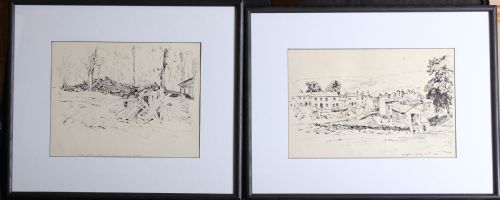
The selection ranges from rapid ink sketches and caricatures to finished pastel portraits and watercolour paintings. Works often originate from named British and European artists, as well as distinct institutional archives such as locomotive works drawings.
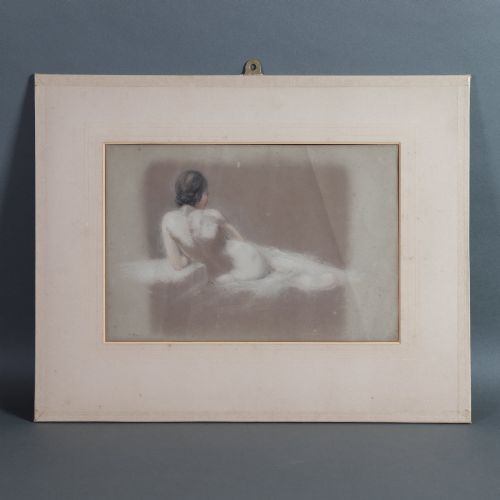
Framed artwork and loose sheets dominate this group, preserved behind glass within period wood frames. These drawings offer direct insight into the preparatory methods and immediate observations of past artists.
How They Were Made
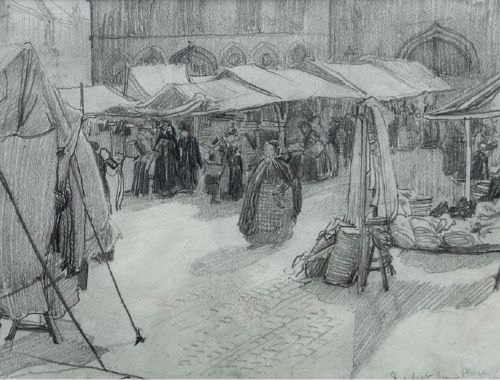
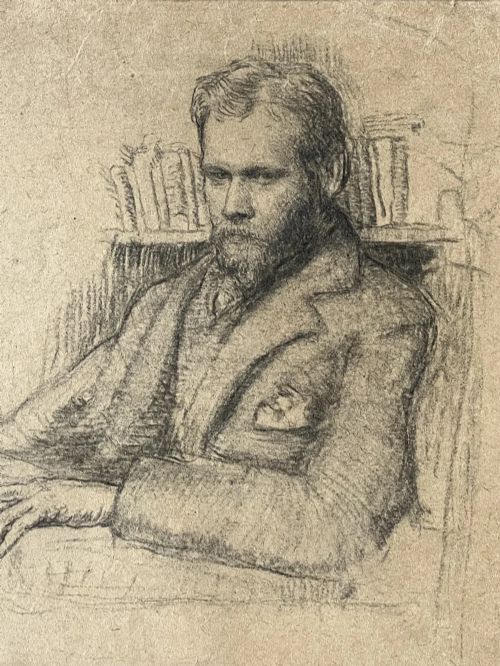
Draftsmen utilised graphite, charcoal, and ink on various paper supports, including buff paper and heavy watercolour sheets. These dry and liquid media allowed for expressive line work, rapid hatching, and tonal shading.
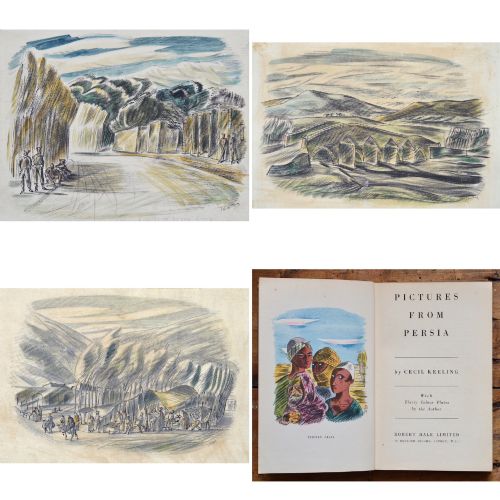
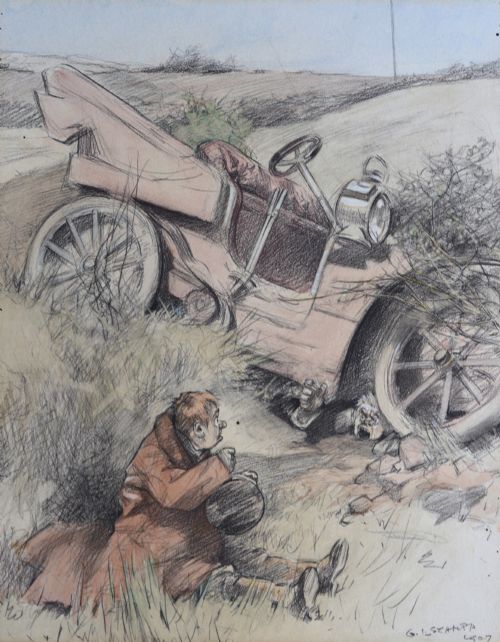
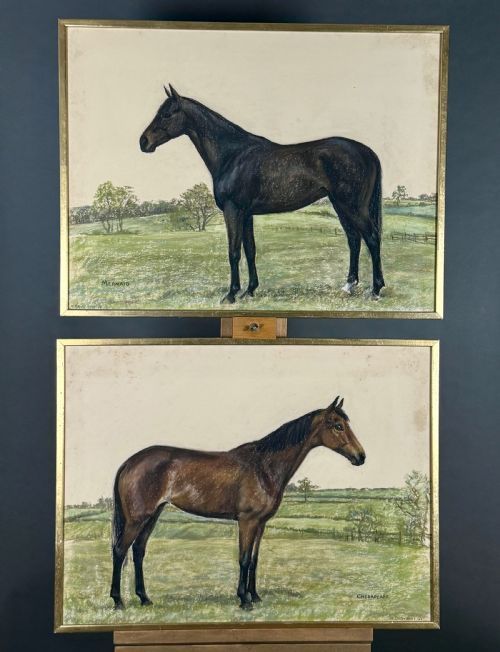
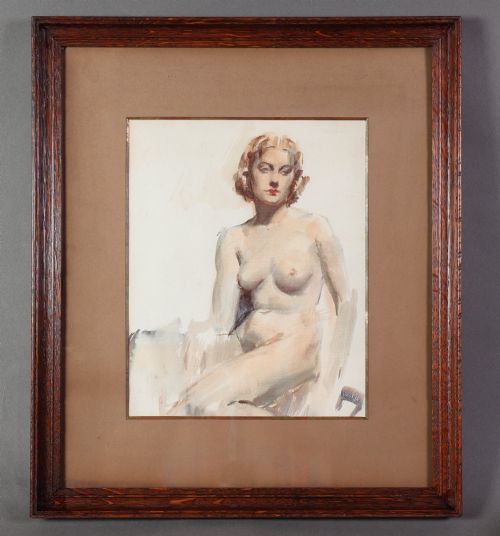
Watercolour, pastel, and gouache frequently appear combined in mixed media studies, adding colour and opacity to linear foundations. Artists applied these pigments to capture immediate atmospheric effects or detailed portrait likenesses.
Works are typically protected by glass and housed in wooden frames suited to their period, preserving fragile paper surfaces from environmental degradation.
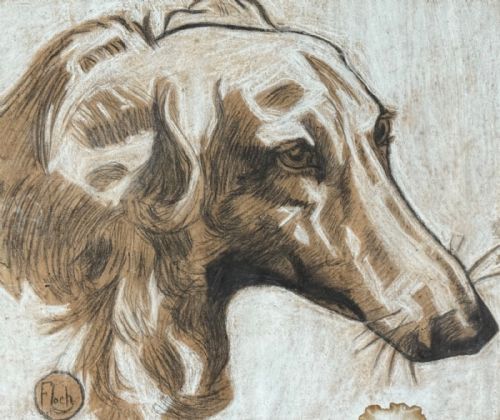
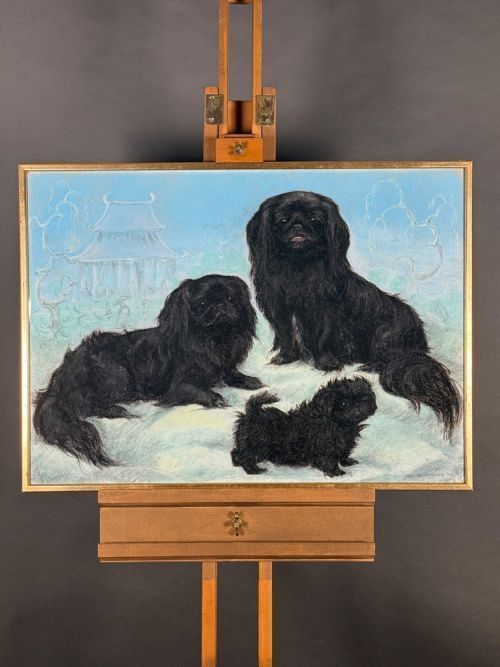
Canine subjects range from an Art Deco Borzoi dog to a study of three black Pekingese.
What Varies in Quality
Quality depends upon the sureness of the hand and the clarity of the composition, distinguishing casual sketches from accomplished finished works. Masterly draftsmanship reveals itself in the economy of line and accurate anatomical or architectural proportions.
The condition of the paper surface significantly affects the piece, with stable, clean sheets holding greater visual integrity than those marred by heavy foxing or moisture staining. Original framing and documented provenance from known exhibitions or makers enhance the historical value of a drawing.
George Lorain Stampa·Henry Percy Huggill·Alfred Young Nutt·Bruce Bairnsfather·William Etty·Fred Lawson·Augustus John·Maurice Brianchon·Frank Dobson·Herbert Johnson Harvey·Samuel Rabin·Dame Laura Knight·Michael Healy·Henry Arthur Roberts
The Vintage Paper Drawing Glossary
- Gouache
- An opaque watercolour paint containing a white pigment filler, producing a heavier, matte finish on paper. Artists utilise it to build solid highlights and vibrant colour areas.
- Foxing
- Brown or yellowish spots that appear on old paper due to chemical reactions over time. This common ageing process results from iron impurities in the pulp or damp storage conditions.
- Pastel
- A dry art medium consisting of powdered pigment and a binder, applied directly to paper. It creates velvety textures and soft colour transitions that require protection under glass.
- Provenance
- The documented history and ownership lineage of an artwork. A clear record establishes authenticity and traces the piece from the artist's studio to the present market.
Vintage Paper Drawing: Frequently Asked Questions
What periods do these drawings cover?
The works span from the late nineteenth century through the Edwardian period and into the mid-twentieth century. Many pieces capture the stylistic shifts of the 1920s, 1930s, and post-war decades.
Examples range from academic realism and early modernist experiments to mid-century modern British and French school compositions.
How should I display drawings on paper?
Drawings require protection behind glass to shield delicate paper, graphite, and pastel surfaces from dust and atmospheric moisture. Conservation framing with acid-free mounts prevents permanent chemical damage over time.
Keep framed works away from direct sunlight to avoid fading organic inks and watercolours.
Are these works signed by the artists?
Many pieces feature artist signatures, monograms, or period inscriptions identifying the creator or subject. Documentation often links specific drawings to known exhibitions or studio collections.
Unsigned works are frequently attributed to particular schools or periods based on technique, paper type, and stylistic evidence.
What is mixed media on paper?
Mixed media describes drawings that combine two or more artistic materials on the same sheet. Artists frequently paired ink line work with watercolour washes, or integrated gouache with pastel.
This approach allowed creators to exploit the distinct visual properties of different substances within a single composition.