
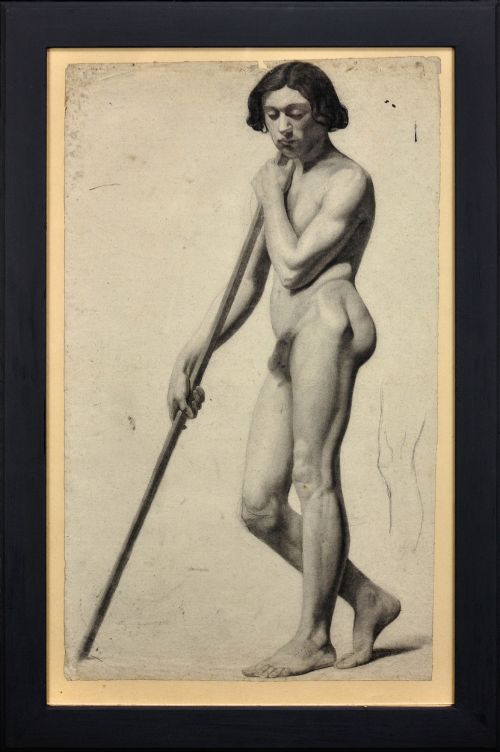


Original Charcoal Sketch
When you search for an original charcoal sketch, you open a direct window into the hand of the artist before any colour or oils take over.
Original Charcoal Sketch
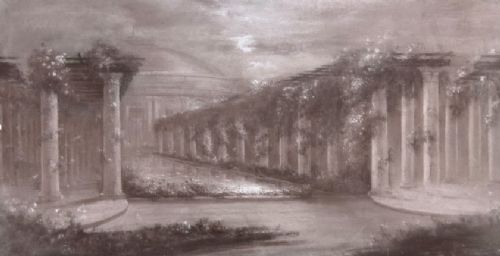
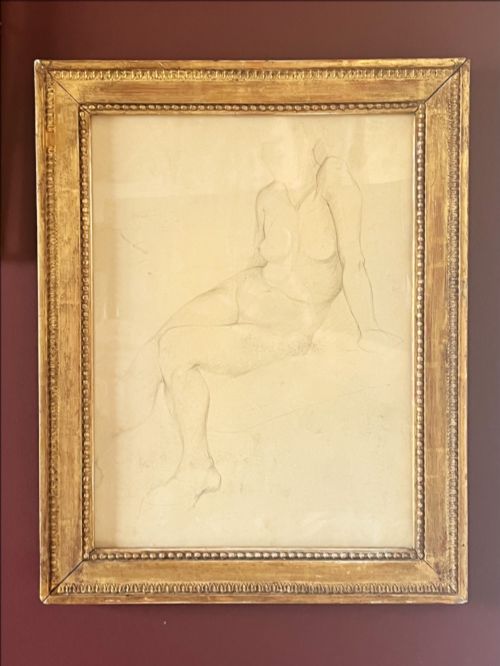
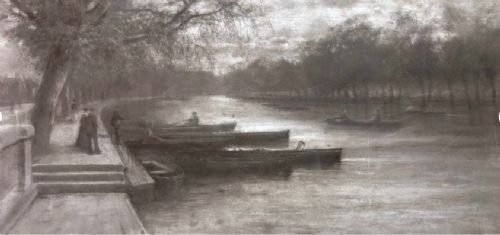
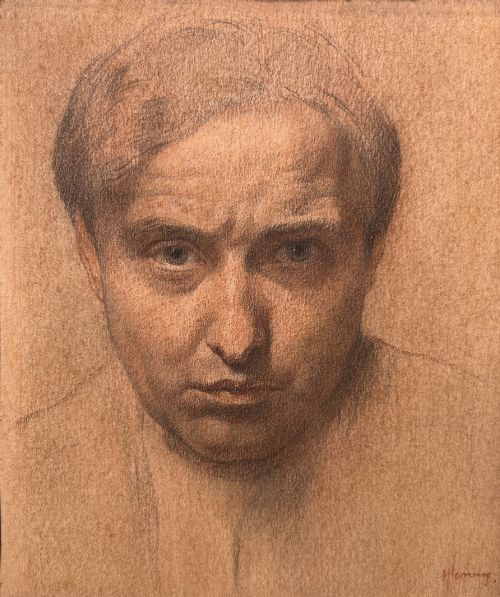
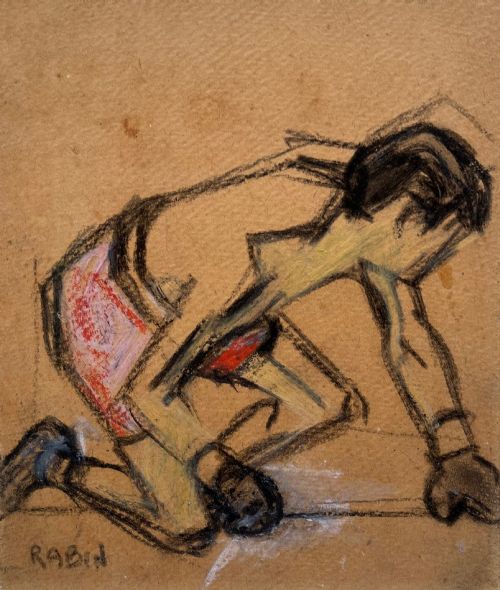
An original charcoal sketch brings you face to face with the primary mark-making of artists working across the eighteenth, nineteenth and twentieth centuries. These pieces range from rapid landscape notations and cityscapes to formal academic life studies and intimate portraiture.
You will frequently encounter works produced during the Victorian and Edwardian eras, alongside bold mid-century modernist compositions and interwar European sketches. The subjects vary widely, capturing everything from quiet domestic scenes and pastoral landscapes to striking anatomical studies.
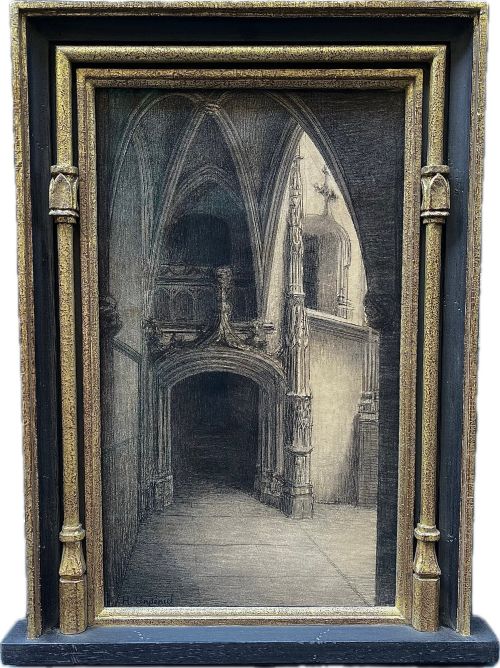
Many of these works survive in their original frames, preserving the specific historical context in which the artist laboured. Whether executed as preparatory studies for larger canvases or completed as finished independent artworks, each sheet records the immediate pressure of the hand.
Materials and execution
The core medium relies on compressed or vine charcoal applied directly to various grades of paper, often supported by secondary materials such as chalk, graphite, or pastel to build contrast and tone. Artists frequently combined these dry media to push deep shadows against stark highlights on textured sheets.
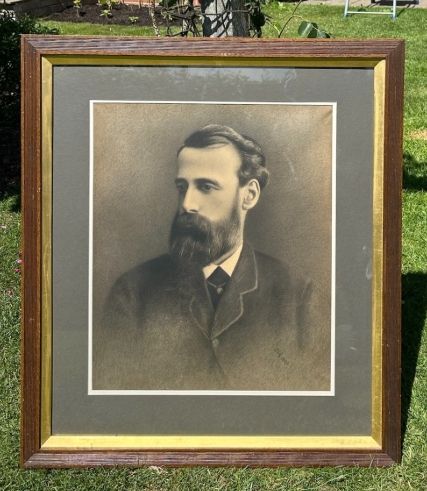
Many works incorporate chalk or watercolour washes alongside the primary charcoal lines, while others are mounted onto canvas stretchers or protected beneath glass within period giltwood frames. The ground paper itself shows age through natural toning, foxing, and handling marks inherent to works on paper.
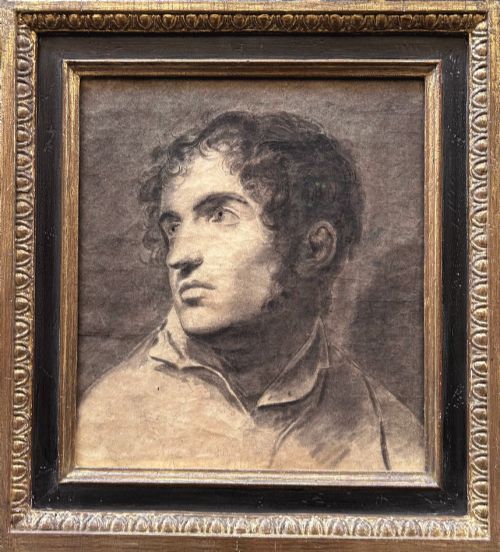
Several portraits preserve the intense gazes of forgotten sitters, including a bio-pirate and a Victorian lord chancellor.
Judging the range
Quality rests upon the confidence of the line and the economy of marks used to establish volume and light. A master hand achieves immense depth and atmospheric presence with minimal strokes, whereas weaker examples rely on heavy-handed blending and laboured shading.
Provenance and context elevate certain pieces significantly, particularly when a drawing connects directly to a known academy, an exhibiting artist, or a documented public commission. The preservation of the paper surface and the integrity of the framing also dictate the standing of an individual work.
Herbert Johnson Harvey·Samuel Rabin·Henri Charles Angéniol·Henry Arthur Roberts·Demetrios Galanis·J D Fergusson·Arthur Todd·John Hoppner·John Macallan Swan·Frank Dobson·Sonia Lawson·Ernest Borough Johnson·George Richmond·Frank O A Haviland·Leo Klin·Harry Epworth Allen·George Charles Haite·LS Lowry·JT Cross·Frederick Goodall
The Original Charcoal Sketch Glossary
- Academic Realism
- A style of painting and drawing produced under the influence of European academies of art, prioritising strict anatomical accuracy and traditional composition. These pieces often feature rigorous life studies.
- Deux crayon
- A drawing technique utilising two distinct coloured chalks or pencils, usually black and red, on tinted paper to create highlights and mid-tones. This method allows for rapid tonal modelling.
- Preparatory study
- A preliminary drawing executed to plan out elements of a larger or more complex final painting. These sheets often reveal the working thoughts and compositional changes of the artist.
- Tonalism
- An artistic style that emerged in the late nineteenth century where artists painted or drew forms based on overall tone and shadow rather than crisp linear definition. Such works emphasise mood and atmospheric haze.
Original Charcoal Sketch: Frequently Asked Questions
What is a charcoal sketch?
A charcoal sketch is a hand-drawn artwork utilising carbon-based drawing material on paper to establish form, shadow, and light through direct mark-making.
These pieces function either as quick preliminary studies for larger paintings or as finished standalone works of art.
How should I frame a drawing on paper?
Drawings on paper require conservation-grade mounting under glass to protect the delicate carbon medium from smudging, moisture, and ultraviolet degradation.
Keeping the paper lifted away from the glass surface prevents humidity damage and preserves the integrity of the antique sheet.
How do I date an antique drawing?
Dating relies on examining the watermark and texture of the paper, the framing materials, the stylistic conventions of the subject, and any visible signatures or inscriptions.
Comparative analysis with documented works by the same school or period provides further clarity on the timeline of execution.
What is an academic life study?
An academic life study is a detailed drawing of a human model produced within a formal art school or academy setting to train the eye and hand.
These works focus heavily on accurate anatomical proportion, musculature, and the play of light across the physical form.