


Ceramic Doulton Jug
A ceramic doulton jug brings tactile warmth to any room, combining robust utility with intricate Victorian and Edwardian craftsmanship.
Ceramic Doulton Jug
A ceramic doulton jug embodies the robust utility and decorative ambition of late nineteenth and early twentieth century British potteries. These vessels range from utilitarian harvest jugs to elaborate exhibition pieces, capturing shifts in taste from Victorian revivalism to Art Nouveau.
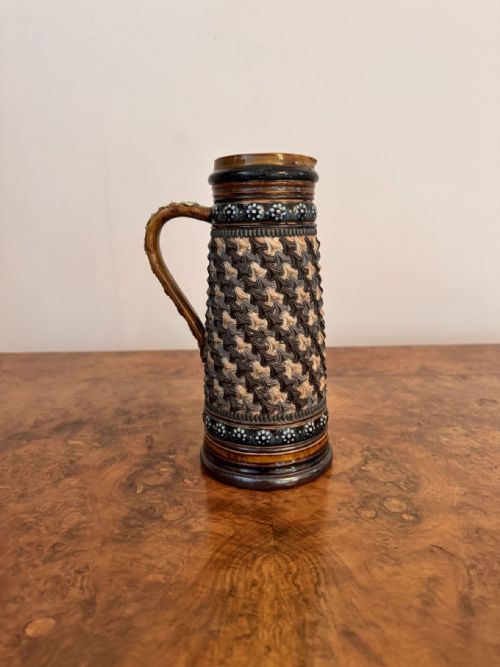
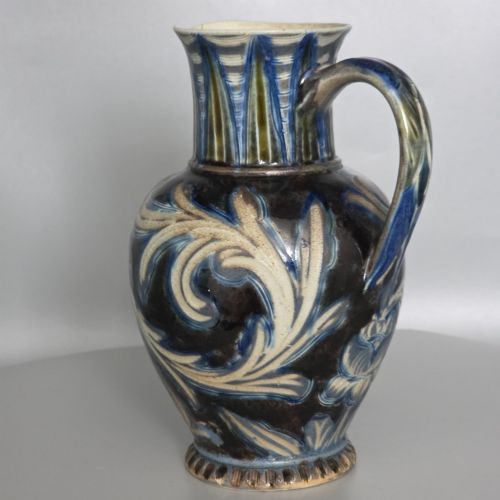
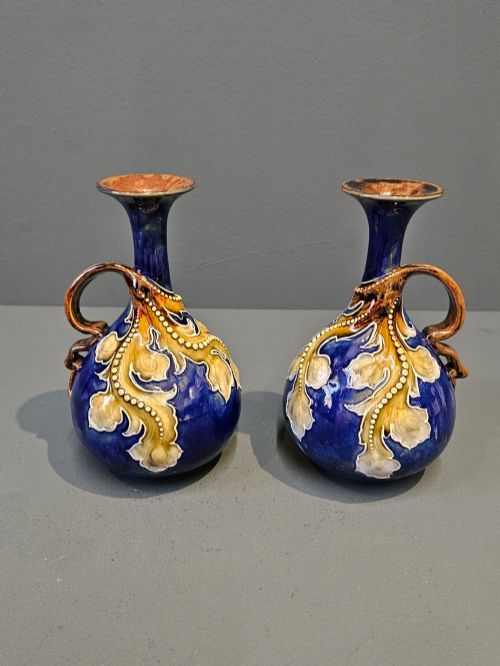
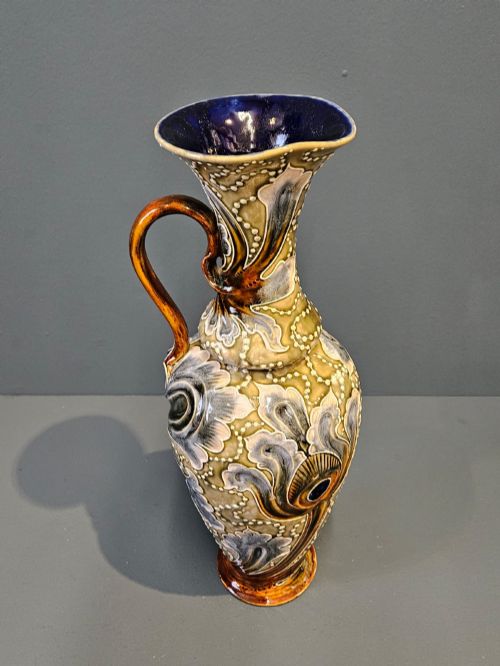
Buyers meet sturdy stoneware pitchers from the Lambeth works most frequently on this page. These pieces often display incised patterns, salt glazes, or applied sprigged decoration typical of the Victorian era.
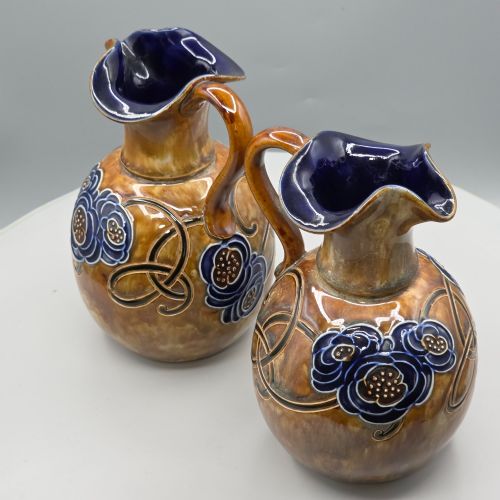
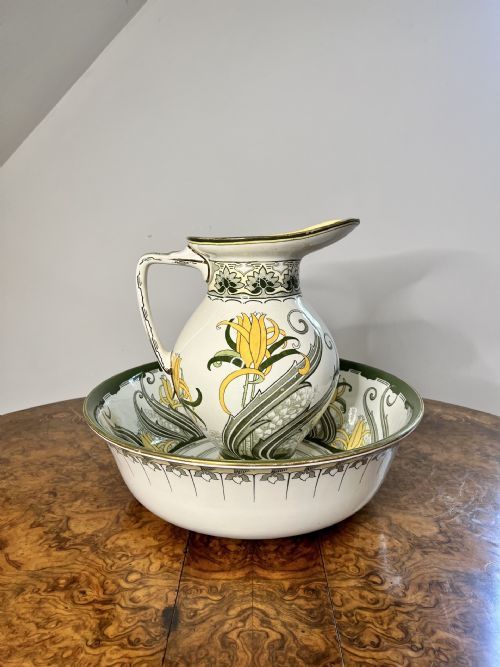
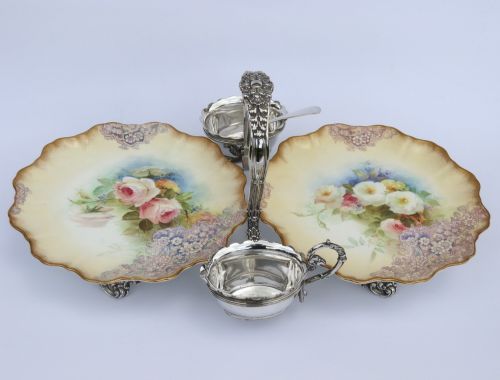
Earthenware versions from Burslem also appear, bringing softer lines, painted surfaces, and occasional silver rims or associated bowl sets. Each example reflects the immense output of a potteries industry that balanced industrial scale with individual artistry.
How they were made
Makers shaped these vessels using durable stoneware and refined earthenware clays, often fired at high temperatures to achieve vitrification. Salt glazing created characteristic textured surfaces through the introduction of salt during the kiln firing.
Decoration relied on incised carving, applied sprigged reliefs, and hand-painted enamel colours. Workshops occasionally added silver plate or solid silver rims to strengthen the mouths of heavy stoneware jugs and elevate their status.
Certain early golf-themed flasks prove that Victorian drinkers took their sporting enthusiasm right down to the whisky decanter.
What varies in quality
Design complexity and the crispness of applied or incised detail define the upper tiers of these jugs. Pieces bearing named artist ciphers or specific patent marks demonstrate superior individual execution compared to standard factory output.
The integration of precious mounts, such as hallmarked silver rims, separates utilitarian kitchenware from high-end cabinet pieces. Overall preservation of the original glaze and freedom from kiln flaws dictate the standing of any individual vessel.
Emma Shute·Walker and Hall
The Ceramic Doulton Jug Glossary
- Stoneware
- A heavy, dense ceramic fired at high temperatures until semi-vitrified. It holds liquids safely without interior glazing and resists chipping.
- Salt glaze
- A glassy, pitted texture formed by throwing common salt into the hot kiln. Vapours react with the clay body to create an orange-peel finish.
- Sprigged
- A technique where moulded clay reliefs are applied to the unfired body of a vessel. It produces raised decorative motifs like hunting scenes.
- Earthenware
- A porous ceramic fired at lower temperatures than stoneware. It requires an overall glaze to become completely watertight.
- Kingsware
- A dark brown glazed stoneware developed by Royal Doulton featuring incised or painted figures. It often depicts historical or literary characters.
Ceramic Doulton Jug: Frequently Asked Questions
What is a harvest jug?
A harvest jug is a traditional stoneware vessel featuring sprigged or incised motifs celebrating rural life, often decorated with hunting scenes or farming emblems.
These jugs were commonly produced in large quantities during the Victorian period and frequently fitted with silver rims for domestic use.
How do I date a ceramic doulton jug?
Dating relies on identifying workshop marks, such as the impressed Doulton Lambeth stamps or Burslem backstamps found on the base. Stylistic cues like Art Nouveau fluidity or Victorian salt glazing also narrow the period of manufacture.
Changes in company naming conventions across the nineteenth and twentieth centuries provide precise chronological markers for collectors.
Were these jugs used for water?
Many of these pieces served practical functions as water jugs, whisky flasks, or components of large bedroom basin sets. Stoneware versions excelled at keeping liquids cool.
More ornate examples with delicate hand-painted enamel or precious metal mounts likely served decorative display roles rather than daily kitchen service.
What distinguishes Lambeth from Burslem ware?
Lambeth pieces typically consist of dense, salt-glazed stoneware with incised ornamentation and earthy brown or blue tones. They lean toward robust Arts and Crafts aesthetics.
Burslem production generally utilised refined earthenware to create lighter, painted items like floral jugs, ewers, and dessert sets influenced by Persian or aesthetic styles.