


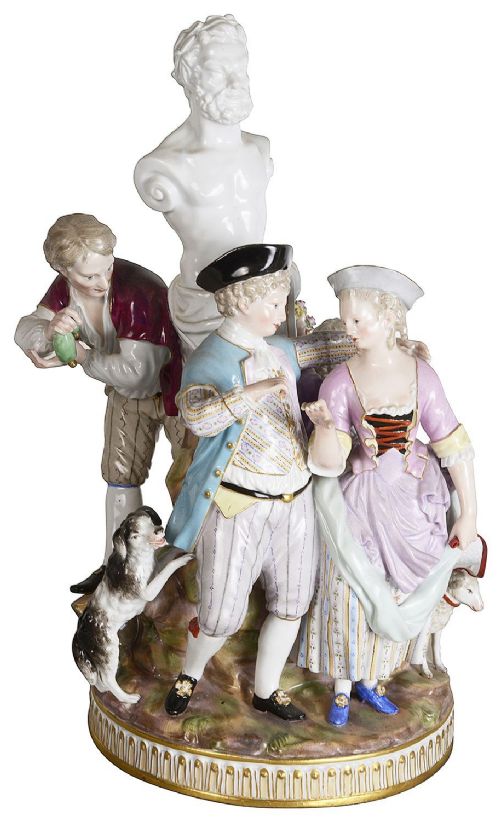
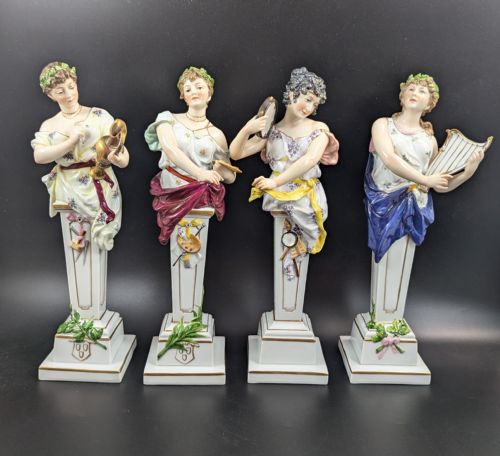


Ceramic Bust Figurine
A ceramic bust figurine brings classical form and domestic scale together, capturing the human likeness in fired clay and porcelain for the collector's shelf.
Ceramic Bust Figurine
A ceramic bust figurine spans several decades of sculptural work, drawing on nineteenth-century academic models and twentieth-century modernism.
Buyers encounter subjects ranging from mythological figures and historical likenesses to expressive character studies rendered in clay.
These pieces cross paths with decorative sculptures, porcelain figures, and pin cushion dolls, reflecting diverse domestic uses.
Materials and Manufacture
Makers utilised terracotta, parian porcelain, and bisque porcelain to achieve varying textures and degrees of finish.
Glazes, enamel, and occasional applications of gold leaf surface finish add colour and highlight specific details on the modelled clay.
Current listings feature pieces spanning the nineteenth century through the Art Deco era, encompassing neoclassical and art nouveau aesthetics.
Assessing Quality
The sensitivity of the modelling and the crispness of the cast dictate the success of the sculpture, separating ambitious studio work from standard production pieces.
Surface finish plays a critical role, where carefully controlled glazes or unglazed parian surfaces reveal the underlying definition of the maker's hand.
Achille Mollica·Ernst Whaliss·Fasold And Stuach·William Goebel
The Ceramic Bust Figurine Glossary
- Terracotta
- A porous fired red earthenware clay. It is frequently left unglazed to showcase the warm reddish-brown colour and tactile surface.
- Parian Porcelain
- A fine-grained, self-glazing white porcelain developed in the nineteenth century. It has a smooth surface texture that closely resembles carved marble.
- Bisque Porcelain
- Unglazed white porcelain fired at a high temperature. It possesses a matte, stone-like finish prized for its ability to show delicate facial expressions.
- Neoclassical
- A style drawing inspiration from classical antiquity. It favours restraint, proportion, and subjects derived from Greek and Roman mythology.
- Art Nouveau
- A decorative style characterised by flowing, organic lines. It often incorporates sinuous floral elements and stylized hair.
Ceramic Bust Figurine: Frequently Asked Questions
What is a ceramic bust figurine?
A ceramic bust figurine is a three-dimensional sculptural representation of the head, neck, and shoulders, modelled in clay or porcelain and fired at high temperatures.
These pieces range from small cabinet ornaments to larger decorative studies, reflecting the sculptural tastes of the nineteenth and twentieth centuries.
How were these busts displayed?
In period interiors, these figures sat upon mantelpieces, library bookshelves, and dedicated pedestals where their details could be appreciated up close.
They served as miniature monuments to historical figures, literary characters, and classical ideals within the Victorian and Edwardian home.
How do I care for terracotta?
Terracotta is a porous material that benefits from dry dusting with a soft brush rather than cleaning with water.
Keeping the piece away from damp environments protects the fired clay from moisture retention and preserves the natural surface texture.