


Central Asian Woven Runner
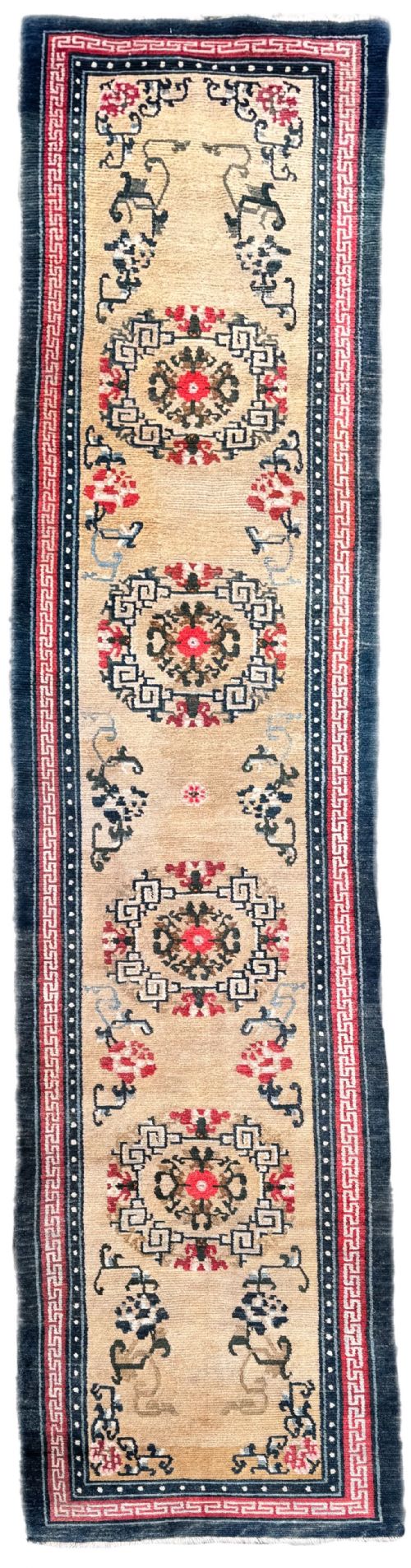
Central asian woven runner pieces are tribal floor coverings and flatweaves crafted by nomadic and village makers across the region.
Central Asian Woven Runner
A central asian woven runner encompasses elongated carpets, long kilim panels, and tent bands produced across Turkmenistan, Uzbekistan, and neighbouring areas. Buyers seeking this phrase typically discover tribal rugs, storage bagfaces, and runner formats made by regional groups such as the Ersari, Tekke, and Yomut tribes.
The selection ranges from narrow nomad bagfaces and yurt bands to full-scale carpets woven in multiple strips. Many examples date from the late nineteenth and early twentieth centuries, reflecting traditional domestic and nomadic utility rather than commercial production.
Materials and construction
Makers utilised hand-spun wool and cotton foundation threads, binding the pile or flatweave structures with natural dyes. Certain twentieth-century pieces incorporate alternative materials such as art silk and mercerised cotton alongside traditional wool.
Many large kilims and yurt rugs were constructed by weaving several narrow strips together and joining them meticulously by hand. Techniques span pile knotting, soumak wrapping, and flatweave tapestry construction, resulting in durable textiles designed for daily nomadic use.
Listings span several decades from the mid-nineteenth century through the 1930s, featuring wool, cotton, and natural dyes.
Assessing quality and execution
The standard of a piece depends heavily on the density of the weave and the precision of the geometric motifs. Finer knot counts and tightly beaten flatweave structures indicate superior technical skill by the weaver.
Quality also shows in the depth and preservation of the natural dye palette, where variations in wool preparation affect how the colours age. Intricate tribal gul designs and balanced proportions separate exemplary tribal pieces from standard utilitarian examples.
The Central Asian Woven Runner Glossary
- Gul
- A repeating medallion or floral-like motif often found in Turkmen tribal rugs. Each tribal group typically utilised distinct geometric gul patterns.
- Kilim
- A flatwoven carpet or panel produced without a pile. These pieces rely on tightly interlocked or slit-woven weft threads.
- Torba
- A small tribal storage bag face made by nomadic weavers. They were traditionally used inside tents for household storage.
- Soumak
- A flatweave technique where supplementary weft threads wrap around the warp yarns. This method creates a durable textured surface resembling a braided chain.
- Ensi
- A specific carpet type woven by Turkmen tribes to hang over tent doorways. They usually feature a distinct quartered design layout.
Central Asian Woven Runner: Frequently Asked Questions
How were these runners used?
Nomadic and village communities utilised these long textiles inside tents and permanent dwellings as floor coverings or utilitarian furnishings.
Many examples served specialised domestic roles, functioning as tent bands, doorway hangings, or storage bag faces for daily camp life.
What materials make up these pieces?
Most antique examples rely entirely on hand-spun wool and cotton combined with natural dyes derived from plants and minerals.
Later twentieth-century works occasionally introduce alternative components like art silk or mercerised cotton into the weave.
How do I care for a textile?
Protect the wool and natural dyes by keeping the piece out of direct sunlight and using a breathable underlay beneath the floor coverings.
Gentle vacuuming without a rotating brush roll helps remove grit from the pile or flatweave structure safely.
How are different tribes identified?
Distinguishing tribal origins involves examining the specific structural design, colour palette, and repeat motifs like the characteristic gul emblems.
Weavers from groups such as the Ersari, Tekke, and Yomut employed distinct geometric vocabularies and construction methods passed down through generations.