



Traditional Turkmen Rug Panel
These traditional turkmen rug panel examples are tribal textile fragments and trappings offering an authentic connection to Central Asian nomadic weaving traditions.
Traditional Turkmen Rug Panel
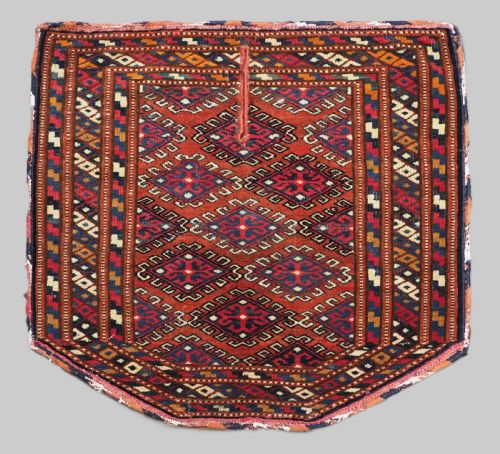
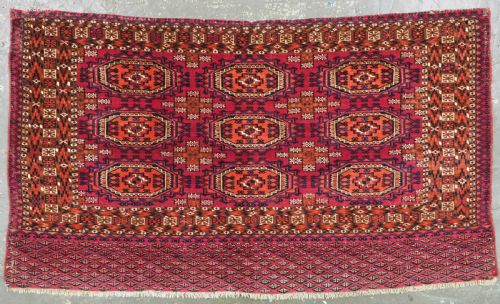
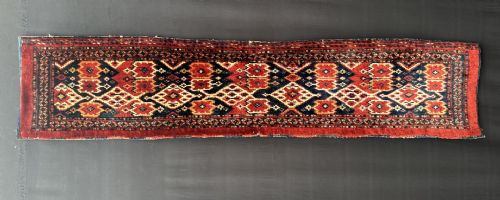
When you search for a traditional turkmen rug panel, you encounter functional tribal items created by specific nomadic and settled groups across Central Asia. The selection includes Yomut asmalyks, dizlyks, mafrashes, and torbas, alongside Tekke and Saryk chuvals.
These textile forms originated as utilitarian trappings, wedding objects, and saddle covers rather than decorative floor coverings made for export. Pieces date from the mid-nineteenth century through to the early twentieth century, reflecting the material culture of tribes such as the Yomut, Tekke, Ersary, and Saryk.
You meet both complete bag faces and items retaining their original wool backs, showing how nomadic households utilised durable woven storage and transport pieces. The regional origins span Turkmenistan, the Trans-Caspian steppes, and the Middle Amu Darya region.
Materials and construction
Traditional Turkmen rug panel items rely fundamentally on wool pile knotted onto wool and cotton foundations. The natural dyes employed in these nineteenth and early twentieth century weavings produce deep, saturated palettes characteristic of Turkmen tribal workshops.
Weavers constructed these pieces as functional household items, ranging from wedding-camel trappings to asmalyks and chuvals. The structure combines tight knotting with durable backing materials designed to withstand the rigours of nomadic existence across the Central Asian steppes.
Some nineteenth-century camels wore larger pentagonal asmalyks on their flanks than their owners wore in hats.
Distinctions in quality
Quality in a traditional turkmen rug panel rests upon the precision of the tribal guls, the depth of the natural dyes, and the fineness of the wool knotting. Pieces exhibiting crisp secondary ornamentation and well-drawn primary motifs separate themselves from simpler utility examples.
The survival of original structural elements, such as wool backs on saddle covers and bag faces, distinguishes well-preserved tribal survivals from heavily worn fragments. The articulation of specific regional designs, including Salor-influenced shemle patterns, dictates the visual strength of each weaving.
The Traditional Turkmen Rug Panel Glossary
- Asmalyk
- A large pentagonal trapping traditionally hung on the flank of a wedding camel during Turkmen marriage ceremonies. These items display distinctive tribal patterns unique to specific weaving groups.
- Chuval
- A large tent bag utilised by nomadic families for storage within a yurt. They are frequently encountered today as single faces or complete pieces with their original backs.
- Torba
- A smaller storage bag produced across Turkmen regions for domestic utility inside the tent. They often feature prominent primary guls and characteristic border designs.
- Gul
- The repeated medallion motif that forms the primary decorative structure of Turkmen tribal weaving. Different tribes utilised specific gul variations to signal identity and heritage.
- Mafrash
- A rectangular storage bag or bedding chest panel woven by nomadic groups. These pieces demonstrate the practical structural requirements of Central Asian transport.
Traditional Turkmen Rug Panel: Frequently Asked Questions
What is a traditional turkmen rug panel?
A traditional turkmen rug panel is a textile fragment, bag face, or trapping created by nomadic tribes in Central Asia. These items include asmalyks, chuvals, torbas, and saddle covers.
Created during the nineteenth and early twentieth centuries, they functioned as practical household and transport objects rather than decorative Western carpets. Each piece reflects the specific tribal identity and dye traditions of makers such as the Yomut, Tekke, and Ersary.
How were these tribal textiles used?
Nomadic families utilised these woven pieces for storing household goods, bedding, and clothing inside traditional dwellings. Items like torbas and chuvals served as durable containers within the yurt.
Other pieces, such as asmalyks and wedding-camel trappings, fulfilled ceremonial roles during tribal marriage processions. Their construction prioritised structural resilience alongside symbolic tribal ornamentation.
How do I identify different tribal groups?
Tribal attribution relies on the specific structural guls, palette choices, and format of the weaving. Yomut, Tekke, Saryk, and Ersary weavers each employed distinct design vocabularies.
Examining the handling of natural dyes and secondary border motifs helps separate regional production centres across Turkmenistan and the Amu Darya basin.
How should I live with these textiles?
These historical textiles adapt well to wall hanging display, where their structural details and natural dyed wools remain protected from heavy foot traffic. Mounting them securely distributes the weight evenly across the fabric.
Keeping them out of direct sunlight preserves the saturation of the nineteenth-century natural dyes. Occasional gentle surface cleaning maintains the integrity of the wool pile.