
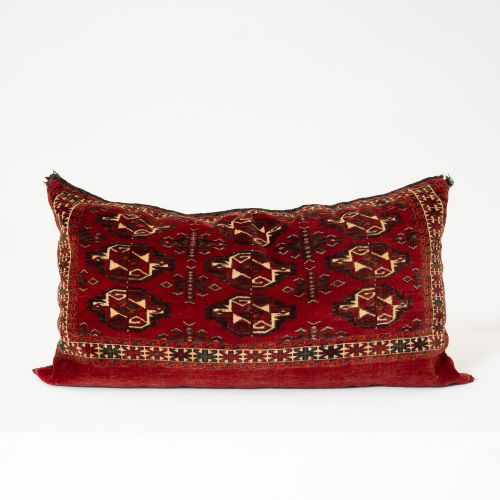
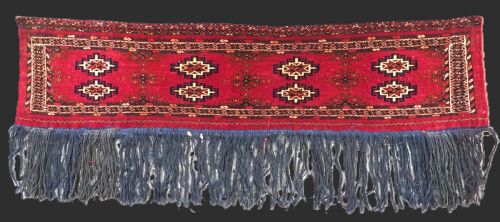
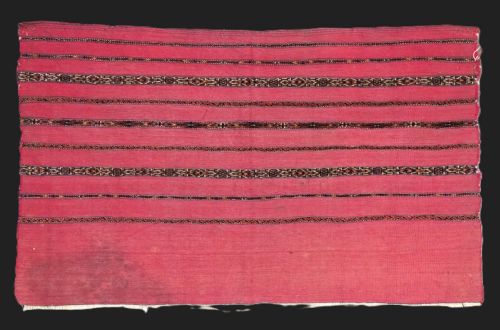


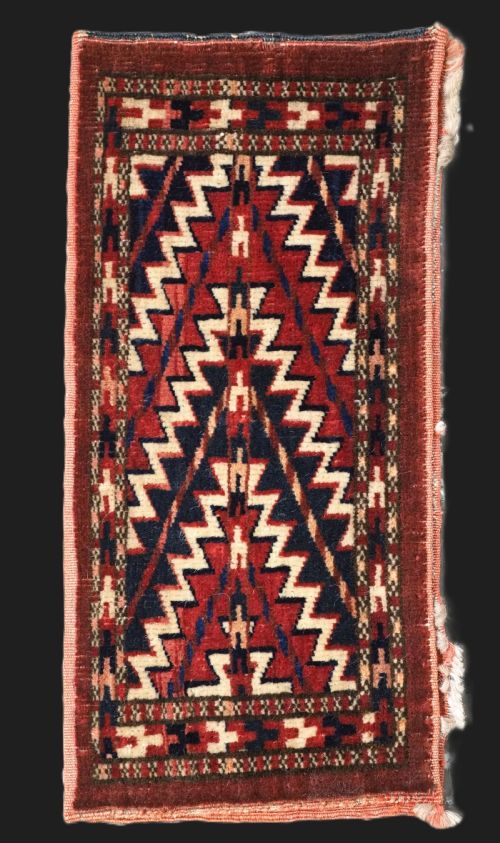


Red Handwoven Turkmen Textile
A red handwoven turkmen textile brings the rich geometric artistry of Central Asian nomadic tribes directly into modern interiors.
Red Handwoven Turkmen Textile
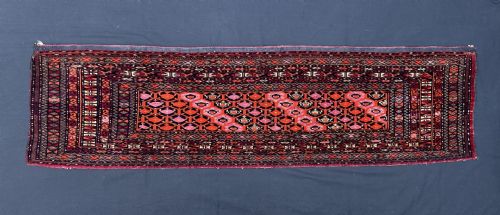
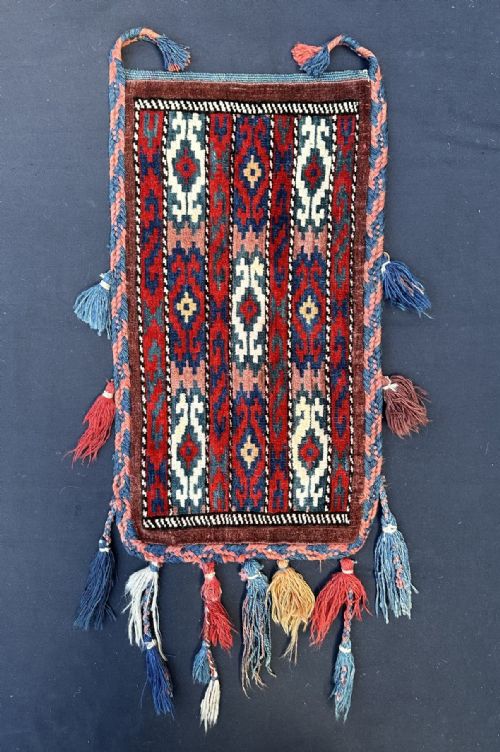
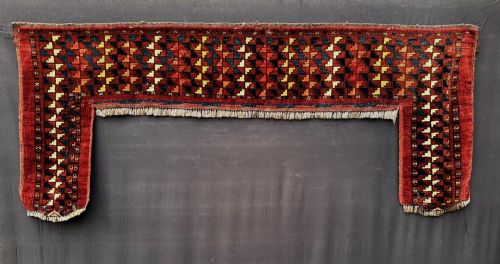
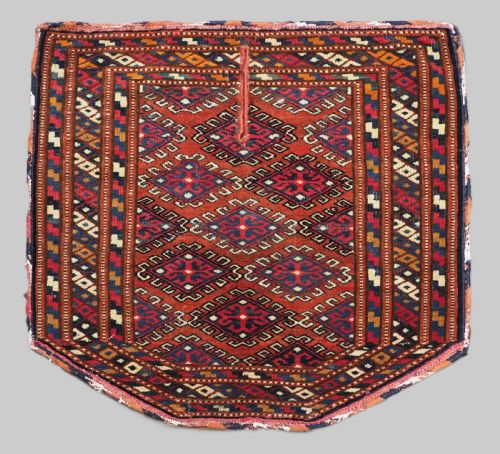
When searching for a red handwoven turkmen textile, buyers encounter an array of tribal weaving traditions originating from Central Asia, including Turkmenistan and surrounding regions. These objects primarily take the form of utilitarian or ceremonial items such as storage bags, torbas, chuvals, tent pole bags, and wedding trappings created by various tribal groups like the Yomut, Tekke, Saryk, and Ersary.
The pieces represented on this page date from the mid-nineteenth century through the early twentieth century, reflecting a period of traditional nomadic craftsmanship before industrial methods displaced local practices. Most examples function as fragments of larger tribal life, serving as saddle covers, wall hangings, or dowry pieces rather than conventional floor coverings.
How they were made
Weavers constructed these textiles predominantly from hand-spun wool and cotton foundations, employing natural dyes to achieve deep red grounds and contrasting secondary tones. The structural techniques vary from fine pile knots to flatweave methods such as cicim and banded flatweave designs.
The creation process demanded extensive labour from nomadic makers who prepared and dyed their own materials locally. Precision in knot density and symmetrical placement of primary motifs defined the execution of each storage bag or trapping.
The inventory highlights regional tribal groups including Yomut, Tekke, Saryk, and Ersary makers.
What varies in quality
The standard of a red handwoven turkmen textile depends heavily on the density of the weave and the clarity of the primary design elements. Finer dowry pieces exhibit tight knotting and intricate, balanced guls, whereas utility items may display coarser foundations and simpler structures.
Saturation and variation within the natural dye palette also influence the visual depth of the piece. Uniformity in the wool preparation and preservation of the original side cords and plain weave backs further distinguish superior examples.
The Red Handwoven Turkmen Textile Glossary
- Gul
- A primary medallion motif repeated across Turkmen carpets and bag faces. These geometric octagons often identify the specific tribe that produced the weaving.
- Chuval
- A large storage bag utilised by nomadic families for bedding and household goods. These rectangular pieces frequently feature multiple rows of guls.
- Asmalyk
- A ceremonial bridal trapping placed on the flank of a camel during wedding processions. They are typically pentagonal or trapezoidal in form.
- Cicim
- A supplementary weft-float flatweave technique used to add surface patterns. This method creates textured geometric designs across the textile face.
Red Handwoven Turkmen Textile: Frequently Asked Questions
How were these bags used originally?
Nomadic families utilised these textile bags inside their portable dwellings for storing household possessions, clothing, and bedding. They served both practical storage functions and decorative roles within the community.
Many specific formats, such as torbas and chuvals, were hung against the lattice walls of the tent. Other specialised pieces formed essential parts of wedding ceremonies and camel decorations.
How do I identify different tribal designs?
Tribal attribution relies heavily on the specific shape and drawing of the primary guls, as well as the choice of secondary ornament and border patterns. Different groups such as the Tekke, Yomut, and Ersary developed distinct visual vocabularies.
Examining the structural materials, such as the use of wool versus cotton in the warp and weft, also provides clues to the origin of the weaving.
Can I hang these textiles on a wall?
Wall display represents a common method for showcasing these historic flatweaves and pile bag faces safely. Mounting requires a professional sleeve or conservation-grade Velcro system to distribute the weight evenly across the upper edge.
Keeping the textile away from direct sunlight prevents the natural red dyes from fading over time. Regular gentle rotation protects the wool fibres from uneven environmental stress.
What is a dowry weaving?
Dowry weaving refers to items specially produced by young women as part of their marriage preparations. These pieces received extra care and finer knotting because they demonstrated the bride's skill to her new household.
Examples identified as dowry items often display exceptionally detailed guls and superior wool quality. They were preserved carefully as family heirlooms rather than subjected to heavy daily use.