
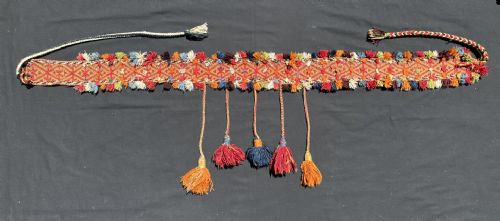
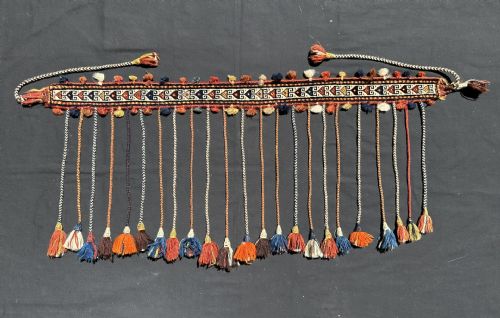
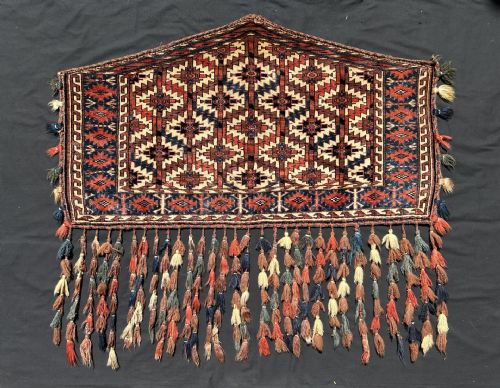
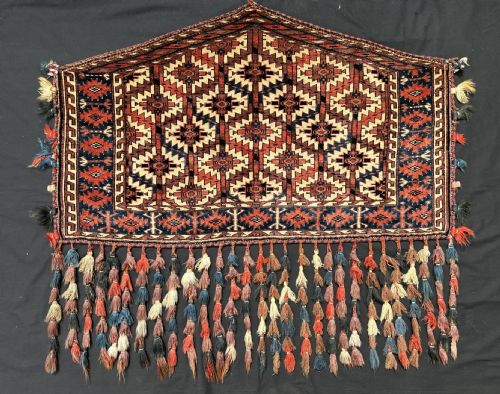




Red Wool Camel Trapping
These red wool camel trapping pieces are authentic nomadic weavings from Central Asia and Persia, offering rich tribal history and striking geometric patterns.
Red Wool Camel Trapping
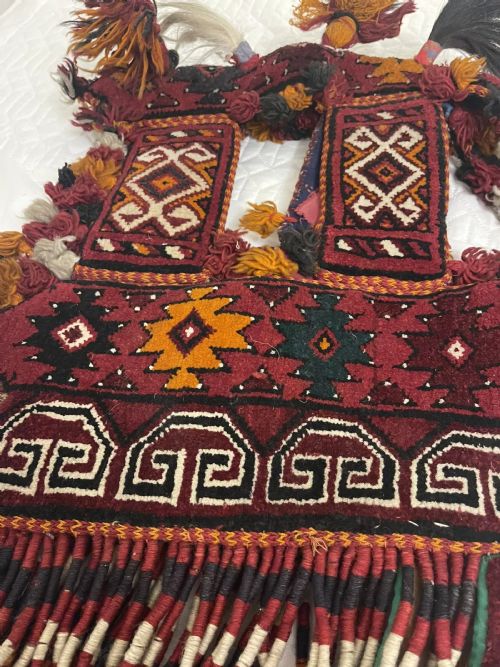
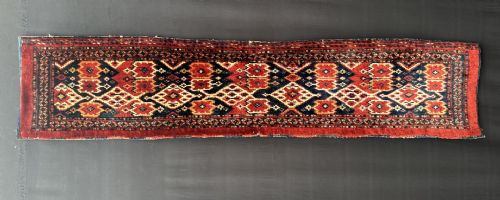
A red wool camel trapping represents the traditional woven ornaments and functional animal trappings produced by nomadic tribes across Central Asia and Persia. These textiles include asmalyks, torbas, and dizlyks, which served both utilitarian purposes during migrations and decorative roles during wedding ceremonies.
The pieces encountered most frequently originate from Turkmen tribes such as the Yomut, Ersari, and Saryk, alongside Qashqa'i nomads from South-West Persia. They typically date from the nineteenth century, spanning periods from eighteen fifty to nineteen hundred.
Makers utilised various specific formats, ranging from pentagonal asmalyks used on wedding camels to smaller torbas designed as storage bags. Each form displays distinct regional motifs, structural proportions, and tribal symbols handed down through generations of weavers.
Materials and construction
The foundational structure relies on handspun wool, supplemented by cotton and occasionally silk highlights for specific design elements. Weavers employed natural dyes to achieve deep red ground colours alongside secondary tones of contrasting hues.
Construction techniques combine dense wool pile with flatwoven backing sections, incorporating tassels and embroidered faces where appropriate. The integration of silk highlights on specific Yomut and Ersari torbas demonstrates advanced detailing within traditional tribal methods.
Nomads dressed camels better than most royalty, hanging intricate wool trap masterpieces over livestock for wedding processions.
Factors determining quality
Quality rests upon the precision of the tribal guls, the depth and stability of the natural dyes, and the density of the wool pile. Superior examples maintain crisp geometric definition across complex fields like the Aishk gul or Salor shemle designs.
Survival of original edge finishes, tassels, and structural integrity further distinguishes exceptional pieces from standard examples. The presence of supplementary materials, such as well-executed silk embroidery, elevates the textile's visual impact.
The Red Wool Camel Trapping Glossary
- Asmalyk
- A pentagonal trapping traditionally mounted on the flanks of a bride's camel during Turkmen wedding processions. These pieces often display elaborate geometric symbolism.
- Torba
- A small tent-bag or storage hanging produced by nomadic tribes for domestic use or transport. They frequently feature repeating gul motifs across the face.
- Gul
- A primary medallion or repeating motif used in Turkmen and Central Asian rug and textile design. Each tribal group utilised distinct gul patterns for identification.
- Dizlyk
- A specific knee-cover trapping utilised on camels during ceremonial occasions. They form part of the broader ensemble of wedding livestock ornamentation.
- Natural Dyes
- Colourants derived from plant, insect, and mineral sources prior to the widespread adoption of synthetic aniline dyes. They produce the characteristic rich patination seen on nineteenth-century tribal textiles.
Red Wool Camel Trapping: Frequently Asked Questions
What is a red wool camel trapping used for?
These textiles served as functional decorations for animals during nomadic migrations and significant community events like weddings. They adorned camel flanks, necks, and knees as part of festive processional arrays.
Over time, many of these weavings transitioned into domestic wall hangings or storage bags within tribal tents. Today, collectors preserve them as textile art rather than functional animal gear.
How do I identify a Yomut trapping?
Yomut weavings typically originate from the Trans-Caspian steppes and are distinguished by specific tribal motifs like the Aishk gul or asmalyk pentagonal formats. They frequently incorporate rich red wool grounds paired with precise geometric arrangements.
Examining the structure reveals characteristic knotting, palette choices, and wool quality consistent with nineteenth-century Turkmen production. Comparing secondary ornaments helps separate Yomut pieces from neighbouring Ersari or Saryk work.
Are these pieces from the nineteenth century?
The available listings and historical examples are concentrated in the nineteenth century, with specific dates ranging from eighteen fifty to nineteen hundred. Tribal weavers produced these items before industrial textile methods displaced traditional nomadic craft.
Date attributions rely on material analysis, dye characteristics, and structural wear patterns observed in the wool and cotton. Pieces from eighteen seventy or eighteen eighty display distinct signs of traditional tribal manufacture.
How should I care for a textile hanging?
Display these weavings away from direct sunlight to protect the natural wool dyes from fading over time. Gentle mounting techniques that distribute weight evenly prevent strain on the historical fabric and structure.
Periodic inspection for dust and careful low-suction cleaning through a mesh screen helps maintain the condition of the wool pile. Avoid moisture exposure and keep the environment stable to preserve the natural fibres.