







Central Asian Ikat Textile
A central asian ikat textile brings vibrant pattern and rich historic character into a room through bold dyeing traditions.
Central Asian Ikat Textile
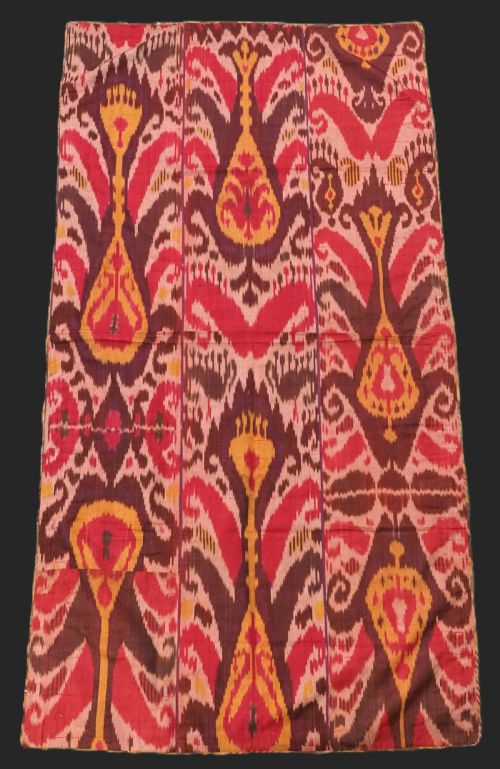
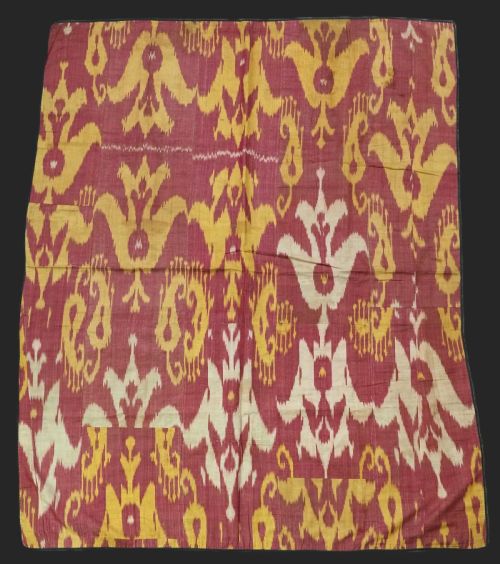
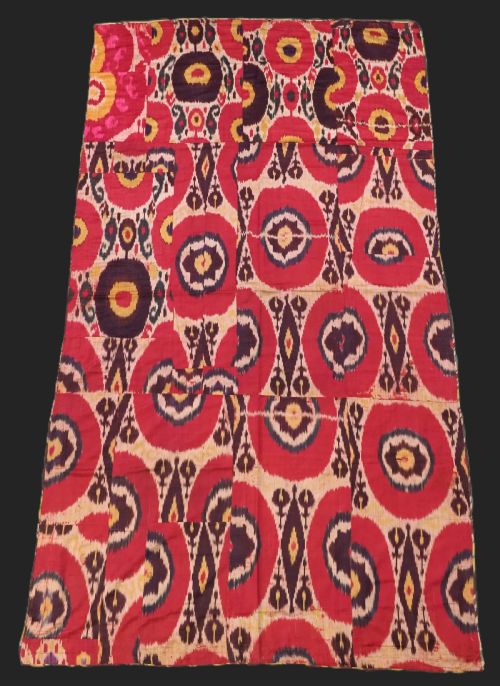
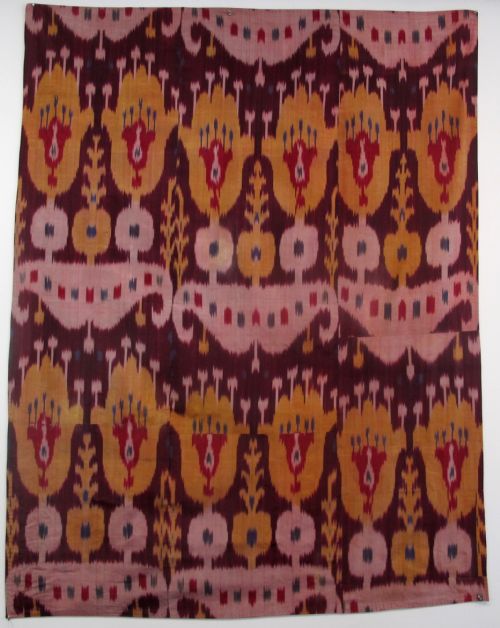
A central asian ikat textile represents a striking tradition of resist-dyeing, most frequently seen here as panels, coats, and tribal trappings from Uzbekistan and Turkmenistan. You will encounter fabric panels alongside gentlemen coats known as khalats or chapan, as well as smaller items like purses and torbas.
The objects originate from the late nineteenth century, spanning decades such as eighteen eighty, eighteen ninety, and nineteen hundred. These pieces display distinct regional identities tied to places like Bukhara and Samarkand.
What varies in quality
The precision of the resist-dyeing and the complexity of the pattern alignment distinguish different examples. Finer panels show exceptional clarity in the blurred edges typical of the technique.
The choice of materials, from pure silk to blended adras and hand-spun wool, alters the weight and tactile presence of the textile. Condition and structural integrity across large panels or tailored coats also separate standard pieces from more remarkable survivals.
Central Asian Ikat Textile Retail Price Guide 2026
Typical asking prices for central asian ikat textile among the pieces listed under this phrase on Sellingantiques today, from the lower quarter to the upper quarter. They describe what is for sale here now, not the wider market.
Listings feature items dated across the late nineteenth century, specifically from eighteen eighty, eighteen ninety, and nineteen hundred.
The Central Asian Ikat Textile Glossary
- Ikat
- A dyeing technique where yarns are tie-dyed before weaving to create distinctive patterns with characteristic blurred outlines. This method requires considerable skill from the artisan to align the design during the weaving process.
- Adras
- A traditional fabric woven with a silk warp and a cotton weft. This combination produces a sturdy yet lustrous textile often seen in panels and garments.
- Khalat
- A long, loose-fitting robe or gentleman coat worn across Central Asia. These garments frequently display bold ikat patterns and quilted construction.
- Torba
- A small storage bag produced by Turkmen tribal groups. Examples often incorporate ikat designs alongside traditional weaving techniques.
- Natural dyes
- Colourants derived from plants, insects, and minerals rather than synthetic compounds. These substances yield the rich, organic hues found in nineteenth-century pieces.
Central Asian Ikat Textile: Frequently Asked Questions
How do I hang a textile panel?
Large fabric panels can be mounted on a padded wooden batten using a discreet sleeve or conservation-grade stitching. This distributes the weight evenly across the upper edge without damaging the fabric.
Keep mounted pieces away from direct sunlight to protect the natural dyes from fading over time.
How were coats worn historically?
Garments like the khalat or chapan served as outer robes for men in regions such as Bukhara and Samarkand. They were often layered over other clothing for warmth and status.
Quilted and padded variants provided insulation during harsh winters while displaying the wearer's taste through bold patterns.
How do I date these textiles?
Dating relies on stylistic markers, material analysis, and comparison with documented examples from the late nineteenth century. Pieces typically date from eighteen eighty to around nineteen hundred.
Examining the specific type of natural dyes and weave structure helps narrow the period of origin.