


Caucasian Tribal Rug Face
A caucasian tribal rug face brings dense geometry and rich wool directly into your room from nineteenth-century nomadic weavers.
Caucasian Tribal Rug Face
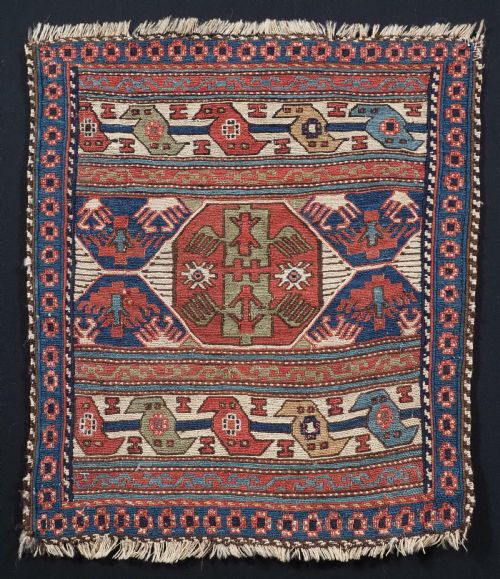
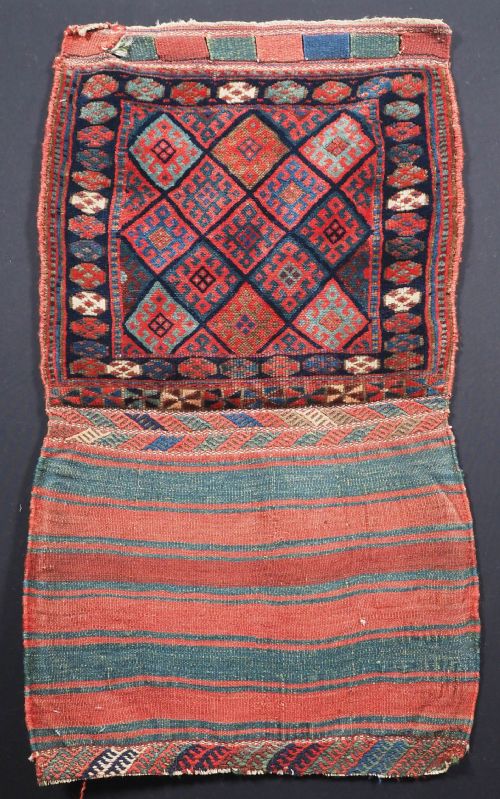
When you search for a caucasian tribal rug face, you find the front panels of nomadic transport bags, saddlebags, and storage pieces created across the Caucasus and neighbouring regions. These fragments survive from the nineteenth century, including specific works from Shahsavan, Jaf Kurd, Yomud, and Heriz weavers.
The pieces on this page appear primarily as bag faces, cushion covers, and sumac panels that once served utilitarian roles in nomadic camps. Makers constructed them as storage containers for tents before collectors separated the durable front panels to preserve the woven art.
You will encounter formats ranging from square saddlebag faces to long mafrash panels, often displaying tribal motifs, birds, and dragons. Their original function as daily utility items gives each piece a robust, authentic character rooted in nomadic traditions.
Materials and construction
Weavers built these textiles using hand-spun wool foundations and pile, combined with cotton elements in specific examples. They employed flatweave and sumac techniques alongside dense knotting to create durable structures capable of withstanding constant nomadic migration.
Colour comes from natural dyes and vegetable dyes applied to hand-spun wool, producing deep tones that soften gracefully over generations. The integration of plain weave backs and sturdy wool warps demonstrates the practical engineering behind each textile.
Several nineteenth-century nomadic bag faces retain their plain weave backs, allowing you to inspect the raw utility side alongside the decorated front.
Factors that separate examples
Quality rests upon the crispness of the tribal design, the complexity of sumac work, and the condition of the hand-spun wool. Pieces featuring identifiable motifs like birds and dragons command attention through their intricate execution.
The depth and vibrancy of the natural dyes and vegetable dyes distinguish finer village and nomadic work from standard utility pieces. Tighter weave density and careful handling of geometric layouts separate superior regional examples from simpler productions.
The Caucasian Tribal Rug Face Glossary
- Bag face
- The decorative front panel of a nomadic storage bag or saddlebag, separated from its plain weave back. These panels preserve the finest weaving and iconography of the original piece.
- Sumac
- A flatweave technique involving wrapping supplementaryweft threads around the warp to create a textured, durable surface. This method allows weavers to produce sharp geometric patterns.
- Khorjin
- A traditional pair of saddlebags used by nomads for transport on horses or camels. Collectors frequently find these divided into individual panels.
- Mafrash
- A large rectangular storage chest panel used inside nomadic tents for bedding and household goods. These pieces typically display horizontal bands of tribal design.
- Natural dyes
- Colourants derived from plants, insects, and minerals used traditionally before synthetic alternatives arrived. They yield complex, mellow tones that age with distinct character.
Caucasian Tribal Rug Face: Frequently Asked Questions
How were these bags used originally?
Nomadic groups utilised these woven containers for storing household goods, bedding, and personal items inside tents and during migrations. Saddlebags rode across the backs of horses and camels as practical transport.
The sturdy construction protected contents from dust and rough handling during constant travel across Azerbaijan and surrounding regions.
How do I identify Shahsavan weaving?
Shahsavan pieces frequently utilise the sumac technique to present crisp geometric patterns, often incorporating distinctive motifs like birds and dragons. Their work displays precise horizontal striping and rich vegetable dyes.
Look for structured panel layouts and firm hand-spun wool foundations that reflect the traditional craftsmanship of weavers from regions like Moghan.
How do I live with a bag face?
Many collectors mount these textile panels on walls as flat art or convert them into cushions and pillows for domestic seating. Their durable wool construction handles gentle placement in low-traffic living spaces.
Keep them away from direct sunlight to protect the natural dyes and allow the thick wool pile or flatweave to breathe naturally.